






 Portuguese
  Spanish
  4 min of reading
  4 comments


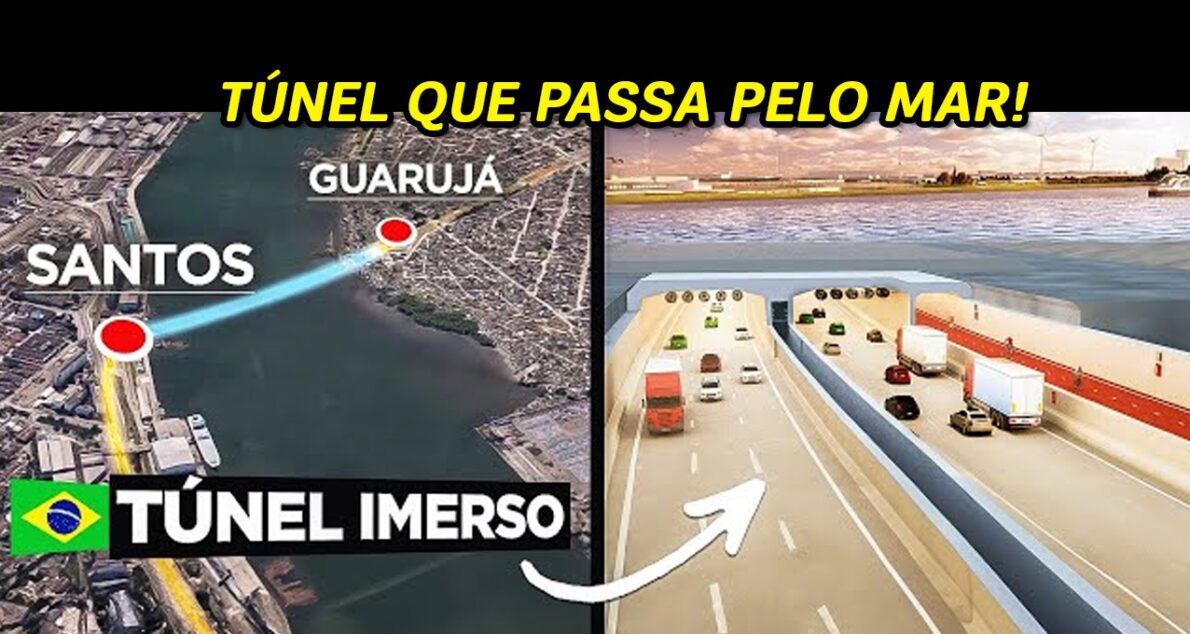


The Santos-Guarujá Tunnel, budgeted at over R$ 6 billion, promises to revolutionize mobility between the cities of São Paulo. It will be the first submerged tunnel in Latin America, with six lanes and areas for pedestrians and cyclists. Approved by the TCU, the project aims to combine technological advancements with environmental preservation.
Brazil is preparing to take an audacious step in engineering and urban mobility with a project that promises to revolutionize the connection between two important cities in São Paulo.
Although it seems like something out of a science fiction movie, the idea of crossing the seabed is not only real but also imminent.
However, the start of the works depends on one last bureaucratic hurdle. What will be the future of this billion-dollar construction?
-
Brazilian Freight Bill Progresses in Congress with $5,000 Minimum Wage, 70% Advance Payment, and Fines Up to $1 Million, as Agriculture and Industry Warn of Rising Costs and Legal Uncertainty

-
High Interest Rates and Record Defaults Lead to Surge in Vehicle Repossessions and Crowded Car Auctions in Brazil by 2026

-
São Paulo Offers Over 13,000 Job Openings: Opportunities in Industry, Logistics, and More Across the State
-
Brazil’s WEG to Open New Factory in China by 2027, Expanding Production of Large Rotating Electric Machines and Low to Medium Voltage Motors in Rugao


Approved by the TCU, mega project is about to come to fruition
The Santos-Guarujá Tunnel, whose construction is budgeted at over R$ 6 billion, was officially submitted to the Federal Court of Accounts (TCU) on October 30, 2024, according to information from the Ministry of Ports and Airports (MPor).
According to Minister Silvio Costa Filho, this project will be crucial for improving urban mobility and port logistics in the Baixada Santista region.
The project will be financed through a partnership between the federal government, the state of São Paulo, and the private sector.
The government estimates that the works will begin in 2025, shortly after the final approval by the TCU and the holding of the concession auction for the management and maintenance of the tunnel for the next 30 years.
Structural Innovation: A Submerged Tunnel in Latin America
This will be the first submerged tunnel built in Latin America, with a total length of approximately 870 meters and a depth of 21 meters.
The structure will connect the downtown and Macuco neighborhoods in Santos to Vicente de Carvalho district in Guarujá.
The tunnel has been designed to accommodate various modes of transportation.
In addition to the six traffic lanes – three in each direction – the project includes an adaptable passage for the Light Rail Vehicle (VLT), as well as a corridor for cyclists and pedestrians. This configuration makes the project innovative and multifunctional.
History and Current Stage
The development of the project did not happen overnight. In March 2024, a public consultation gathered opinions on the proposal, allowing important adjustments during the planning phase.
Later, in September, the Ministry of Ports and Airports conducted a market survey to evaluate investor interest in the construction.
The completion of these stages culminated in the submission of the project to the TCU, which, upon granting its approval, will release the auction notice.
Impacts in the Baixada Santista Region
The local impact of the tunnel will be significant.
According to Minister Silvio Costa Filho, the project will help separate urban traffic from port flow, facilitating the transport of goods from the Port of Santos, which is the largest in Latin America.
In addition, the tunnel promises to improve the quality of life for thousands of residents and workers in the region, who currently face daily mobility challenges.
Currently, the crossing between Santos and Guarujá is mainly done by ferries, which often cause long traffic jams.
Feasibility and Challenges
Although the project is audacious, it also faces challenges. The complexity of constructing a submerged tunnel demands cutting-edge technology and environmental precautions.
According to experts consulted by the newspaper Diário do Litoral, there are concerns about the impact on the local marine ecosystem. However, engineers assure that the techniques used will minimize damage to the environment.
Another challenge is the high cost. The public-private partnership is considered essential for making the financing viable.
Additionally, the forecast of a 30-year concession ensures that the maintenance of the tunnel will be sustainable in the long term.
When do the works start?
The official forecast is that the works will begin in 2025, provided the project receives swift approval from the TCU.
The timeline depends on the completion of the final bureaucratic stages, including the auction notice and the hiring of the company responsible for execution.
And you, do you believe the submerged tunnel can change the history of mobility in Brazil? Or will the high cost and environmental challenges compromise this dream?




Um projeto que já tem mais de 80 anos, finalmente vai sair do papel
Se essa obra fosse gerenciada pelo governo federal, provavelmente seria mais um ponto pra desvio de dinheiro, mas com ficará sob o comando do Tarcísio, aí tem credibilidade.
Se essa obra foce do governo federal eu acredito que seria só mais um monte de entulho como fizeram com a transposição do são Francisco, mas como o Governador TARCÍSIO está a frete deu credibilidade.