






 Portuguese
  Spanish


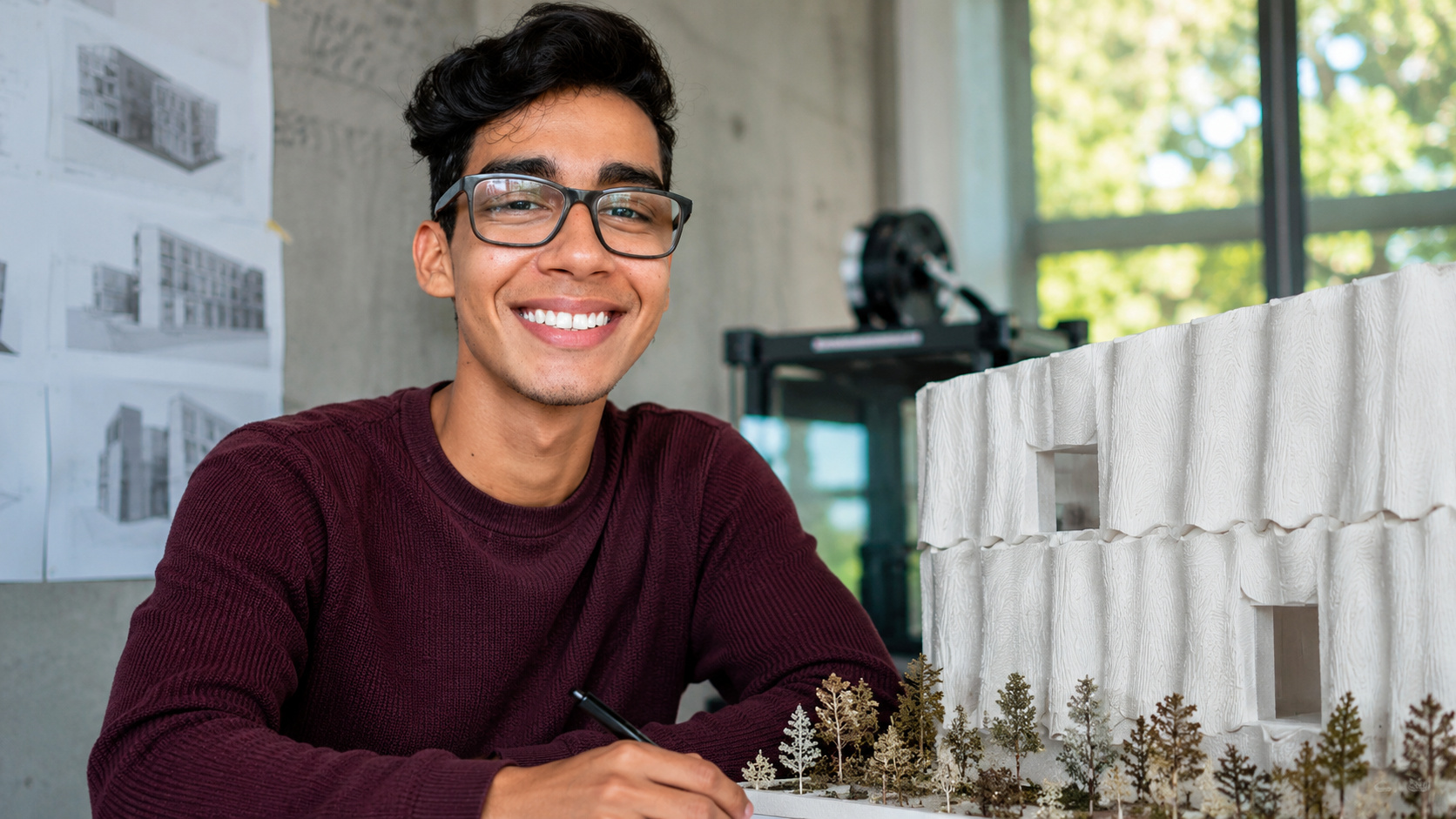

UFS student wins award in Paris with sustainable engineering project and puts Brazilian science ahead of Europeans in innovation.
UFS student Eric Matheus Morais won 1st place in the “Prix du projet innovation” category of the Chaire IdB 2026 program, held in Paris by the traditional French school ESTP, an international reference in civil construction, public works, and engineering innovation.
According to information released by Portal UFS on May 26, 2026, the victory drew attention for surpassing European competitors in a competition focused on sustainable solutions and technology applied to architecture.
The awarded project combined 3D printing in concrete, parametric design, and recycled materials to rehabilitate an old French linen factory. The result reinforced the potential of Brazilian science within the international academic scene and highlighted the strength of public universities in training highly qualified professionals.
-
China Develops Custom 140-Ton Electric Mining Truck with 770 kWh Swappable Battery, Deploys 290 Units in Xinjiang’s Largest Zinc Mine

-
Meta to Launch Arena, a New Prediction App Targeting 3.56 Billion Users, Competing with Polymarket and Kalshi

-
Scientist Challenges Famous Human Evolution Theory, Argues Homo Sapiens Evolved Gradually Over Thousands of Years
-
15-Year-Old American Builds Ocean Generator with PVC Pipe and 3D-Printed Propeller for $12, Wins National Prize, Presents at White House, and Makes Forbes 30 Under 30 List




UFS student wins award in Paris with sustainable engineering project
During the competition held in France, Eric Matheus Morais represented the Polytech Orléans School of Engineering through the Brésil France Technologie en Ingénierie (Brafitec) program, an academic partnership between Brazil and France focused on training engineers.
The UFS student was part of the team responsible for the “Façades – Hargicourt” project, which developed a sustainable façade inspired by the undulations of linen fabric and the movements of the French harvest.
The proposal used 3D printing in concrete to create complex and sustainable architectural forms. The project also attracted attention for combining structural functionality and modern aesthetics, something valued by the award jury in Paris.
Among the presented differentials were:
- low-carbon concrete;
- use of recycled materials;
- mechanical and technical validations;
- advanced parametric design;
- application of 3D printing in civil construction.

Sustainable engineering and architecture surprise European judges
The awarded project managed to unite engineering, sustainability, and artistic expression in a single architectural solution. According to Eric Matheus Morais, the team worked to transform mathematical calculations and digital modeling into a functional and visually striking facade.
The result impressed European experts precisely because of the combination of technological innovation and practical application. The group managed to create a sustainable structure without giving up the visual identity inspired by the local French culture.
The competition brought together students and renowned institutions from Europe, including traditional French engineering schools. Even as the only foreigner without French as a native language, the UFS student managed to stand out during the event.
Brazilian science gains international space with 3D printing in concrete
In recent years, 3D printing applied to civil engineering has come to be considered one of the most promising technologies in the construction sector. The technique reduces waste, improves the precision of structures, and allows for the creation of more complex architectural projects.
The work presented by the UFS student used precisely this technology as the main basis of the winning project in Paris. The team developed a sustainable solution capable of reproducing curves and undulations inspired by the old French linen industry.
Furthermore, the concrete used in the project had lower carbon emissions thanks to the presence of recycled materials in its composition.
According to data from the United Nations Environment Programme (UNEP), the construction industry accounts for about 37% of global energy-related emissions. Therefore, sustainable projects have been gaining more and more space in international engineering competitions.
UFS student surpasses Europeans in competition held in France
The achievement had an important symbolic weight because it occurred precisely within one of the main European centers of engineering. The ESTP, organizer of the event, is considered one of the most respected institutions in France in the area of civil construction and infrastructure.
Eric Matheus Morais highlighted that the victory was even more significant because Polytech Orléans was participating in the competition for the first time in the area in which he currently works.
The UFS student also emphasized the importance of financial support from the Coordination for the Improvement of Higher Education Personnel (CAPES), responsible for enabling his academic stay in France through the Brafitec program.
Among the factors that contributed to the victory were:
- integration between architecture and engineering;
- sustainable proposal applied to construction;
- technological innovation;
- use of 3D printing;
- artistic concept combined with functionality.
Award in Paris reinforces the importance of CAPES for international education
The performance of the UFS student also highlights the importance of academic exchange programs funded by Brazil. Brafitec, for example, brings Brazilian and French universities closer to strengthen the international education of engineers.
CAPES plays a fundamental role in this process by financing scholarships, research, and academic experiences abroad. Without this support, many Brazilian students would find it difficult to participate in international projects of great relevance.
In addition to individual recognition, the achievement in Paris strengthens the image of Brazilian science and increases the visibility of the Federal University of Sergipe in the global academic scene.
Experts point out that international experiences help accelerate technological development and expand the exchange of knowledge between universities from different countries.
Sustainable engineering becomes a global priority in civil construction
The search for sustainable solutions has transformed the engineering sector worldwide. Currently, universities, companies, and research centers are increasingly investing in eco-friendly materials, smart constructions, and technologies capable of reducing environmental impacts.
In this scenario, the project developed by the UFS student directly aligns with one of the main global trends in modern civil construction.
The combination of sustainable concrete, 3D printing, and structural reuse attracted attention precisely for presenting a viable solution for the recovery of old industrial spaces.
Moreover, the work demonstrated how engineering can unite innovation, sustainability, and cultural identity in contemporary urban projects.
An achievement that strengthens Brazilian science abroad
Eric Matheus Morais’s victory in Paris represents more than an academic award. The result symbolizes the ability of Brazilian science to compete at a high international level, even in the face of financial and structural challenges faced by public universities.
The performance of the UFS student shows how investments in education, research, and innovation can generate global recognition and open new opportunities for young Brazilian researchers.
By defeating European competitors in a competition held in France, the Brazilian helped expand the presence of national engineering in international debates on sustainability, technology, and smart construction.
The achievement also reinforces the importance of maintaining academic incentive programs that bring Brazilian students closer to the world’s leading centers of research and technological development.
With information from Portal UFS





