Portuguese
  Spanish


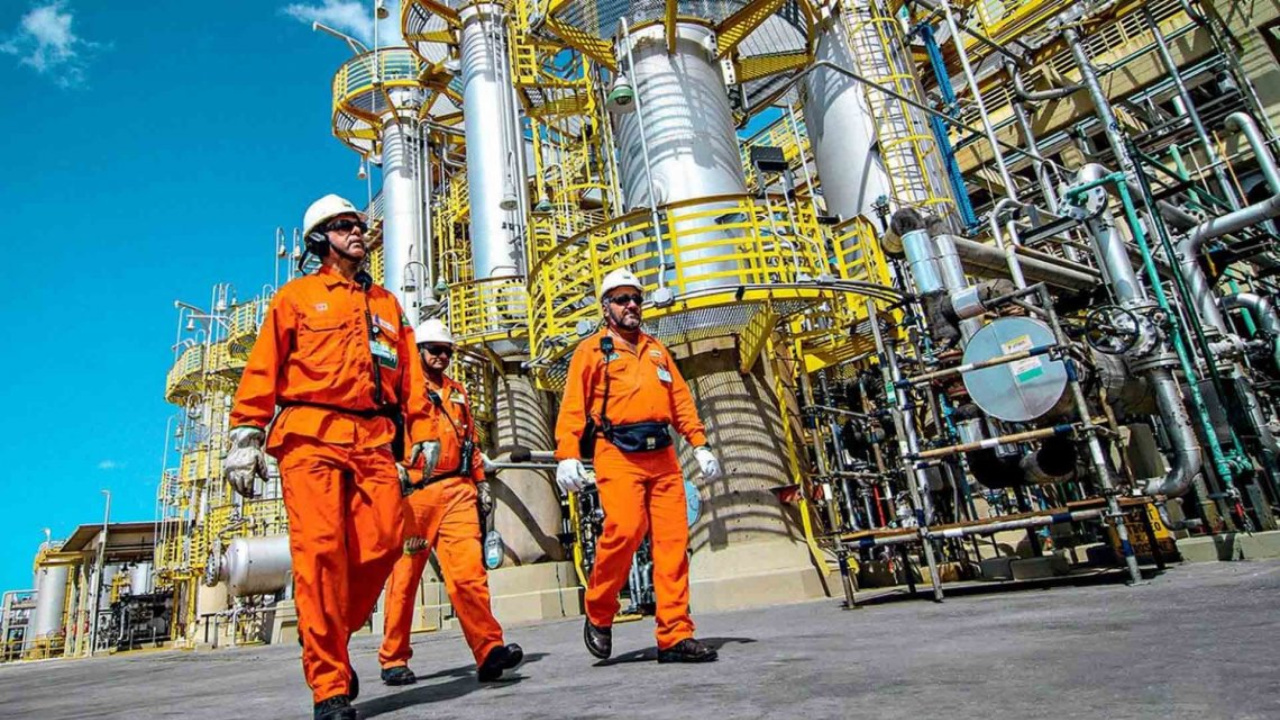

The New Bill Presented By Senator Lindbergh Farias Proposes To Extend The Rest Time For Oil Workers And Correct Inequalities Between Direct And Outsourced Workers Of Petrobras.
Senator Lindbergh Farias (PT-RJ) presented Bill No. 4875/2025, which promises to significantly alter the routine of offshore workers in the oil and gas sector. The proposal extends the current 14×14 schedule — 14 days of work followed by 14 days off — to a new 14×21 schedule, guaranteeing three weeks of rest for every 14 days on board.
The measure amends Law No. 5.811, of 1972, which has defined the work and rest regime in exploration, drilling, production, and oil transfer activities for over 50 years. The objective, according to the parliamentarian, is to promote more justice and equality between direct Petrobras workers and outsourced workers, who currently have different rights despite performing similar functions.
Senator Highlights Fight For Dignity And Valuation Of The Category
During the announcement of the project, Lindbergh Farias emphasized that the proposal is a “fight for dignity, rest, and valorization of those who drive the national economy.” The senator pointed out that oil workers face long periods of isolation and intense shifts aboard platforms and vessels, which justifies the extension of rest time.
-
Qantas and Airbus Invest in Company Aiming to Convert Unsorted Household Trash into Jet Fuel

-
Brazil’s ANP Opens 86 New Oil Blocks in the Equatorial Margin, Expanding the Amazon River Mouth Frontier

-
OPEC+ Boosts Oil Supply by 188,000 Barrels per Day in July 2026, Leading to Price Drop from $112 to $89 per Barrel in Under Two Months

-
TotalEnergies Signs 20-Year Deal to Purchase 2 Million Tons of LNG from Alaska, Boosting Project Viability



In addition to changing the schedule regime, the text of the bill brings important adjustments in Article 2 (Article 6 of Law 5.811/72), extending the rest period during on-call from 24 to 36 hours for every 24 hours of on-call. The minimum additional of 20% will also be maintained, potentially increasing according to collective agreements or conventions.
Another relevant point is the amendment of Article 2 (Article 8 of Law 5.811/72), which reduces the maximum onboard period from 15 to 14 consecutive days, as well as establishes a proportional rest of 1.5 days for each day worked onboard.
The creation of Bill 4875/2025 is the result of a collective effort involving Senator Lindbergh Farias, the Unified Federation of Oil Workers (FUP), Sindipetro-NF, Sindipetro-ES, the Institute of Strategic Studies of Oil (INEEP), and DIEESE. Discussions also included the councilor of Porciúncula, Fellipe Coutinho, and other labor and political leaders connected to the sector.
This articulation between political representatives and class entities aimed to align the historical demands of workers with new market conditions and occupational safety and health requirements.
New Additional And Equality Between Direct And Outsourced Workers
Currently, only Petrobras employees have the right to the 14×21 schedule, achieved through a collective agreement renewed annually. Outsourced workers remain subject to the 14×14 regime, which is considered more exhausting and detrimental to family and social life.
According to the director of Sindipetro-NF, Jancileide Morgado, the new project represents a significant advancement. “The text creates a minimum additional of 20% over the basic salary, the so-called boarding additional, and requires that agreements and collective conventions incorporate this additional, which can expand the calculation base for benefits. Furthermore, it guarantees equality between permanent and outsourced workers, which tends to level up the minimum wages practiced in companies contracted by Petrobras and its subsidiaries,” she highlighted.
With Bill 4875/2025, the central goal is to correct a historical distortion that separates workers of the same category. By extending the 14×21 regime to all offshore professionals, the Senate seeks to ensure equal rights and better living conditions for oil workers operating on platforms and vessels in Brazil, reinforcing the strategic role of this workforce in the national economy.