Portuguese
  Spanish


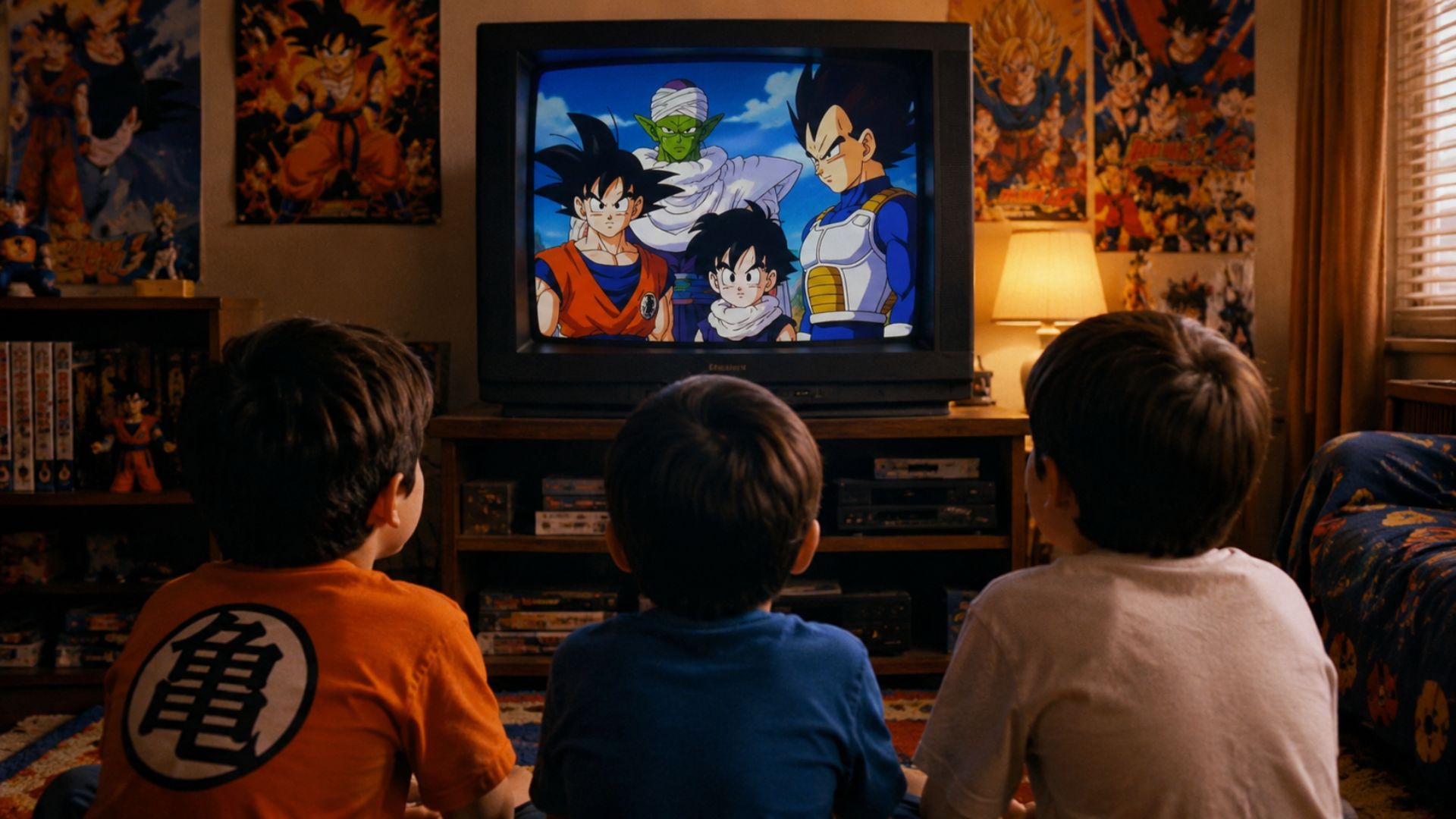


Studies on fiction, empathy, and moral development help explain why Dragon Ball continues to be regarded as a significant work for children and teenagers who grew up between the 1980s and 1990s, especially due to the emotional complexity of characters like Vegeta, Piccolo, and Gohan.
Dragon Ball marked the childhood of millions of viewers in the 1980s and 1990s, but the idea that the work gave a “decisive advantage” to this generation requires caution.
Psychology allows us to state that fictional narratives can stimulate empathy, social interpretation, and moral reflection, although there is no definitive proof of a specific effect caused by the anime.
How fiction influences empathy and social interpretation
Studies on fiction and cognition, such as ‘How Children Learn Socially from Narrative Fiction‘ published on PubMed, indicate that stories with complex characters can favor the so-called theory of mind, a skill linked to understanding emotions, intentions, and viewpoints of others.
-
$12 Billion Invested in AI Data Centers in Semi-Desert Mexican State, But 17 of 18 Municipalities Now Face Water Shortages, Residents Receive Water Only 3 Days a Week

-
How Much Does Starlink Satellite Internet Cost for Cars, Trucks, and RVs? Prices for Antenna, Accessories, and Plans

-
Scientists Convert Food Waste into Aviation Fuel, Successfully Test 50% Blend with Conventional Kerosene to Cut Emissions and Promote Sustainable Flights
-
OnePlus N6 Smartphone to Launch in India with 8,000mAh Battery and 45W SuperVOOC Charging, Lasting Up to Three Days




This field of research usually analyzes books, movies, series, and narratives in general, not just animes.
In this context, Dragon Ball can be read as a work that presented moral dilemmas to children and teenagers.
Characters like Piccolo and Vegeta did not follow a simple division between heroes and villains, as their trajectories involved rivalry, behavior change, emotional bonds, and choices with consequences.
Vegeta, Piccolo, and conflicts beyond good versus evil
Part of Dragon Ball’s impact lies in how the series led initially threatening characters into more complex roles.
Piccolo, once treated as an enemy, comes to have a decisive relationship with Gohan, while Vegeta stops being just an antagonist and gains conflicts related to pride, family, and belonging.
This type of construction can lead young audiences to observe different motivations before judging an action.
Even so, turning this experience into a proven generational superiority would be extrapolating what the available studies support with certainty.
Son Gohan and the freedom to choose another path
Son Gohan also holds an important place in this reading.
Children who followed his trajectory saw a character with enormous fighting potential prefer studies, family life, and a routine far from the expected role of a permanent warrior.
Gohan’s decision helps to discuss power, responsibility, and autonomy without relying on direct speeches.
For many fans, this arc showed that strength doesn’t need to mean just combat, victory, or dominance over others.
What the theory of moral development says
The association with Lawrence Kohlberg appears because his theory deals with the development of moral reasoning in stages, especially in childhood and adolescence.
The psychologist analyzed how people justify choices when faced with dilemmas, more than the answers themselves.
Dragon Ball can engage with this perspective by presenting conflicts about duty, sacrifice, loyalty, and reparations.
However, Kohlberg’s theory did not study Dragon Ball nor does it allow us to conclude, in isolation, that watching the anime produced a measurable moral advantage.
Dragon Ball became a global phenomenon of pop culture
Created by Akira Toriyama, Dragon Ball started as a manga in Japan in 1984 and became one of the most influential franchises in global pop culture.
The complete work comprises 42 volumes in the original Japanese edition and helped popularize manga and anime outside of Japan.
In Brazil, the series gained strength especially through open television and formed a shared emotional memory among different audiences.
This reach explains why analyses of childhood, nostalgia, and behavior often use Dragon Ball as an example of a striking narrative.
The limit between cultural influence and scientific proof
The main correction needed is in the word “affirm”.
There are studies that relate fiction, empathy, and theory of mind, but no reliable evidence was found that psychologists have demonstrated a specific decisive advantage in children who watched Dragon Ball in the 1980s and 1990s.
Therefore, the more precise formulation is to say that the work may have contributed to experiences of moral and emotional reading among its viewers.
The cultural influence is clear; the proven psychological advantage, however, is not directly demonstrated in the available sources.