Portuguese
  Spanish


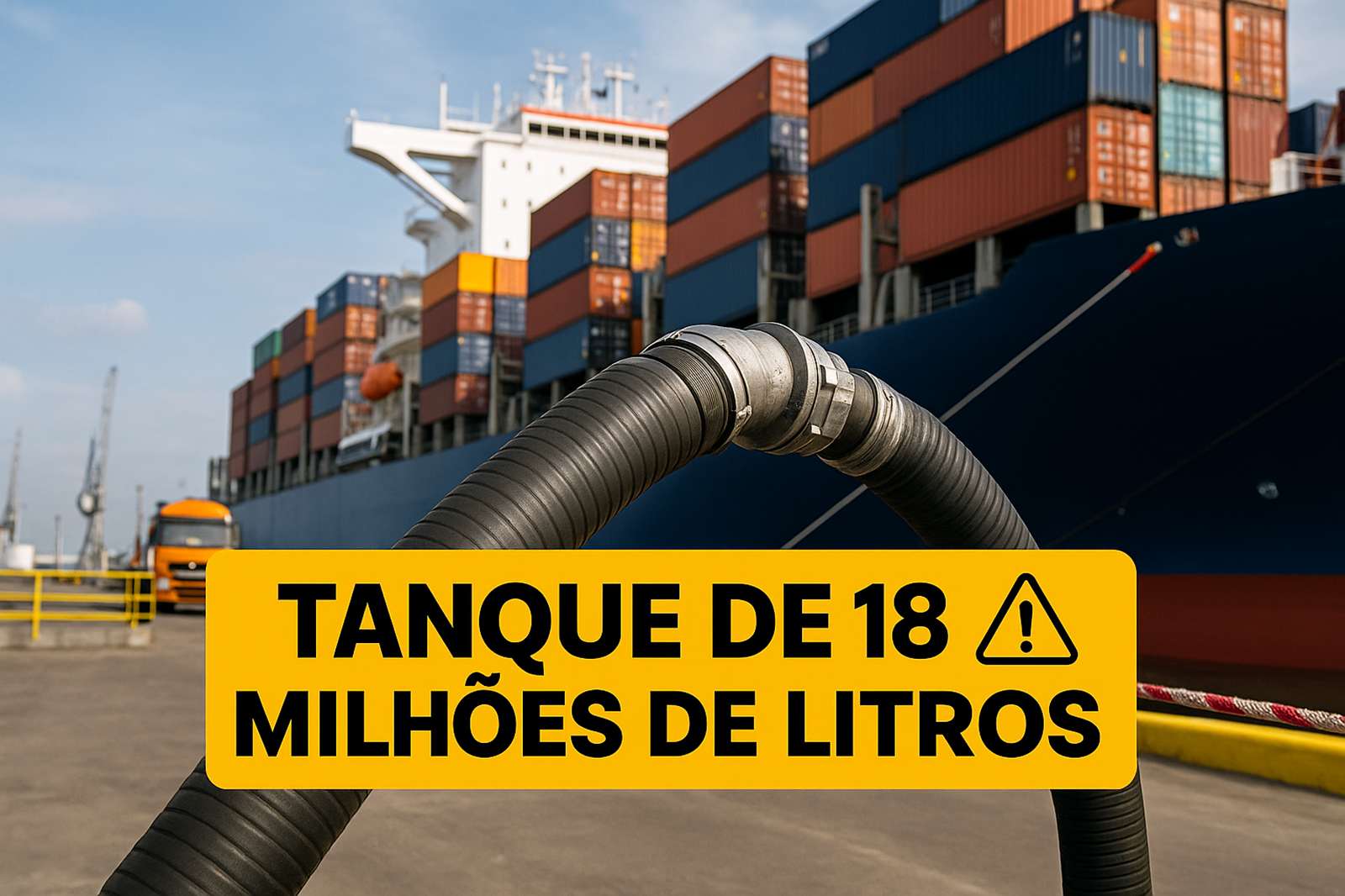


Ships of 300 Meters Carry Tanks with Millions of Liters, and the Supply Process Can Last Many Hours. The Real Numbers Impress Because They Reveal the Colossal Dimension of These Operations That Almost No One Knows
Ships about 300 m long, especially container ships, have fuel tanks with considered high volumes. These reservoirs typically vary between 10,000 and 20,000 m³, which represents 10 million to 20 million liters. In more common models, the capacity reaches approximately 18 million liters, making the refueling a large-scale operation.
The refueling rate of these ships reaches, at the maximum limit within safety margins, about 1 million liters per hour. In most situations, however, the volume that enters the tank is around 500,000 liters per hour. These figures indicate the need for long operational periods to complete the process.
Navigation Autonomy and Arrival Conditions
The size of the tanks provides the ship with significant autonomy. In many cases, the range reaches 20,000 miles, exceeding 35,000 km. This autonomy allows for long journeys without the need for frequent stops, which reduces costs and increases operational efficiency.
-
How to Prevent Brown Recluse Spider Bites: Common Hiding Spots and Free Tips to Reduce Risks

-
Natto: The Unusual Japanese Superfood Gaining Popularity on Social Media and Driving Record Exports
-
Brazilian Mayor Goes Undercover as Homeless for 24 Hours to Assess Public Services

-
15-Year-Old Entrepreneur Malu Lira Publishes 20 Children’s Books on Financial Education, Earns $500,000, and Expands Her Project to the Amazon Rainforest




For this reason, these ships do not usually arrive at ports completely empty. They dock with enough fuel for maneuvers and to continue operations until the end of the refueling. This also reduces risks and facilitates recharge planning.
Estimated Time to Fill a Tank from Empty
If it were necessary to refuel an 18,000 m³ tank that is completely empty, the process would require a long interval. Considering the maximum rate of 1 million liters per hour, the time would be approximately 18 hours. This calculation shows the scale of the operation, which depends on suitable equipment and constant monitoring.
The estimate reinforces how the logistics of refueling large ships require detailed planning and respect for the established safety limits to avoid overloads and ensure efficiency.