Portuguese
  Spanish


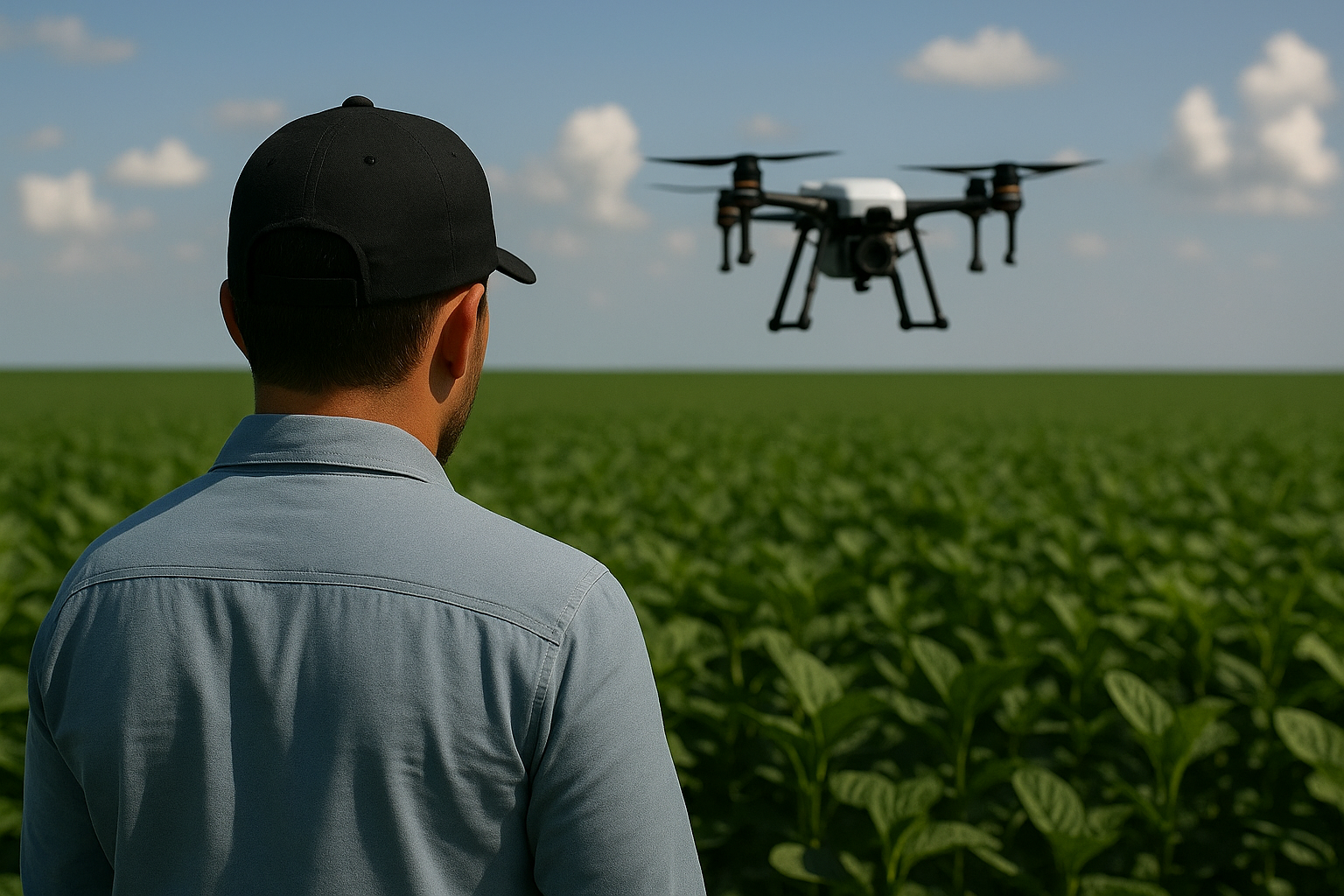

With Advances in Technology in the Field, the Profession of Agricultural Drone Pilot Attracts Youth and Offers Earnings Above the Average in the Sector
The advancement of technology in the field has created space for a new profession in Brazil: agricultural drone pilot. With the increasing use of these devices in agribusiness, the job market has warmed up and begun to offer attractive salaries, higher than the average of other careers in the sector.
According to data from the SARPAS system, which manages access to airspace for drones, Brazil registered over 150,000 pilots and 100,000 drones in 2024. A large part of these numbers is directly linked to agricultural operations, driven by the increase in GDP in the sector and the constant search for efficiency in crops.
Salaries and Commissions Vary According to the Work
The earnings of an agricultural drone pilot vary according to the size of the farm, the type of contract, and the application volume. In general, there is a fixed remuneration, which can range from R$ 3,000 to R$ 8,000 per month.
-
Flower strips in Brazilian farms become pest control strategy, attracting predator insects and reducing the need for chemical pesticides.

-
Yara acquires Texas ammonia plant for $1.3 billion, boosting global fertilizer competition with 1.3 million tons annual capacity

-
At 35, Lawyer Leaves Corporate Career to Turn 1-Hectare Farm into Organic Supplier for Schools in Southern Brazil

-
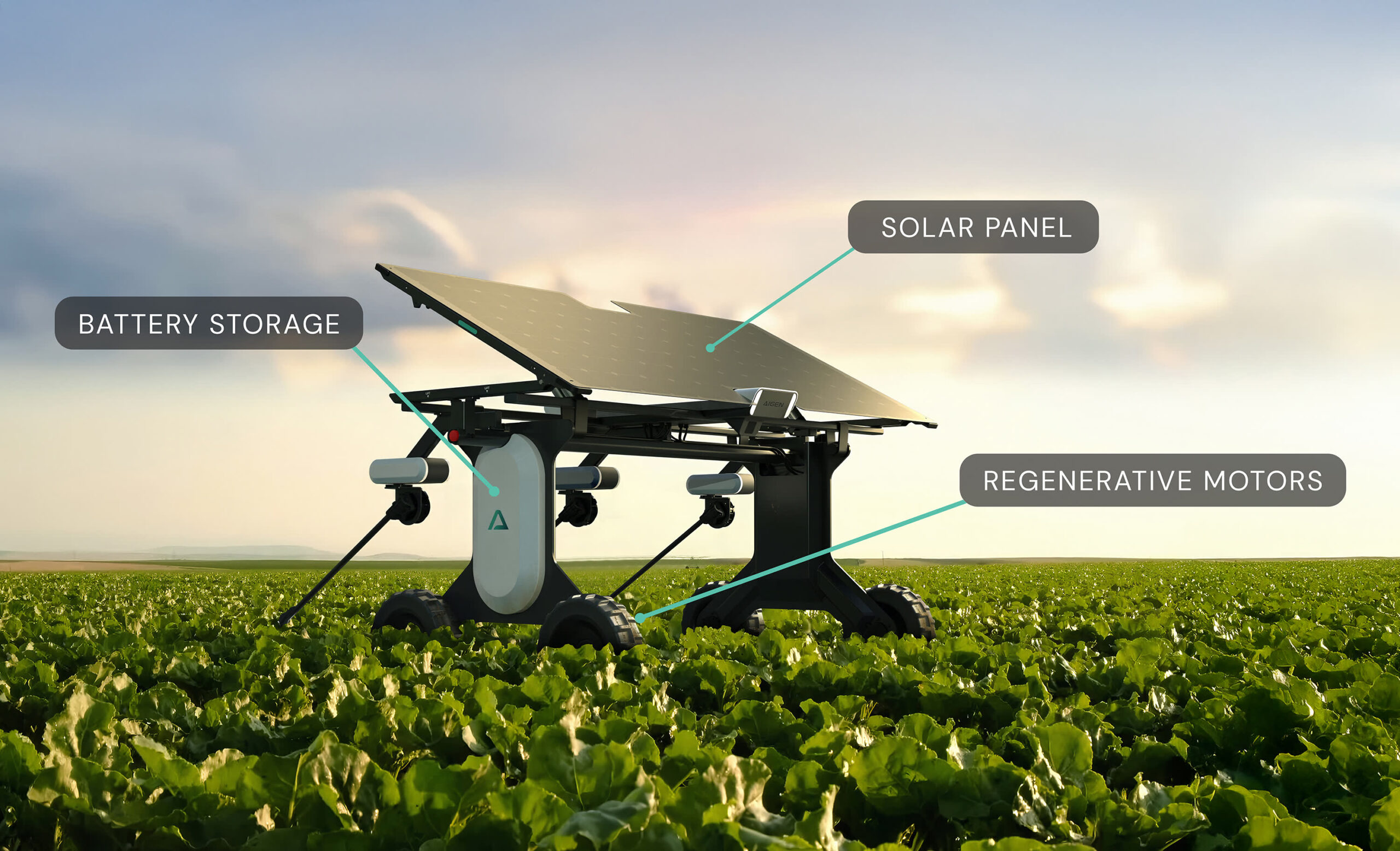
Solar-powered agricultural robots operate 24/7, remove weeds with 8mm precision, and aim to cut herbicide use without fuel consumption in the fields.


In addition, many professionals receive additional commissions of up to R$ 5.00 per hectare sprayed with agricultural pesticides.
Instructor Raí Augusto, who left tire sales to train new pilots, explained to the Istoé Dinheiro portal that some producers prefer to mix fixed payment with a share of the final production.
He cites cases of professionals who apply pesticides in areas of up to 5,000 hectares, which allows for substantial earnings solely from commissions. According to him, “it’s a market that lacks qualified labor, because the demand already exists.”
Training Requires Official Courses and Certifications
To work as an agricultural drone pilot in Brazil, the interested party needs to meet technical and legal requirements. The profession is regulated by both the Ministry of Agriculture (Mapa) and the National Civil Aviation Agency (Anac).
Among the requirements, one must be over 18 years old, be in good physical condition, and have a registration with the Department of Airspace Control (Decea).
It is also necessary to complete the Remote Agricultural Aerial Applicator Course (CAAR), with a minimum of 28 hours of workload, offered in face-to-face, online, or hybrid formats.
Despite the high initial investment in equipment and training, the financial return is usually quick. Cattle rancher Rondal Pereira Guedes, from Nova Bandeirantes (MT), spent over R$ 200,000 on an agricultural drone and training.
Since 2023, he has already applied pesticides on over 2,500 hectares. According to his calculations, he would have spent around R$ 400,000 had he hired service providers.
Sector Attracts Youth and Offers Good Prospects
The use of drones in agriculture brings advantages such as better use of inputs, increased productivity, and reduced losses, making it a viable solution for properties of different sizes.
According to Raí Augusto, there is a growing number of young people entering the field, many of them returning to family properties.
According to him, “it’s a profession that has come to stay. And there is still a shortage of qualified professionals.” With agriculture becoming increasingly digital, the career of agricultural drone pilot solidifies as one of the most promising in the field, combining innovation, good salaries, and a high employability rate.
With information from Compre Rural.