






 Portuguese
  Spanish


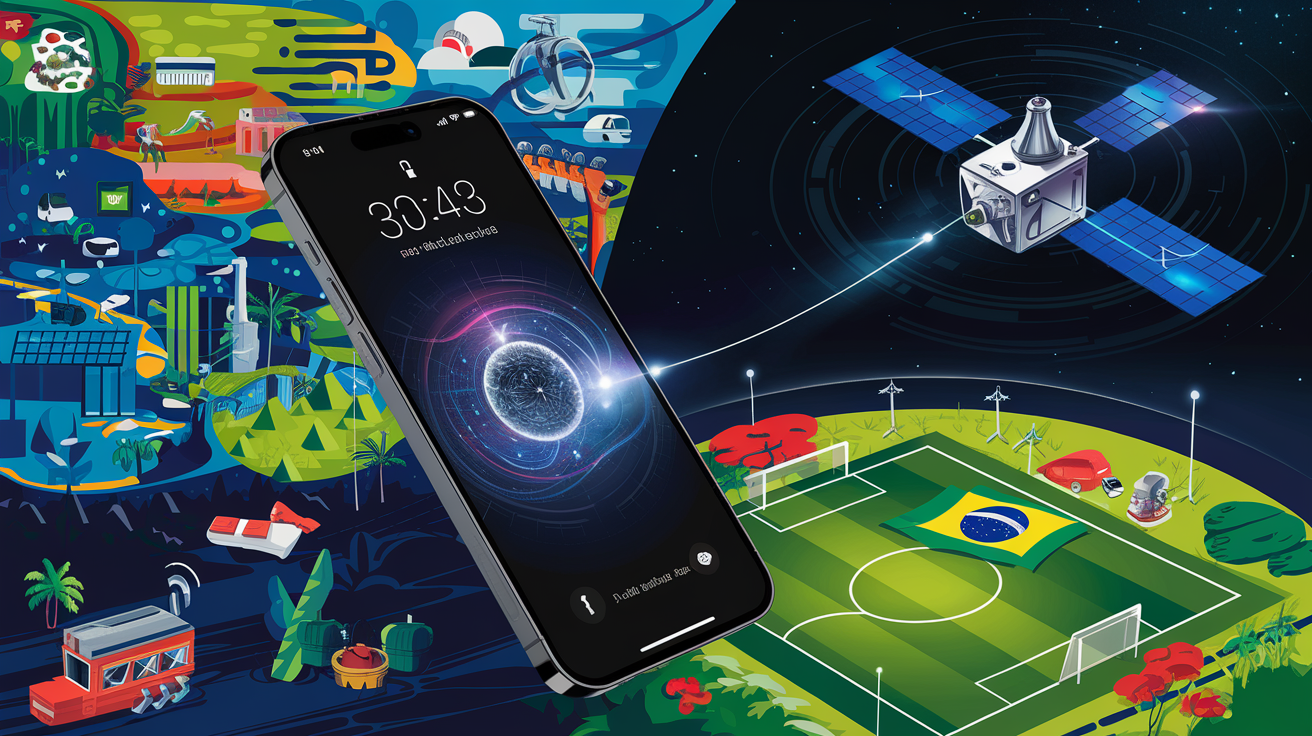


Company Joins Starlink to Bring Satellite Internet to Cell Phones, Revolutionizing Connectivity. But What About Brazil? High Costs and Lack of Partnerships Still Hinder Technology Adoption.
In an increasingly connected world, the search for solutions that bring quality internet to remote areas has been a priority for technology and telecommunications companies.
Recently, a collaboration between industry giants promises to transform the way we connect, especially in places where traditional coverage is limited or nonexistent.
T-Mobile, one of the leading mobile network operators in the United States, has teamed up with Starlink, the satellite internet service from SpaceX, to provide connectivity in areas without cellular network coverage.
-
China Develops Custom 140-Ton Electric Mining Truck with 770 kWh Swappable Battery, Deploys 290 Units in Xinjiang’s Largest Zinc Mine

-
Meta to Launch Arena, a New Prediction App Targeting 3.56 Billion Users, Competing with Polymarket and Kalshi

-
Scientist Challenges Famous Human Evolution Theory, Argues Homo Sapiens Evolved Gradually Over Thousands of Years
-
15-Year-Old American Builds Ocean Generator with PVC Pipe and 3D-Printed Propeller for $12, Wins National Prize, Presents at White House, and Makes Forbes 30 Under 30 List




This initiative aims to eliminate so-called “blind spots” and ensure that users stay connected, regardless of their location.
According to the Financial Times, the collaboration has already resulted in successful tests, including video calls made in previously signal-less regions, demonstrating the revolutionary potential of this technology.
Which Cell Phones Are Compatible?
To take advantage of the satellite connectivity offered by the T-Mobile and Starlink partnership, users need compatible devices.
The list includes recent smartphone models from major market brands:
- Apple: iPhone 14, 14 Plus, 14 Pro, 14 Pro Max; iPhone 15, 15 Plus, 15 Pro, 15 Pro Max; iPhone 16, 16 Plus, 16 Pro, 16 Pro Max.
- Google: All Pixel 9 line.
- Motorola: Razr (2024), Razr Plus (2024), Edge, and G series models like Moto G Power 5G (2024).
- Samsung: Galaxy A14 to A54; Galaxy S21 to S25; Galaxy Z Flip 3 to Z Flip 6; Galaxy Z Fold 3 to Z Fold 6; Galaxy X Cover 6 Pro.
- T-Mobile: REVVL 7 5G and 5G Pro.
Devices must be updated to the latest version of the operating system to ensure proper functioning of satellite connectivity.
In the case of iPhones, for example, they need to be running iOS 18.3 or higher.
Plans and Costs After the Beta Period
During the beta period, which extends until July 2025, T-Mobile is offering free trials of the satellite connectivity service to users from various carriers, including Verizon and AT&T.
After this period, plans will be structured as follows:
- T-Mobile Customers with Go5G Next Plan: Access to the service at no additional cost.
- Other T-Mobile Customers: Monthly fee of US$ 15.
- Users from Other Carriers (Verizon, AT&T, etc.): Monthly fee of US$ 20.
During the beta period, there is a promotional discount, reducing the cost to US$ 10 per month until March 2025.
These prices make satellite connectivity a viable and accessible option for many consumers, especially those in areas with limited or no coverage.
And What About Brazil? Satellite Connectivity Is Still a Challenge
While the United States advances with this innovative partnership, in Brazil, satellite connectivity still faces challenges.
Although Starlink has been available in the country since 2022, its high cost has been a barrier to widespread adoption.
Currently, Starlink’s monthly plan costs about R$ 184, plus the cost of the installation kit, which exceeds R$ 2,000.
Starlink’s coverage in Brazil has primarily focused on rural areas and locations where traditional networks do not reach.
However, there is still no forecast for the implementation of a similar partnership to T-Mobile’s by Brazilian carriers.
Companies like Vivo, Claro, and TIM continue to invest in expanding fiber optics and 5G, but the adoption of satellite technology for cell phones remains uncertain.
In Brazil, some government initiatives, like the Wi-Fi Brasil program, already use satellites to bring internet to schools and isolated communities.
However, the direct connection of smartphones to satellites, as proposed in the U.S., has not yet been implemented on a large scale.
Impact of Satellite Connectivity on the Digital Landscape
The integration of Starlink technology with T-Mobile services represents a significant advance in the expansion of global connectivity.
By allowing ordinary smartphones to connect directly to satellites, this partnership opens new possibilities for users in isolated regions, providing access to high-speed internet for browsing, communication, and even high-definition streaming.
However, experts warn that while promising, satellite connectivity may not match the performance of traditional terrestrial networks, especially in terms of speed and latency.
Additionally, challenges such as physical obstacles and access to suitable radio spectrum may affect service quality.






Ótimo 👍🏻
Olá boa noite!
Vi o valor da internet Elon Musch
$ 15 dólar
O meu aparelho é Moto G 54
Nunca vou comprar nada desse **** **** e drogado….nem que fosse de graça…lixo