






 Portuguese
  Spanish


Venezuela Blocked Its Border With Brazil in Pacaraima (RR) Shortly After Nicolás Maduro’s Inauguration. Authorities Confirmed That Vehicles Are Prohibited From Passing, but Pedestrians Maintain Normal Circulation. The Measure Reignites Diplomatic Tensions and Concerns Local Residents Who Depend on the Border for Trade and Transportation.
This Friday (10), the border between Brazil and Venezuela became the stage for a new chapter in the troubled relationship between the two countries.
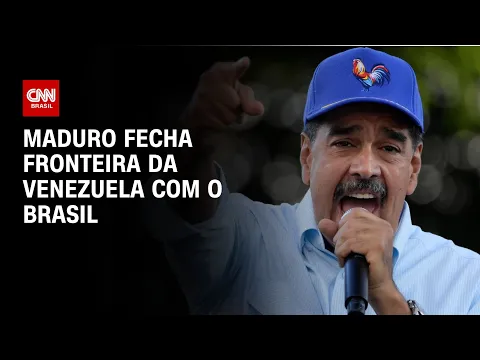
Under orders from Venezuelan President Nicolás Maduro, access for vehicles was completely blocked on the Venezuelan side of the border with Pacaraima, in Roraima.
Although the closure is not new in the recent history of the region, the timing and possible implications raise questions about Maduro’s internal and external politics.
-
Former Atacadão Employee Turns Online Cake-Baking Lessons into a Confectionery Brand with Factory, Store, Delivery, and Nearly $400,000 in Revenue

-
Brazilian Startup Sells Nearly 9 Million Surprise Bags of Near-Expiry Food, Prevents Thousands of Tons of Waste, Aiming for $42 Million Revenue by 2026
-
How to Prevent Brown Recluse Spider Bites: Common Hiding Spots and Free Tips to Reduce Risks

-
Natto: The Unusual Japanese Superfood Gaining Popularity on Social Media and Driving Record Exports




The Border Closure: A Repeated Pattern
According to CNN Brasil, Brazilian authorities reported that the blockade began a few hours after Nicolás Maduro’s presidential inauguration.
This decision is not unprecedented; on previous occasions, the Venezuelan government has implemented temporary restrictions at its border with Brazil, especially during delicate political periods.
The Military Police of Roraima (PMRR) confirmed that, despite the closure for vehicles, pedestrian passage remains allowed, although the flow is visibly reduced.
In an official statement, PMRR stated that movements on the Brazilian side remain normal, with no significant recorded events so far.
“Historically, Venezuela imposes restrictions at the border during similar situations,” emphasized the corporation.
Reasons and Possible Implications
Maduro’s strategy reflects a political pattern used to demonstrate control and sovereignty in critical moments.
The blockade may be interpreted as an attempt to reduce migratory flow, as Venezuela continues to face a severe economic and social crisis.
Thousands of Venezuelans have crossed the border into Brazil in search of better living conditions, making Pacaraima a crucial point for humanitarian flows in the region.
Furthermore, the closure raises concerns about the impacts on local trade.
The border between Pacaraima and Santa Elena de Uairén, on the Venezuelan side, is a strategic route for transporting goods and the movement of cross-border workers.
With the blockade, businesses and local residents may face logistical difficulties and economic losses.
The Position of the Brazilian Government
So far, the Brazilian Ministry of Foreign Affairs has not released an official stance on the blockade.
However, experts suggest that the measure may further complicate diplomatic relations between the two countries.
Brazil, which has been dealing with the challenge of welcoming Venezuelan refugees for years, may see the humanitarian situation at the border worsen if the blockade is prolonged.

Life in Pacaraima: Changes and Challenges
The routine in the border town of Pacaraima already reflects the effects of the Venezuelan decision.
With the reduction in vehicle traffic, merchants who depend on the transport of goods report uncertainties about the coming days.
On the other hand, residents point out that the flow of pedestrians, although allowed, is insufficient to keep the local economy active.
“Even when the border is open, the situation is already difficult for those who live here,” explained a local merchant.
According to him, any interruption in the flow of goods directly harms the small businesses in the area.
Humanitarian and Migratory Impact
One of the most significant effects of the border closure is the impact on the migration crisis.
In recent years, Pacaraima has become one of the main entry points for Venezuelans fleeing the crisis in their country.
It is estimated that thousands of people cross the border every month seeking refuge in Brazil.
“Maduro’s decision further complicates the lives of those already facing inhumane conditions to leave Venezuela,” commented a human rights expert.
He warns that the blockade could lead to increased tensions in the region, as well as hinder migrants’ access to essential services.
History of Tensions at the Border
The border between Brazil and Venezuela has been, in recent years, a point of political and social tensions.
In 2019, for example, a similar episode occurred when the Venezuelan government blocked access to international humanitarian aid that was arriving via the Brazilian border.
At that time, the incident generated a diplomatic crisis and drew attention to the difficulties faced by refugees and local residents.
The Future of the Border: Questions and Expectations
With the blockade still in place, questions arise about how long this measure will be maintained and what its consequences will be.
Experts suggest that, depending on the duration of the closure, the consequences could be felt in both economic and social terms.
Does Nicolás Maduro’s decision reflect only a temporary control measure, or does it indicate a broader strategy of isolation? The humanitarian and economic impacts will still be evaluated in the coming days.






