






 Portuguese
  Spanish


Scientists found goethite, hematite, and magnetite inside the Brazilian stone, expanding clues about water circulation in the deep mantle
For those observing a diamond, the sparkle is usually the most important detail. However, inside a stone found in Juína, Mato Grosso, scientists discovered something even more valuable for science.
The diamond preserved a hydrated mineral capable of transporting water into the Earth’s interior. Moreover, the discovery helps explain how this substance circulates hundreds of kilometers below the surface.
The study was published on May 11, 2026 in the journal Scientific Reports, part of the Nature group. The research was conducted by scientists from the National Center for Research in Energy and Materials, CNPEM, and partner institutions.
-
Smart Connectivity Transforms Daily Life: High-Speed Internet, 5G Mobility, and Seamless Service Control

-
World’s First Fully Robot-Operated Hotel to Begin Trials with Real Guests in 2026, Full Opening in China Set for 2027

-
Estonia Constructs Bunkers and Trenches on Russian Border to Strengthen NATO Defense and Signal Baltic Readiness

-
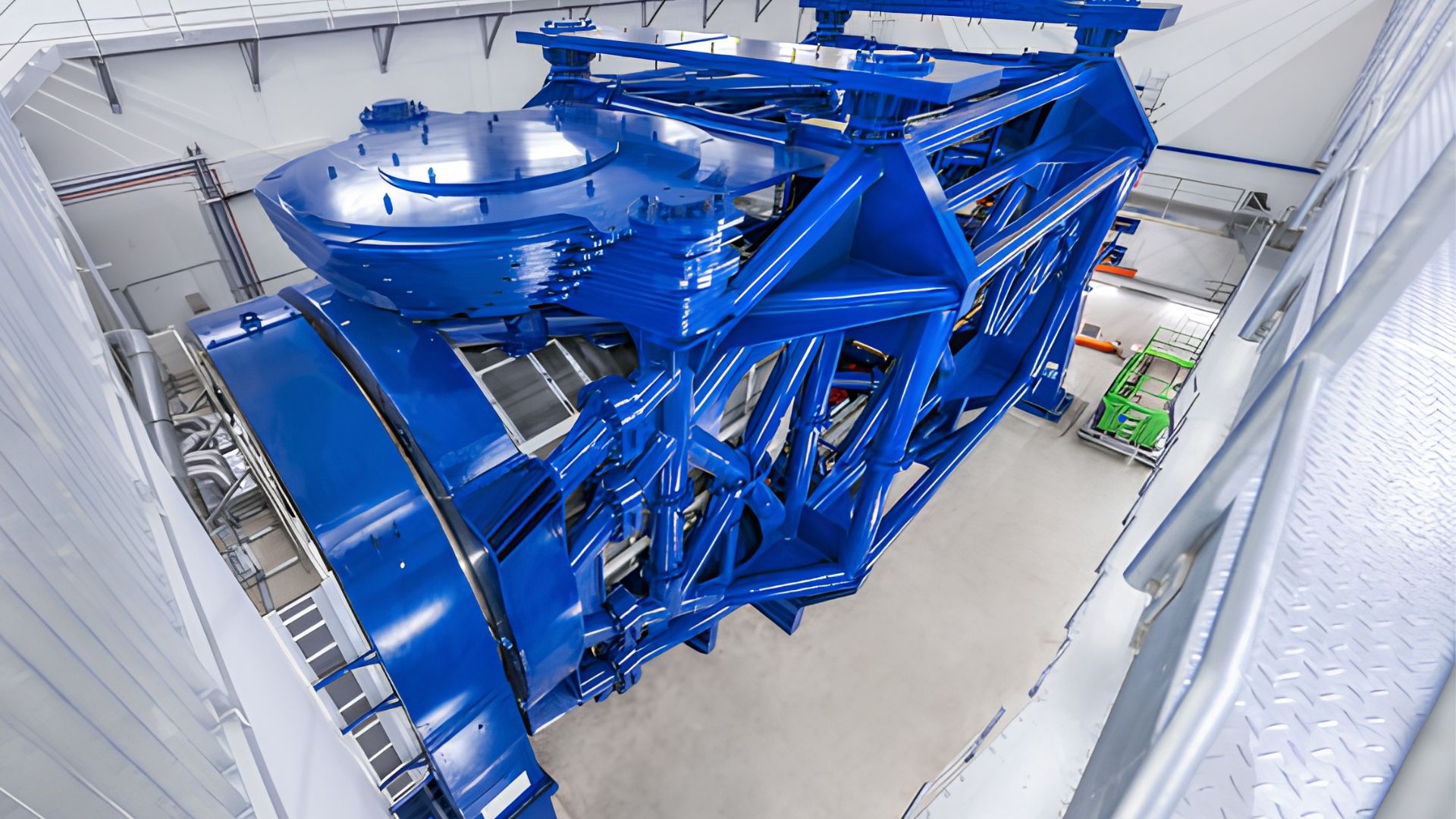
Heidelberg’s 670-ton, 25-meter medical machine rotates 360 degrees to target hard-to-reach tumors with ion beams without surgery.


The diamond formed in the depths of the Earth
The stone belongs to the group of so-called superdeep diamonds, formed under extreme pressures and temperatures.
In this case, these diamonds can form up to 800 kilometers deep. Additionally, they are found in few places on the planet.
Among these regions, Juína is the main area of occurrence known to researchers.
Although they are diamonds, these stones have little commercial value as gems. Therefore, they are generally used in cutting tools, sandpapers, and surgical or precision materials.
Initially, the samples were donated by prospectors in the region. Later, new specimens were acquired with funding from the Serrapilheira Institute.

The mineral that can carry water to the mantle
The discovery was hidden inside the stone.
During the analyses, the researchers identified an inclusion of iron oxyhydroxide, formed by the combination of goethite, hematite, and magnetite.
Consequently, this mixture creates a hydrated material. Thus, the compound can function as a vehicle to transport water from the surface to extremely deep regions.
The discovery is noteworthy because mantle temperatures can exceed 2,000°C.
Under these conditions, hydrated minerals generally become unstable. Nevertheless, the inclusion retained hydroxyls incorporated into its crystalline structure.

Sirius revealed what was preserved in the diamond
To analyze the material, the scientists used the Sirius synchrotron light, a fourth-generation particle accelerator installed at CNPEM.
Additionally, the research lines Mogno, Ema, and Carnaúba were used.
With this structure, the mineral composition was observed in ultra-high resolution. Therefore, the researchers confirmed that the inclusion was completely isolated within the diamond.
According to Fernanda Gervasoni, a researcher at the Federal University of Pelotas and a CNPEM collaborator, the material did not come from surface contamination.
In fact, the inclusion had no contact with fractures or the external environment.
Deep water does not mean underground ocean
Probably, the mineral originated in subduction zones, where tectonic plates dive into the Earth’s interior.
During this process, the material faced extreme pressures and temperatures. Consequently, it would have released water and oxygen into the deep mantle.
However, this does not mean there are underground oceans.
In this environment, water appears as hydroxyls incorporated into minerals. Even so, it can alter rock melting, magma formation, and deep earthquakes.
The discovery that expands the water cycle
The finding shows that the water cycle involves not only oceans, rivers, and atmosphere.
In practice, it also reaches deep regions of the planet. Moreover, the observed transformation indicates that the mineral probably had already released water inside the Earth.
The study brought together researchers from CNPEM, the University of Brasília, the Federal University of Pelotas, and the Federal University of Rio Grande do Sul.
Finally, the research received funding from Fapesp, responsible for supporting Fernanda Gervasoni’s postdoctoral work.
Thus, a small material preserved inside a Brazilian diamond opened a new window into the planet’s interior. After all, the stone can help explain how water and oxygen alter the dynamics of the Earth’s mantle.
And you, did you imagine that a diamond found in Brazil could hold clues about the circulation of water in the Earth’s deepest regions? Tell us in the comments.


