






 Portuguese
  Spanish


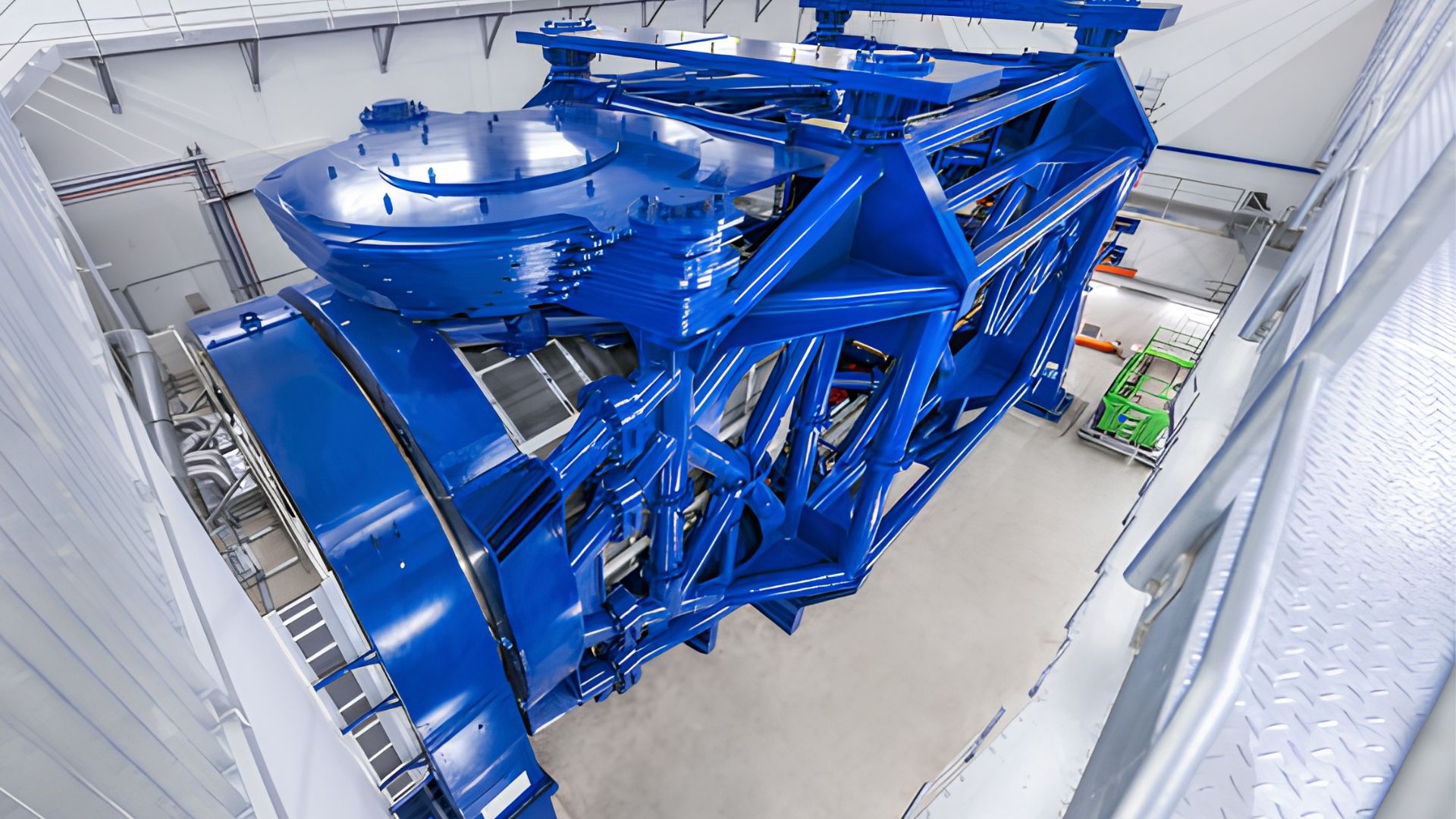

Heidelberg machine with 670 tons uses protons and ions to treat tumors with millimeter precision in one of the most impressive medical structures in the world.
Few people imagine that one of the most impressive structures of modern medicine weighs 670 tons, measures 25 meters in length, and occupies three floors within a hospital. At the Heidelberg Ion Beam Therapy Center in Germany, this machine was created to rotate around the patient and direct particle beams with extreme precision against complex tumors.
This is the gantry of the Heidelberg Ion Beam Therapy Center, the HIT, a clinical facility developed for ion beam therapy. The structure has become a landmark for combining dimensions typical of heavy industry with a highly delicate function: irradiating the tumor from as many angles as possible, preserving the surrounding healthy tissue to the maximum extent.
Heidelberg machine has 670 tons, 25 meters, and complete rotation around the patient
The official documentation of HIT states that the gantry is a steel construction with 25 meters in length, 13 meters in diameter, and 670 tons. The center itself describes the equipment as the world’s first heavy ion therapy facility with a 360-degree rotating system for beam delivery.
-
3-Billion-Year-Old Crater May Be Earth’s Oldest Known, with Tiny Minerals Helping Scientists Solve a Billion-Year Mystery

-
Giant Asteroid Impact Crater in Australia Suggests Possible “Gold Rain” 790,000 Years Ago

-
Construction Begins on First U.S. Modular Nuclear Reactor, Smaller Than a Sports Court
-
Dutch Innovator Develops Dual Battery and Electrolyzer Machine for Solar and Wind Energy Storage, Raises €30 Million Following 1 MW Pilot


This complete rotation changes the treatment because it allows the tumor to be targeted from virtually any direction. In cases located near sensitive structures, such as nerves, intestine, vessels, or critical areas of the brain, this geometric gain can make a difference in dose distribution and healthy tissue protection.
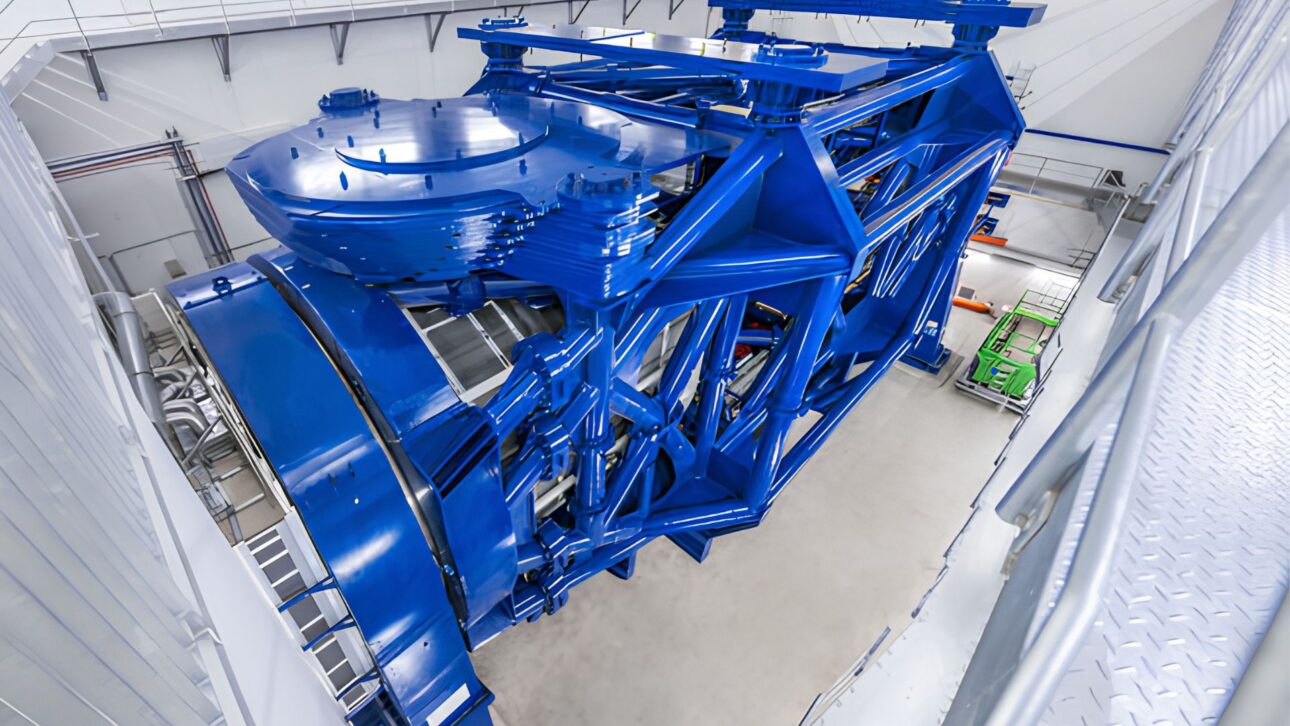
The official hospital material also highlights that the structure was designed to work with extreme mechanical stability.
In the rotating system, the beam needs to maintain very high precision even with the equipment in motion, which helps explain why the machine is regarded as one of the most sophisticated medical applications ever built with technology derived from accelerator physics.
Proton and carbon ion beams treat tumors with precision up to 1 millimeter
Instead of conventional photon-based radiotherapy, HIT uses protons and heavy ions to concentrate energy directly on the tumor.
The center reports that, in Heidelberg, therapy can be performed with protons and ions such as carbon and helium, while the project’s historical technical documentation also mentions the use of heavy ions like oxygen in its clinical and research program.


According to the hospital, these beams can be directed with the highest precision thanks to the raster scanning method, a controlled scanning technique that distributes the dose within the tumor volume in an extremely refined manner. This allows most of the energy to be deposited on the target, reducing unnecessary irradiation in neighboring areas.
The official HIT documentation also states that the particles can reach more than 75% of the speed of light, penetrate up to 30 centimeters into the tissue, and maintain a maximum deviation of only 1 millimeter from the planned target. It is this combination of speed, range, and precision that has made the system a global reference for complex cases.
World’s first heavy ion gantry expanded possible treatment angles
HIT reports that it began operating the first clinical system of heavy ions with a 360-degree rotating gantry in October 2012.
Before that, the center’s own documentation explains that treatments with heavy particles relied mainly on fixed beams, which limited the possibilities of radiation entry into the body.
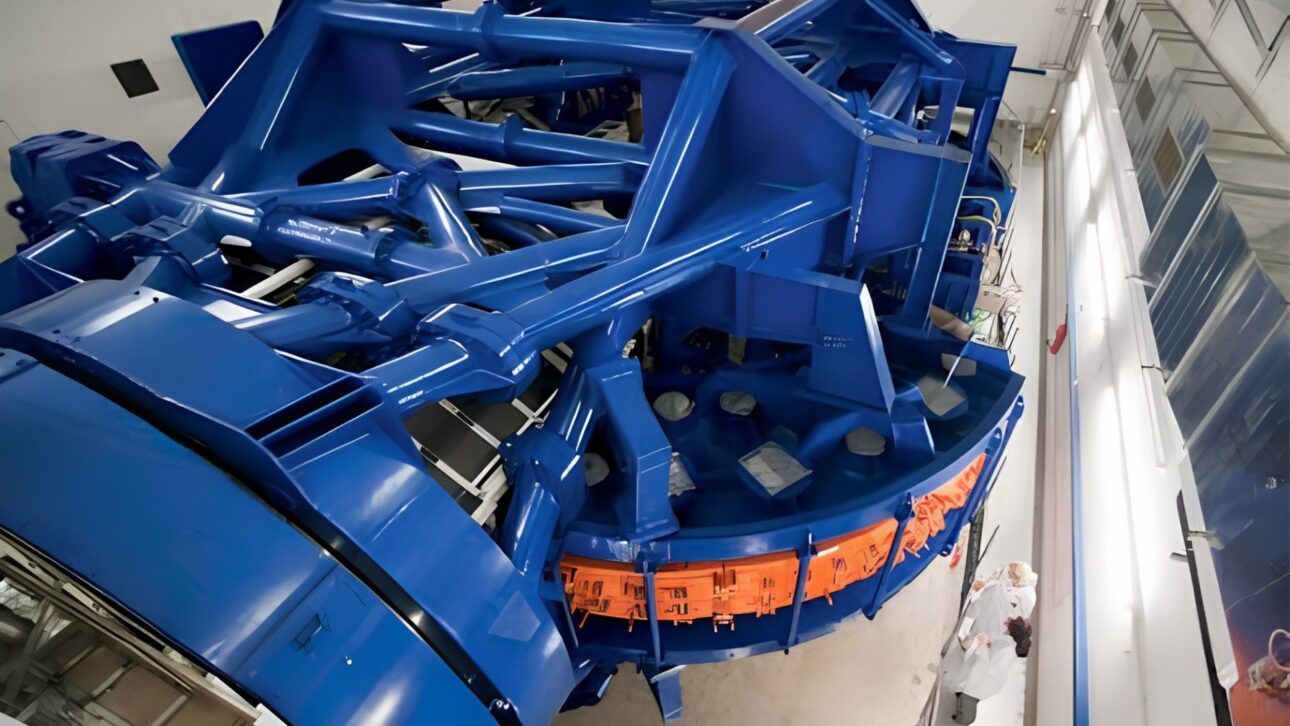
Heidelberg University
With the gantry, the hospital started to combine the beam rotation with the fine adjustment of the treatment table. In practice, this greatly expands the number of therapeutic angles available and improves the adaptation of the irradiation plan to tumors located in regions of difficult anatomy.
This advancement helped to establish Heidelberg as one of the most emblematic centers for particle therapy. What makes the machine so unique is not just its size, but the fact that all this volume of steel exists to enable an extremely precise objective: to deliver a high dose where the tumor is and spare what should not be affected.
Heidelberg Oncology Center combines robotics, 3D imaging, and accelerator physics
The HIT is not limited to the gantry. The hospital’s official materials state that the facility was a pioneer in using cooperative robots for automated patient positioning, as well as three-dimensional imaging systems and ultra-fine adjustment resources before irradiation.
The structure of the center also impresses as a whole. The complex occupies an area close to half a football field, distributes part of its operation across three levels, and integrates treatment rooms, research areas, and the heavy infrastructure typical of a medical particle accelerator.
This combination helps to show that cutting-edge oncology treatment no longer depends solely on compact equipment. In Heidelberg, medicine, engineering, automation, and particle physics operate together on a scale that few people would associate with a hospital environment.
Medical giant shows that some of the world’s largest machines are inside hospitals
When talking about colossal machines, the imagination usually goes to giant excavators, cargo ships, or underground accelerators.
The case of Heidelberg draws attention precisely by reversing this logic: there, hundreds of tons of steel were not designed to move cargo or excavate rocks, but to improve the precision of cancer treatment.

The most impressive aspect of the HIT gantry might be in this contradiction. It is a monumental machine, but dedicated to a task almost invisible to the naked eye: aligning particle beams with millimetric precision against tumors that challenge conventional radiotherapy.
Instead of launching rockets or drilling mountains, it slowly rotates around one person at a time. And in this rotation, it concentrates one of the most ambitious ideas of contemporary medicine: using extreme technology to destroy the tumor and preserve as much as possible of what is healthy around it.


