Portuguese
  Spanish


Estonia reinforces the eastern border with bunkers, trenches, and anti-tank barriers in a project that integrates the Baltic Defense Line and expands military preparedness amid tensions with Russia.
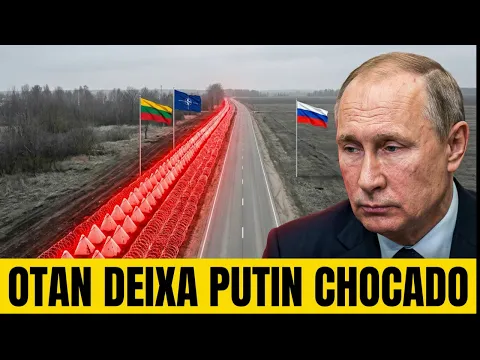
Estonia has advanced in setting up a defense line on its border with Russia, with trenches, bunkers, and anti-tank obstacles known as “dragon’s teeth.”
The structures are part of a military plan to hinder or delay a potential Russian offensive against Estonian territory, amid the strengthening of defenses on NATO’s eastern flank.
The fortifications have been installed in forest areas and fields near the border.
-
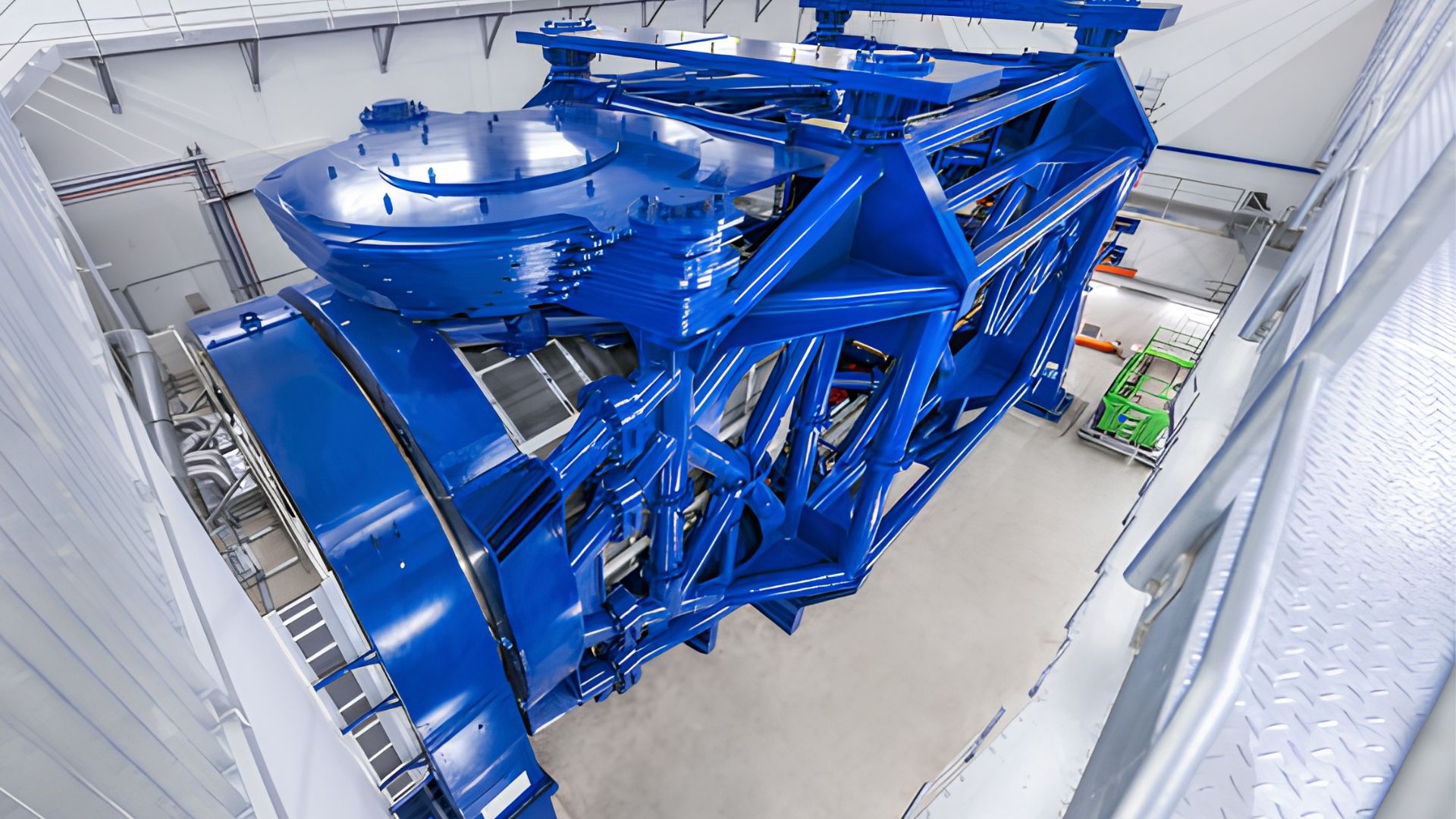
Heidelberg’s 670-ton, 25-meter medical machine rotates 360 degrees to target hard-to-reach tumors with ion beams without surgery.

-
3-Billion-Year-Old Crater May Be Earth’s Oldest Known, with Tiny Minerals Helping Scientists Solve a Billion-Year Mystery

-
Giant Asteroid Impact Crater in Australia Suggests Possible “Gold Rain” 790,000 Years Ago

-
Construction Begins on First U.S. Modular Nuclear Reactor, Smaller Than a Sports Court


Images captured by Reuters show bunkers protected by logs and sandbags, as well as trenches and concrete barriers used to form defensive ground positions.
One of the agency’s records shows an Estonian soldier near the entrance of a Baltic Defense Line bunker, near Kiislova, Estonia, on June 26, 2026.
Lieutenant Colonel Ainar Afanasjev, of the Estonian Defense Forces, stated that the most time-consuming stage of preparation has already been completed.
“If you do not prepare for war, you cannot maintain peace,” said the military officer, according to Reuters.
The statement was made in the context of the presentation of the fortifications, which are part of the defense strategy adopted by the Baltic country.
Afanasjev also said that, so far, Estonia maintains a fortified company-level post in the northeast and another in the southeast of the country.
According to the military officer, these positions were created to show the population what is being done and why, while still following the plan set by the Defense Forces.
Bunkers and dragon’s teeth in Estonia’s defense
“Dragon’s teeth” are concrete blocks used as obstacles against armored vehicles.
In the Estonian project, this type of barrier appears alongside trenches, bunkers, barbed wire, anti-tank ditches, and other blockades planned for use in case of a military threat.
According to the Estonian Defense Investment Center, fortification materials can be stored in peacetime and moved to points defined by the Defense Forces if necessary.
The composition of the so-called strong points includes concrete bunkers, pyramidal anti-tank obstacles, barbed wire, and construction equipment.
The official plan provides for up to 600 bunkers for units of the Defense Forces and the Estonian Defense League.
The goal announced by Estonian authorities is to install these structures by the end of 2027, as part of the Baltic Defense Line.
The initiative also includes anti-tank ditches.
According to the Estonian public broadcaster ERR, the country plans to build 40 kilometers of this type of structure on its eastern border by 2027.
The publication also reported that five bunkers were under construction on the southeastern border and that another 23 would be installed at a later stage.
Baltic Defense Line unites Estonia, Latvia, and Lithuania
Estonia’s line of fortifications is part of the so-called Baltic Defense Line, a joint initiative of Estonia, Latvia, and Lithuania.
The agreement was announced on January 19, 2024, by the defense ministers of the three countries, all members of NATO and the European Union.
The project was created to enhance the defensive capability of the Baltic countries in areas close to the borders with Russia and Belarus.
In the Estonian case, the infrastructure combines prepared positions, storage areas, and obstacles that can be positioned according to military planning.
Estonian authorities state that roads, forests, and fields should continue to be used normally in peacetime.
Meanwhile, the defensive elements are distributed according to military criteria, environmental conditions, and negotiations with landowners.
This organization seeks to prevent the entire infrastructure from being permanently set up in locations where it could interfere with residents’ routines or property use.
At the same time, the Estonian government states that the materials need to be available for quick use in case of a worsening security situation.

Estonia and NATO’s eastern flank
Estonia borders Russia and is among the European countries advocating for greater attention to NATO’s eastern flank since the Russian invasion of Ukraine, which began in February 2022.
The advancement of the Baltic Defense Line occurs in a scenario of increased military investments and a review of the alliance’s defensive plans.
The concern also appears in statements from other governments in the region.
On June 25, 2026, during a press conference in Gdansk, Poland, the Polish Prime Minister, Donald Tusk, stated that the security situation on NATO’s eastern flank was “very unstable” and that the risks of escalation could increase “in the coming weeks and months”.
Tusk said that the most exposed countries share borders with Russia, Belarus, and Ukraine.
At the same event, the Prime Minister of Estonia, Kristen Michal, advocated for broader support for the eastern flank, with resources linked to the European defense industry and European Union border funds.
NATO has also been reviewing its military presence in the region.
In May 2026, Germany and the Netherlands announced that the German-Dutch Corps would assume command over allied forces in Estonia and Latvia in the event of a conflict with Russia.
According to the governments of the two countries, the measure is part of the alliance’s defensive plans.
Border fortifications and communication with the population
The construction of bunkers and the acquisition of anti-tank obstacles were presented by Estonian authorities as part of national defense planning.
At the same time, the positions installed in specific areas are also used to explain to the population how the infrastructure will be employed.
According to Afanasjev, the fortified posts in the northeast and southeast were set up to demonstrate the strategy’s functioning and clarify the reason for the works.
The military’s statement indicates that Estonia seeks to combine operational preparation with public communication about the measures adopted at the border.
The choice of locations depends on the Defense Forces’ planning and the terrain’s characteristics.
According to ERR, Afanasjev stated that the position of the bunkers needs to be aligned with the military units and the specific conditions of each area.
The Estonian Defense Investment Center reports that since the end of 2024, the country has purchased wire, “dragon’s teeth” type obstacles, concrete blocks, and barriers compatible with roadblocks.
The official schedule indicates that the selection of locations and contract preparation advanced throughout 2025, while new installation phases were planned for 2026 and 2027.
The objective of the barriers is to delay military advance
Estonian authorities describe the fortifications as instruments to delay and hinder a potential offensive.
In conflict scenarios, anti-tank obstacles, ditches, and fortified points can reduce the speed of armored columns and create conditions for organizing defense.
This assessment appears in the project’s own formulation.
The objective stated by Estonia is to prevent or delay the advance of adversary forces from the initial areas of contact with the border.
To achieve this, the country seeks to combine physical barriers with prepared positions for military units.
In the Estonian case, gaining time is one of the declared goals of the defensive structure.
As a member of NATO, Estonia is part of the alliance’s collective defense system, but its geographical position leads the government to maintain infrastructure prepared before a potential crisis.
The installation of bunkers occurs while European countries discuss increasing military spending, defense industrial capacity, and support for Ukraine.
Governments in Eastern Europe have advocated that the preparation of borders, stockpiles, and protective structures be treated as a central part of regional security.
At the border with Russia, Estonia attempts to transform military planning into response capability.