






 Portuguese
  Spanish


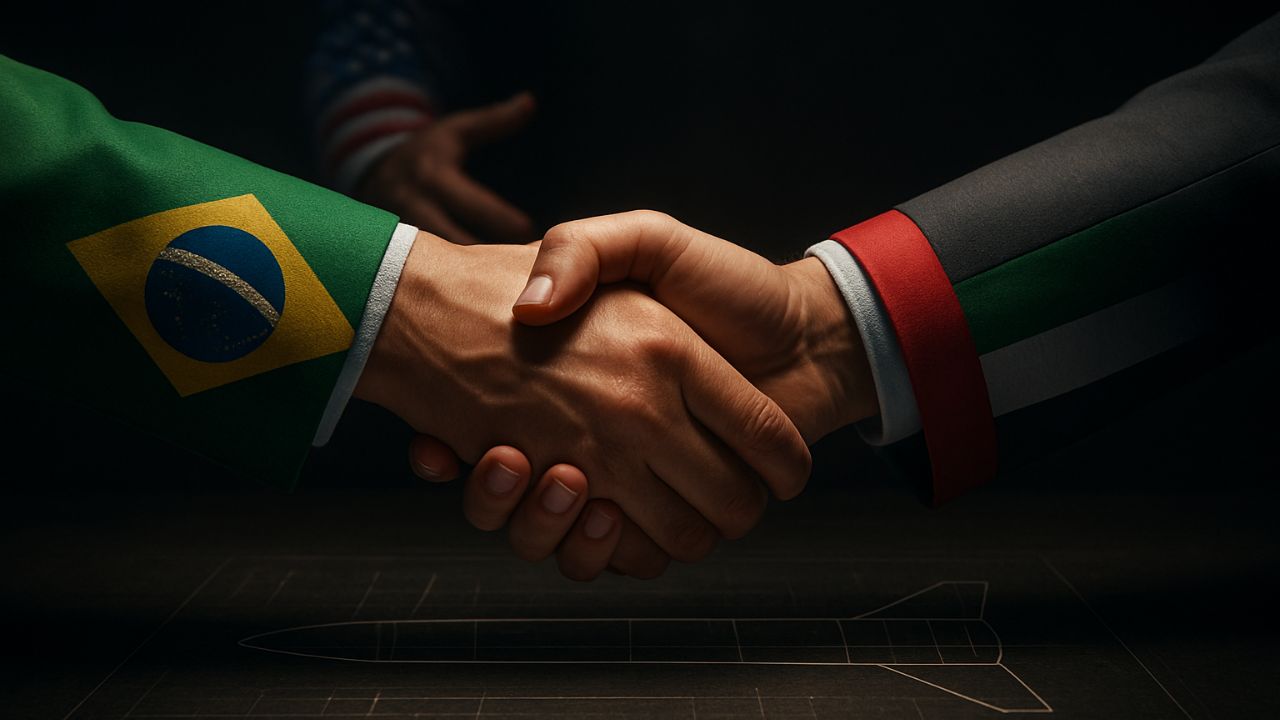


Amid Tensions With Washington, Brazilian Government Boosts Ties With Edge Conglomerate, Which Has Already Invested BRL 3 Billion and Sees the Country as a Strategic Hub in Latin America.
In light of the tensions in diplomatic relations with the United States, Brazil has sought to diversify its trade partners in the defense industry. In this scenario, the United Arab Emirates emerges as the favorite candidate to enhance cooperation. The strategy does not aim for a complete replacement of American products, but rather to reduce dependence and broaden the range of strategic suppliers.
A Strategic Diversification for National Defense
Brazilian authorities and military officials consider it impossible to completely replace the U.S. defense industry. However, the pursuit of new alliances is seen as fundamental. The goal is clear: to decrease dependence on a single supplier and strengthen national sovereignty. Closer ties with the United Arab Emirates represent a concrete step in that direction, facilitated by relationships that have already been solidifying.
The Market Opportunity in the View of the United Arab Emirates
The distancing between Brazil and the United States is seen as a business opportunity. Hamad Al Marar, CEO of the Edge Group, one of the largest defense conglomerates in the world, confirmed this perception. “100% (it can be an opportunity). Relations go up and down,” he stated. He emphasized that when there are tariffs or barriers, his company can position itself more competitively by offering “the right proposal, the appropriate delivery schedule, and a fair price.”
-
Brazil’s 2026 Tax Refund: Record 9.58 Million Filers in Largest Payout Ever, But a Key Detail on Priority Recipients Draws Nationwide Attention

-
Itaú Alters Hybrid Work Model, Increasing Office Days from 2028, Prompting Employees to Adjust to New Routine
-
Facing Labor Shortage, Japan Plans to Invest $34 Million to Attract Foreign Workers in Construction, Healthcare, Industry, and Commerce

-
Brazilian City Makes Remarkable Leap, Becomes 4th Wealthiest in the Country with GDP of R$ 134.1 Billion




Billion-Dollar Investments That Overcome National Challenges
The business environment in the Brazilian defense sector is considered complex. Military officials point to a budget below what is necessary and low predictability of resources. However, such factors do not seem to be a problem for the United Arab Emirates. The Edge Group, for example, does not see the budgetary issue as a barrier, focusing its strategy on investing in national projects that already have a certain degree of development.
Consolidated Partnerships and the Advancement of the Edge Group in Brazil
In less than three years, the Edge Group, headquartered in Abu Dhabi, has already invested about BRL 3 billion in Brazil. The company purchased 51% of Condor Non-Lethal Technologies and 50% of SIATT, specializing in smart weapons. Additionally, it has established a crucial partnership with the Brazilian Navy for the development and production of the National Anti-Ship Missile (MANSUP), with commercial exploration rights and royalty payments to the Navy.
Brazil as a Platform for Expansion in Latin America
The CEO of the Edge Group reinforced Brazil’s strategic role in the region. The company sees the country as a potential “showcase” of success for expanding its business throughout South America. Hamad Al Marar praised the Brazilian workforce, especially engineers, who are considered highly skilled. He concluded that partnerships will not be limited to the military budget, encompassing projects in cybersecurity, national security, and even the space sector, showcasing the vast interest of the United Arab Emirates in the Brazilian market.









Trocando seis por meia dúzia já que os Árabes são apaixonados pelos EUA, e são ” marionetes”. Apesar de terem tanto poder , não sabem agir por conta própria sem depender dos EUA como sempre. Caso os EUA queira algo ou forçar alguma coisa, eles o farão através dessas empresas Árabes que tem como sócios justamente os estadunidenses.
Tio San,virou vovo
O Brasil está no caminho certo, tem de entender que o maior inimigo são os EUA, que não querem deixar o Brasil se tornar uma potência. Os BRICs é o melhor caminho que o Brasil tem para percorrer, é a essência do Brasil, somos diferentes de americanos e europeus, não nascemos para estar no Grupo do bolinha conspirando contra o resto do mundo. O Brasil nasceu para fazer negócios com todos, absorver várias culturas, ter um Mac Donald’s, assim como produtos chineses, russos, e de toda parte do mundo. – os EUA não encantam mais o Brasil, os super heróis envelheceram, perderam o brilho, a música americana não é mais a mesma, os carros não são mais os mesmos, as casas sem cerca deixaram de ser cobiça brasileira, temos tudo de igual ou mais interessante. Portanto para não sofrer ameaças americanas tem de investir em armamentos de destruição em massa, assim como fazem os EUA. **** que dá em Chico também dá em Francisco. Bora Brasil, o Lula é o Cara!
Os heróis americanos estão muito mais alinhados com o ” capitão Patria” nos tempos do “tio Trump”, que trocou a tradicional cartola com listas e estrelas por uma de cor laranja…
Linda sua fala
Só q ****.
Ampliar essas alianças
só causa maior dependência
Fragmentada pelos lobos a procura da caça.
Com desejos de potencializar os interesses próprio.
Não entendi, somos diferentes? Tomamos o Brasil dos índios, somos colonizadores, em sua maioria europeu. Está de mau com sua origem?