Portuguese
  Spanish




Hidden Military System in Commercial Truck Reveals Mobility and Camouflage Strategy Adopted by Taiwan to Preserve Strike Capability with Hellfire Missiles Even in High Air Defense Scenarios and Growing Military Pressure in the Taiwan Strait.
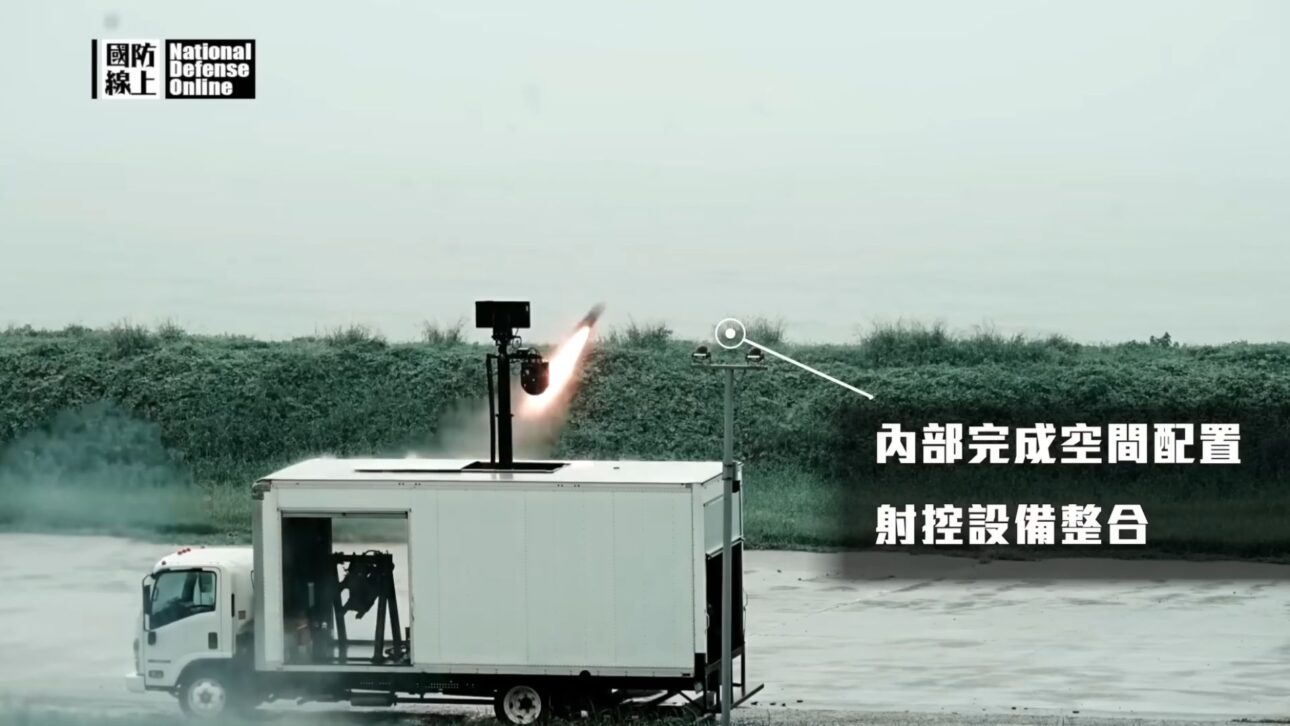
Taiwan revealed a system that hides AGM-114 Hellfire missiles inside a civilian-looking truck, in an attempt to enhance mobility and reduce visual exposure of a strike capability already present in the island’s arsenal.
The project was showcased in a video by the Military News Agency, the official body linked to the Ministry of National Defense, and has been regarded as another step in the Taiwanese strategy to make its combat means harder to locate, target, and neutralize.
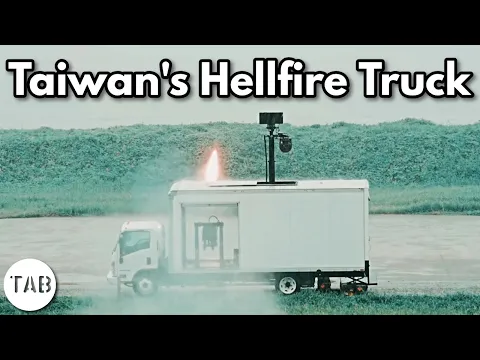
The vehicle maintains the profile of a common logistics truck with a closed cargo area, without the typical silhouette of a military launcher.
-
Seven-Year-Old Nicknamed Hulk Wins Gold in Brazilian Jiu-Jitsu After Defeating South American Competitors

-
Once Burdened by $90,000 in Debt and a Divorce, Now Leads a Beauty Group Targeting $150 Million by 2026
-
Ice Cream Shop Grows from 39 Square Meters to $19 Million Revenue with Popsicles Sold at 20 Cents in Brazil
-
Rural Worker Spotted “Flying” on a Drone in Brazil




Inside, however, it houses a dual structure for firing Hellfire, with a side opening for launch and a system that directs exhaust to the opposite side, preserving the concealment logic and allowing for quick deployment in an improvised position.
Missile Launcher Hidden Inside Truck
The images also show a retractable mast emerging from the ceiling of the cargo compartment that carries sensors on top.
The analysis of the material indicates the presence of a small radar and an electro-optical tower, a combination that enhances observation, target acquisition, and engagement capabilities without requiring a higher visual signature platform or prolonged preparation before firing.
The system didn’t only remain a visual presentation.
According to Taiwan News, based on the official video and information from CNA, the launcher achieved direct hit against a naval target during a live-fire test.
The same report indicates that engineers adapted land use components for launching and fire control previously associated with helicopters, transferring to a wheeled vehicle a function originally designed for attack aviation.
Adaptation of Hellfire Missile for Land Use
This point helps to underscore the change.
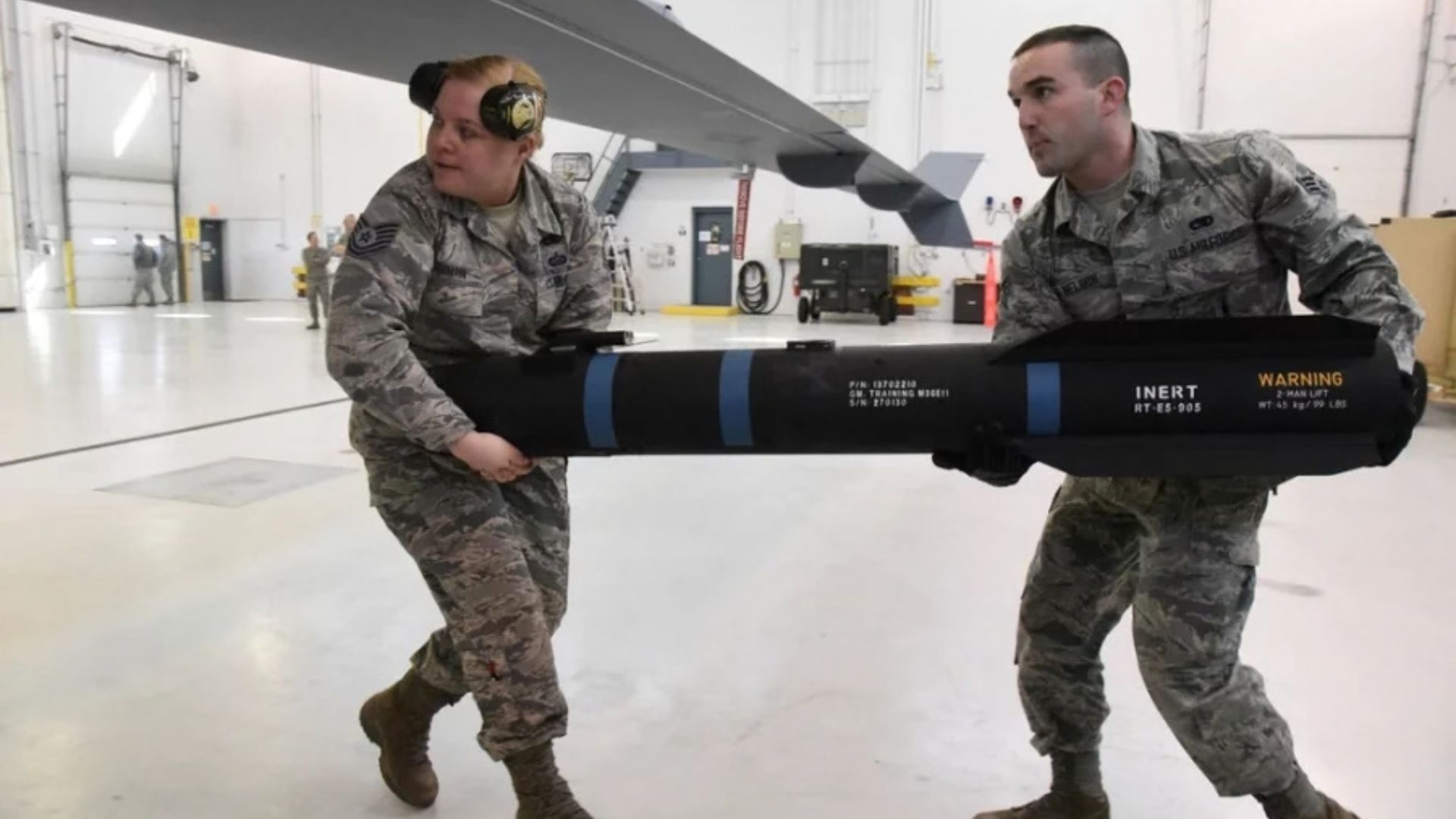
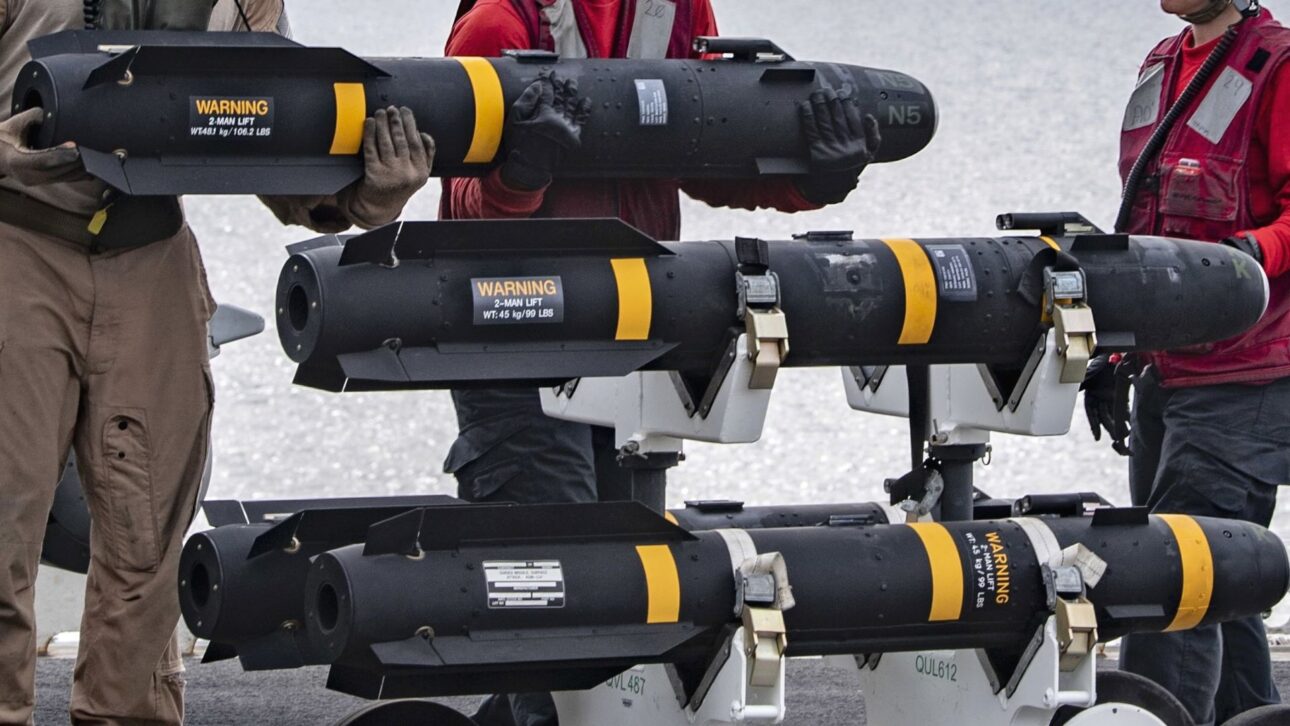
The Hellfire was born as a air-to-surface missile aimed at destroying tanks and point targets, and the U.S. Army describes it as a system created to engage armored vehicles and individual targets while minimizing the launch platform’s exposure to enemy fire.
The Longbow variant uses millimeter-wave radar, while versions of the Hellfire II family follow a laser guidance logic.
In Taiwan, the most well-known use of the Hellfire was linked to the AH-1W Super Cobra and AH-64 Apache helicopters.
These platforms remain relevant but may face greater risks in environments saturated with air defenses.
By moving this armament to a disguised truck, Taiwanese forces attempt to preserve strike capability even in scenarios where operating aircraft becomes costlier, riskier, or less predictable.
Military Strategy of Asymmetric War in Taiwan
The logic directly aligns with the asymmetric warfare doctrine that Taipei has been reinforcing in recent years.
In a statement to Reuters, Defense Minister Wellington Koo asserted that the island’s strategy aims to build a multi-level and multi-domain deterrence with an emphasis on more mobile and harder-to-hit means, including vehicle-mounted missiles and drones.
In this framework, a launcher hidden in a commercial truck meets the need for dispersion, surprise, and survival in case of crisis or open conflict.
Beyond camouflage, the project responds to the military environment in the Taiwan Strait, marked by growing regional pressure.
Reuters reported that China has conducted large-scale military exercises around the island, training for integrated operations, blockade simulations, and precision strikes against targets deemed strategic.
For Taiwan, the repetition of such pressure reinforces the value of less visible systems capable of moving through common routes, operating in dispersed points, and making prior identification by the adversary more difficult.
Technical Challenges of the Mobile Launch System
The development of the launcher was assigned to the 209th Arsenal of the Armaments Bureau of the Ministry of National Defense.
In a statement reproduced by specialized media, Colonel Su stated that the adaptation was designed for asymmetric warfare and to confront armored threats under enemy air pressure.
The integration required not only the physical installation of armaments in the truck but also a revision of the firing logic and engagement routines in a land environment.
The technical difficulty is not marginal.

The officer himself acknowledged that terrain and elevation may affect target locking, requiring adjustments in the firing logic to ensure accurate impact.
In other words, the military value of the system depends on its ability to detect, track, and hit the target reliably even outside the context for which the Hellfire was originally designed.
Another relevant detail appeared in the type of missile seen in the images.
The analysis indicates that the video shows, at some moments, laser-guided Hellfires.
However, the test shots seem to have been made with the AGM-114L Longbow variant, equipped with millimeter-wave radar.
If this interpretation is correct, the system can operate with more than one guidance profile already present in Taiwan’s stocks.
This enhances employment flexibility based on the target, visibility, and battlefield conditions.
The innovation alone does not change the regional military balance.
Still, it offers a clear indication of the direction chosen by Taiwan.
Instead of concentrating its capacity on easier-to-identify platforms, the island is advancing in the integration of known armaments, common vehicles, and low-signature solutions, in an attempt to complicate any suppression or forced landing operation in the strait.