






 Portuguese
  Spanish


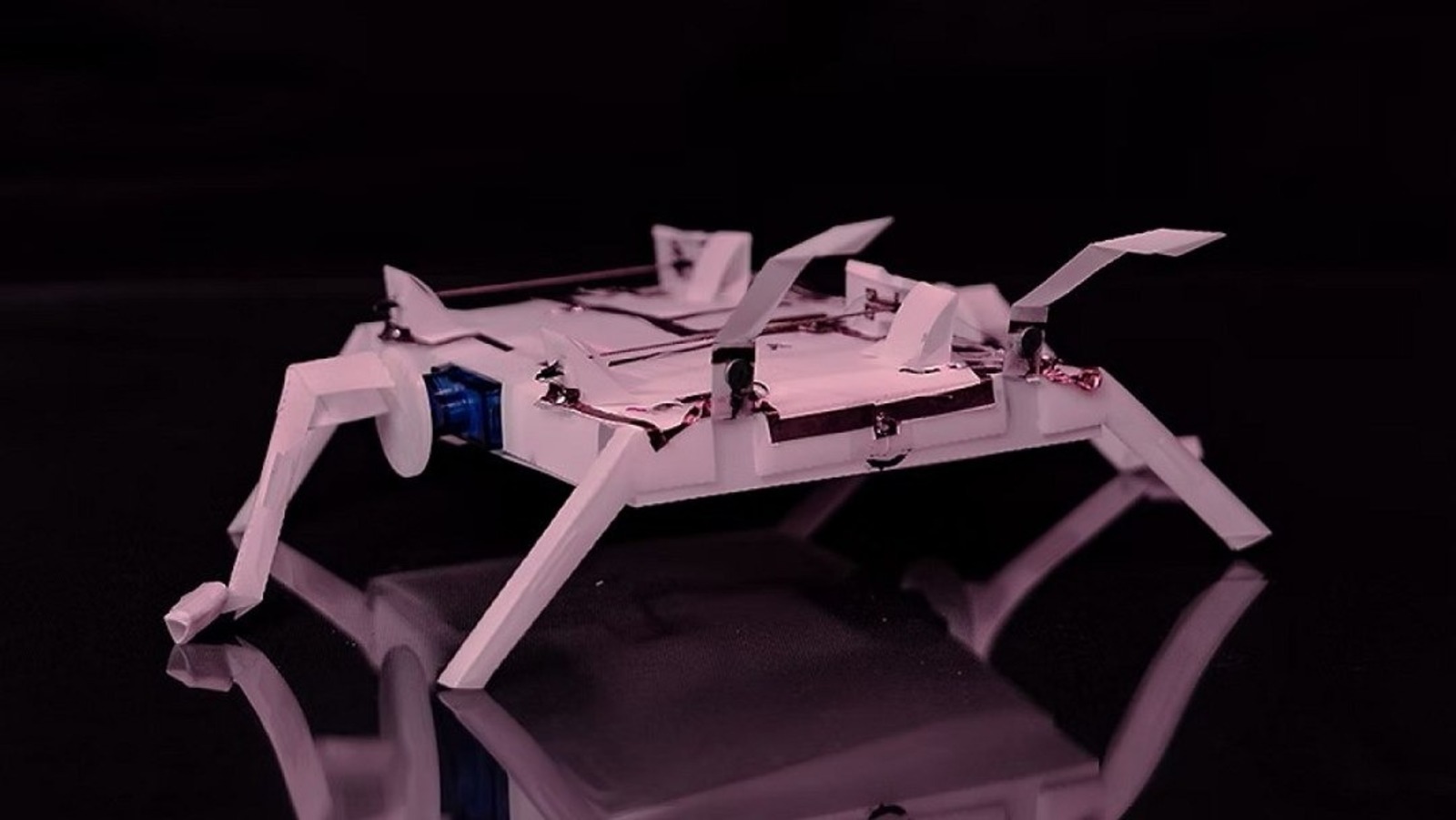


Biometric Origami Robot Jumps 188 Times and Lifts Up to 1,700 Times Its Own Weight Using Only Light Energy in Experiment by the University of California, Davis
A biometric origami robot the size of an insect, developed by researchers at the University of California, Davis, in the United States, has managed to jump continuously 188 times and lift loads equivalent to 1,700 times its own weight using only light energy.
Development of the Biometric Origami Robot
Researchers led by Wenzhong Yan developed a biometric origami robot that combines two concepts already used in modern engineering: biology-inspired robotics and structures based on folding techniques similar to origami.
The device was designed without any electronic components. Even so, it is capable of performing repetitive movements solely from light energy, which is directly converted into mechanical movement by the material that makes up its structure.
-
Midea Unveils Portable PortaSplit Air Conditioner: 12,000 BTUs, Quiet Mode, Heating, Dehumidification, App Control, and AI Efficiency Without Professional Installation

-
Singapore Turns Incinerated Waste Ash into Construction “Sand” in Ambitious Project to Revolutionize Megacity Waste Management
-
High School Teen Develops AI to Detect Autism and ADHD Signs from Retinal Patterns with 89% Accuracy

-
Abandoned Building in Brazil to Become Biotechnology Unit with $10 Million Investment, Bridging Science, Industry, and Public Health




The robot has dimensions comparable to those of an insect and was developed after several experimental prototypes were created by the research team.
Special Material Allows Continuous Jumping
The operation of the biometric origami robot primarily depends on a liquid crystal elastomer, a soft material similar to rubber.
This material changes its shape when exposed to light. When illuminated, it folds and stores elastic energy that is later released suddenly, propelling the jump.
The mechanism is based on a principle observed in nature. Some plants release seeds using capsules that accumulate energy and then release it abruptly.
During the jump, the structure itself creates a shadow that blocks the triggering light. When this occurs, the material automatically returns to its original shape, preparing the system for a new movement.
Experiments Demonstrate Resistance and Repetition
Even with a delicate appearance, the biometric origami robot demonstrated resistance during tests conducted by the researchers.
In repeated experiments, the device made 188 consecutive jumps without any structural failures.
According to researcher Wenzhong Yan, the result was not expected at the project’s outset. He reported that the number of jumps was a surprise during testing with the prototype.
Weight Lifting Capacity Surprises Researchers
Another experiment evaluated the capacity of the biometric origami robot to jump while carrying additional weight.
The team gradually added loads to check whether performance would be affected. The goal was to measure the load limit before the robot lost efficiency.
Even with a load equivalent to 1,700 times its own weight, there was no significant reduction in jumping capacity.
This weight corresponds to about 300 milligrams, approximately the weight of a paperclip. Still, the robot continued to jump consistently during tests.
In some records of the experiment, the robot continued functioning even after several repetitions of the movement, which caught researchers’ attention.
Electronics-Free Manufacturing Technique Expands Possibilities
The researchers state that one of the most promising aspects of the project is the manufacturing technique used to build the biometric origami robot.
The method allows for the creation of fully autonomous foldable robots without relying on chips, electronic circuits, or batteries.
In this system, sensors, control, and actuators are incorporated directly into the materials and structure of the robot.
The team’s future goal is to develop more advanced versions, possibly inspired by humans or animals, capable of performing practical tasks in different environments.
Possible Environmental and Rescue Applications
Among the applications envisioned for the biometric origami robot, researchers highlight environmental monitoring.
One idea is for these robots to carry sensors and jump continuously in natural areas. If they detect smoke or flames, they could send a signal to forest fire monitoring systems.
This model would function as a distributed environmental detection network, covering large areas autonomously.
Furthermore, such robots could access difficult or dangerous locations, such as collapsed buildings, toxic or radioactive environments, and narrow underground spaces.
Another cited possibility is exploring regions where human access is limited or risky, expanding the technology’s potential uses in various contexts.
With information from Technological Innovation.


