Portuguese
  Spanish


Ready-to-use product changes construction routines by reducing preparation steps, enhancing application control, and offering versions usable for 36 or 72 hours in services such as laying, coating, and subflooring.
Stabilized mortar is gaining ground in projects that aim to reduce steps on-site, standardize material preparation, and speed up services such as laying, coating, and subflooring, without relying on the continuous mixing of sand, cement, water, and concrete mixer.
Produced at a batching plant, this type of mortar arrives at the site ready for application, in plastic boxes designed for storage and control of the delivered volume, which changes a routine still common in small, medium, and large constructions.
Instead of separating materials, measuring proportions, operating a concrete mixer, and adjusting the mix several times throughout the day, the team receives a pre-prepared product with a set application time and technical guidance for different stages of the project.
-
Mexico Sinks Giant Fabric Tubes Filled with Sand off Yucatán Coast to Create Invisible Barrier and Restore Hurricane-Damaged Beaches

-
Modern Liquid Porcelain Flooring Offers Seamless, High-Gloss Finish for Home Renovations Without Demolition
-
Brazilian Couple Builds Entire Cabin from Cement and Shade Cloth in Just 7 Days to Escape Renting, Using Affordable Farm Supplies Instead of Steel Mesh

-
Epoxy Paint Revolutionizes Bathroom Makeovers in a Weekend at a Fraction of Renovation Costs

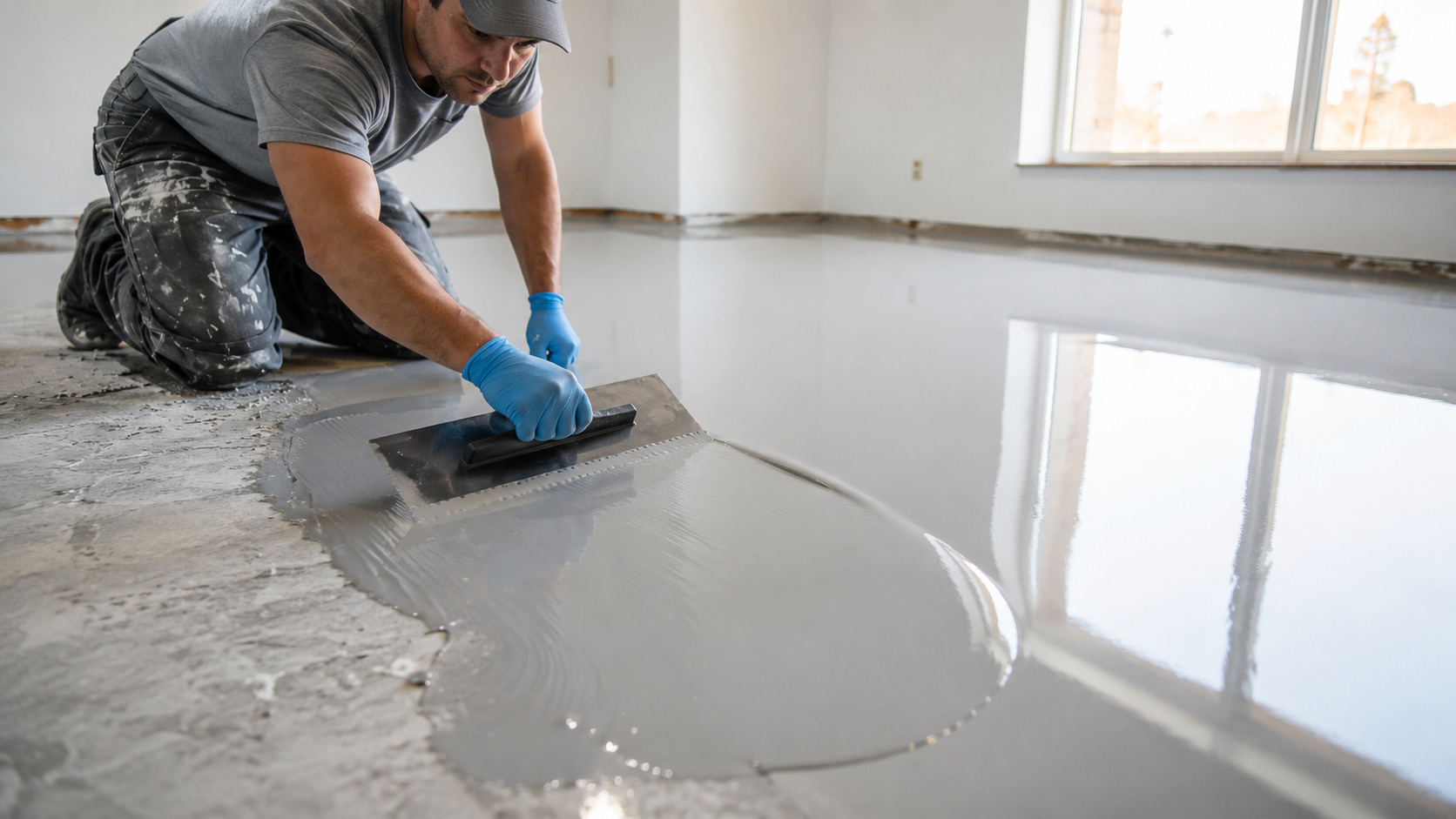


Ready-to-use stabilized mortar in civil construction
According to technical information from Votorantim Cimentos about Engemassa, stabilized mortar is recommended for internal and external coating, sealing laying, structural laying, and subflooring, applications that concentrate a large consumption of material on-site.
The manufacturer states that the product has two usage times, with 36-hour and 72-hour versions, with the longer-term option supplied on Friday afternoons for use on Monday.
In this format, the difference lies in the combination of industrialized preparation and a longer usage window, as conventional mortar needs to be applied in a shorter interval after mixing, requiring constant production control on-site.
While common mortar requires recurrent preparation during the workday, the stabilized version maintains workability for longer when storage and handling conditions indicated by the supplier are respected.
The arrival of the ready product also reduces the need to reserve large spaces for storing sand and cement, something that usually interferes with the organization of the environment, worker circulation, and control of materials available for each service front.
Industrialized preparation reduces variations in the mix
In comparison to mortar prepared manually or in a concrete mixer, production in a batching plant aims to deliver a material with more uniform characteristics, reducing consistency variations caused by changes in the dosage of water, cement, and sand.
This standardization facilitates execution planning and reduces improvisation during the service, especially in projects with multiple teams working simultaneously on stages such as masonry, plastering, and subfloor preparation.
According to Votorantim Cimentos, Engemassa is delivered to the site in plastic boxes, which allow storing the product and measuring the volume of mortar delivered for use within the informed technical timeframe.
The technical guidance also recommends that the product be stored in clean boxes, free from dry or fresh mortar residues, and that a layer of water approximately two centimeters thick be placed over the mass during the conservation period.
This care in storage is an essential part of the promised performance because stabilized mortar does not function like common mortar left on-site without control until the next day.
Dirty boxes, contamination by other materials, or neglect in surface protection can impair use and compromise application, even when the product was delivered within the timeframe provided by the supplier.
Use in Masonry, Plastering, and Subfloor
In practice, the material fits repetitive services and large mortar consumption, such as masonry construction, plastering execution, and subfloor preparation, stages where the regularity of the mortar directly affects the pace of the project.
By arriving ready for use, the product allows the team to spend more time on application and less time on preparing the mixture, provided that the delivered volume, available labor, and schedule are aligned before unloading.
Waste reduction mainly appears due to the logic of controlled supply and the reduced need to produce mortar in successive cycles on-site, a practice that can generate leftovers, premature hardening, or consumption above what is necessary.
In conventional mixtures, dosage errors, excess preparation, loss of hardened material, and unused leftovers increase the risk of waste, especially when the produced volume does not match the real demand of the team.
With stabilized mortar, the received volume can be sized according to the expected demand for the application period, which helps better organize service execution and material consumption throughout the workday.
Even so, the product requires technical planning before contracting, including analysis of the type of application, necessary volume, usage time, access for unloading, and regional availability of the service informed by the manufacturer.
Votorantim Cimentos itself advises that the availability of applications be checked according to the region, an important recommendation to avoid inappropriate purchases and ensure that the chosen product is compatible with the planned service.
Site Organization and Delivery Logistics
It is also necessary to observe the site structure, as unloading depends on a level area, access for the concrete mixer truck, and the correct positioning of the boxes that will receive the ready-to-use mortar.
In projects with narrow access, streets with difficult circulation, or limited storage space, logistics may require adjustments before delivery, especially when planning involves large volumes or simultaneous application fronts.
The use of stabilized mortar does not mean that sand, cement, and concrete mixers cease to exist in construction, as small renovations, specific repairs, and locations without product supply still rely on conventional mixing.
The difference appears in the type of project where productivity, standardization, and site organization weigh more in the choice of materials, especially when several stages depend on mortar in constant volume.
In projects with multiple work fronts, receiving ready-to-use mortar usable for 36 or 72 hours changes how the team organizes the service, provided that technical recommendations are respected.
The material can be distributed among different stages of the project, maintaining control over the usage deadline, storage conditions, and the necessary volume for each team involved in the application.
Industrialized Materials Gain Space in Construction
The adoption of stabilized mortar aligns with a broader change in construction, where industrialized products take on roles previously handled directly on-site, reducing improvisation and increasing execution predictability.
Ready-made mortars, processed concretes, higher-performance blocks, and faster installation systems respond to the demand for projects less dependent on manual preparation and with greater control over deadlines, materials, and productivity.
For the end consumer, interest in the topic arises when the choice of material affects deadlines, cleanliness, labor costs, and perceived quality in the finishing of walls, installations, and subfloors.
A more uniform mortar can contribute to services executed with greater control, although the result still depends on an adequate project, correct application, storage within recommendations, and skilled professionals for each stage of the project.
The advancement of stabilized mortar shows that even basic construction materials are undergoing more industrialized versions, with less manual preparation and greater control of use on-site.
Between a mix made in the concrete mixer at each stage of the service and a ready-to-use mortar with a technical usage deadline, which option would make more sense for your project?