Portuguese
  Spanish


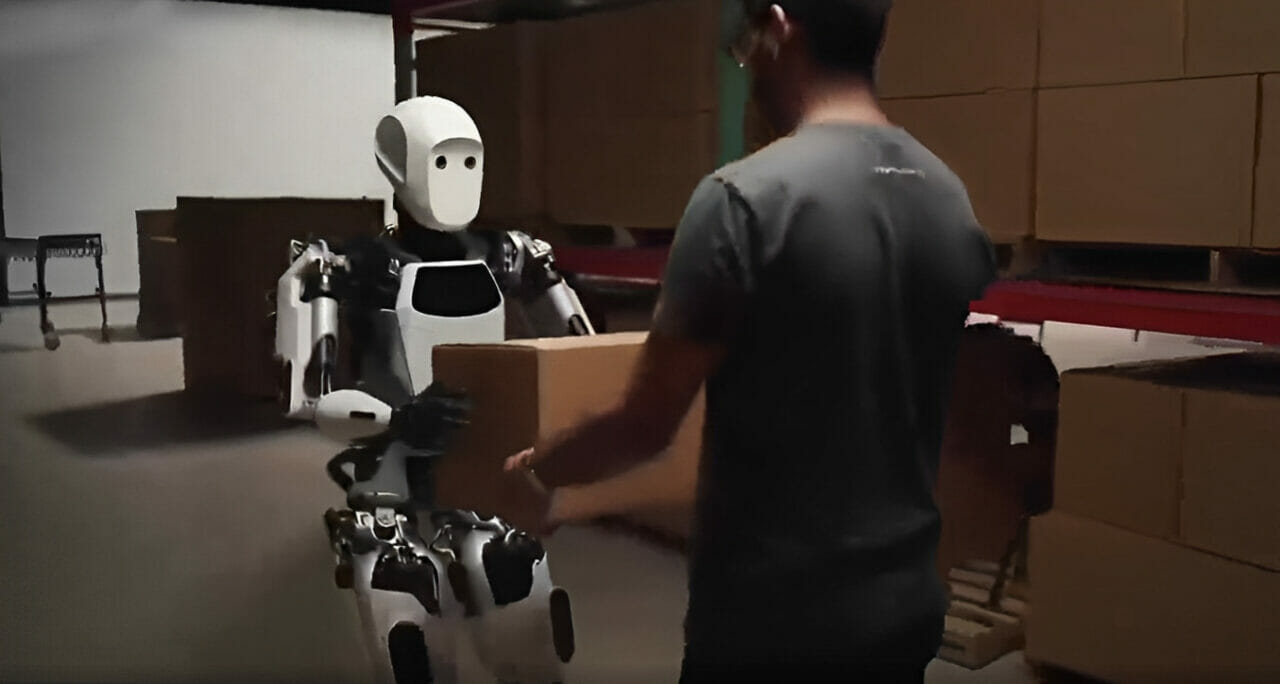


Meet Apollo, the Humanoid Robot Developed by Apptronik and NASA That Promises to Transform the Industrial Automation Sector Starting in 2024.
Get ready to welcome the future coworker. Developed by Apptronik in partnership with NASA, Apollo is a humanoid robot that promises to change the way we see automation.
With a launch expected in 2024 and a price of around US$ 50,000, it’s already making headlines. In the demonstration video, you can see Apollo in action, performing storage and load manipulation tasks with efficiency and precision.
The Operation and Design of Apollo
Imagine this: a robot nearly 5’8″ tall and 158 lbs eagerly awaiting the next delivery in a warehouse. And don’t think we’re talking about just any machine.
-
Advancement in science: a new plastic developed by researchers in the USA combines structural strength and thermal blocking in a single technology, opening new possibilities for construction, transportation, electronics, and sustainable solutions with a direct impact on global energy efficiency.

-
A 17-year-old student created an artificial intelligent trash can that moves by itself through schools and parks, finds trash, separates waste with 90% success, and turns recycling into an automatic, mobile task that is harder to ignore in busy public spaces.

-
Detectorist finds 2,700-year-old bronze sword embedded vertically in forest in Poland; artifact may reveal ancient Bronze Age ritual
-
At the bottom of the Mediterranean, Italian engineers have sunk a “plant” in the shape of a giant donut that uses the ocean’s own weight to store energy, storing electricity generated by wind and sun at the sea floor and returning it to the grid without dams, mountains, or chemical batteries.

This is Apollo, a fully electric humanoid capable of lifting boxes up to 55 lbs without breaking a sweat. Every detail of its metallic body has been carefully designed.
It displays “tattoos” that identify the function of each part, with a user-friendly interface that even gives a quick smile of recognition when a human passes by.
The Differential of Apollo: Human, But Not Too Much
We really had to find new answers. Apollo had to be more than just a machine; it had to convey emotions, intentions, and above all, be relatable.
Mark Rolston – Industrial Designer and Entrepreneur
The term “relatable” in English is often used to describe something or someone with which people can easily identify. In the context of Mark Rolston’s quote about the Apollo robot, the term suggests that the robot was designed to be easily relatable or understandable for humans.
In other words, even though it is a machine, Apollo has features that make it comprehensible and even familiar to people. This can encompass emotional, functional, or visual aspects.
Apollo and Competition
It’s hard not to compare Apollo with other humanoid robots on the market, such as Elon Musk’s Optimus or Boston Dynamics’ Atlas.
However, Apollo manages to stand out, appearing more like a technological masterpiece than a poorly made science fiction movie character. It redefines many of the clichés we’ve seen in decades of literature and cinema about robots.
Although it is the first functional iteration of an autonomous humanoid worker, Apollo 1 has a promising future. It won’t wash your dishes or work on oil platforms for now, but it has already proven to be a machine capable of operating alongside its human colleagues in an industrial setting. And this is just the beginning.