






 Portuguese
  Spanish
 4 min of reading
  0 comments


Paraná’s Civil Defense resumed the purchase of 26 firefighting robots after the president of the Court of Justice overturned the injunction that prevented the acquisition, considered unprecedented in Brazil, while the entire state already faces drought and prepares for the dry winter season.
Paraná has just unlocked the purchase of up to 26 large-scale firefighting robots, an acquisition that was paralyzed by a judicial decision and is now moving forward again after Judge Lídia Maejima, president of the state’s Court of Justice, suspended the injunction that prevented the process. This scale of contracting by a federative entity is unprecedented in Brazil and will give Paraná’s Civil Defense the technological capacity to face scenarios that currently put military firefighters at extreme risk, such as high thermal load industrial fires, situations in confined environments, and emergencies in critical infrastructure.
The urgency of the acquisition gains weight when observing the climatic context. The latest report from the National Water Agency’s Drought Monitor indicated drought throughout Paraná’s territory, a scenario that drastically increases the risk of fire precisely on the eve of the dry winter season. With the robots blocked by an injunction filed by a competing company that lost the bid, Paraná was temporarily without access to a tool that could save lives and reduce damage in large-scale occurrences. The judge’s decision reopened the path for Civil Defense to conclude the contracting.
What these robots are for and where they operate

The robots acquired by Paraná are not generic versions of automated equipment. They are machines specifically designed to operate where human firefighters cannot or should not enter. The application catalog includes industrial fires with high thermal load, occurrences in confined environments such as tunnels, basements, and galleries, urban fires with risk of structural collapse, and emergencies in critical infrastructure, such as ports, airports, chemical plants, and refineries.
-
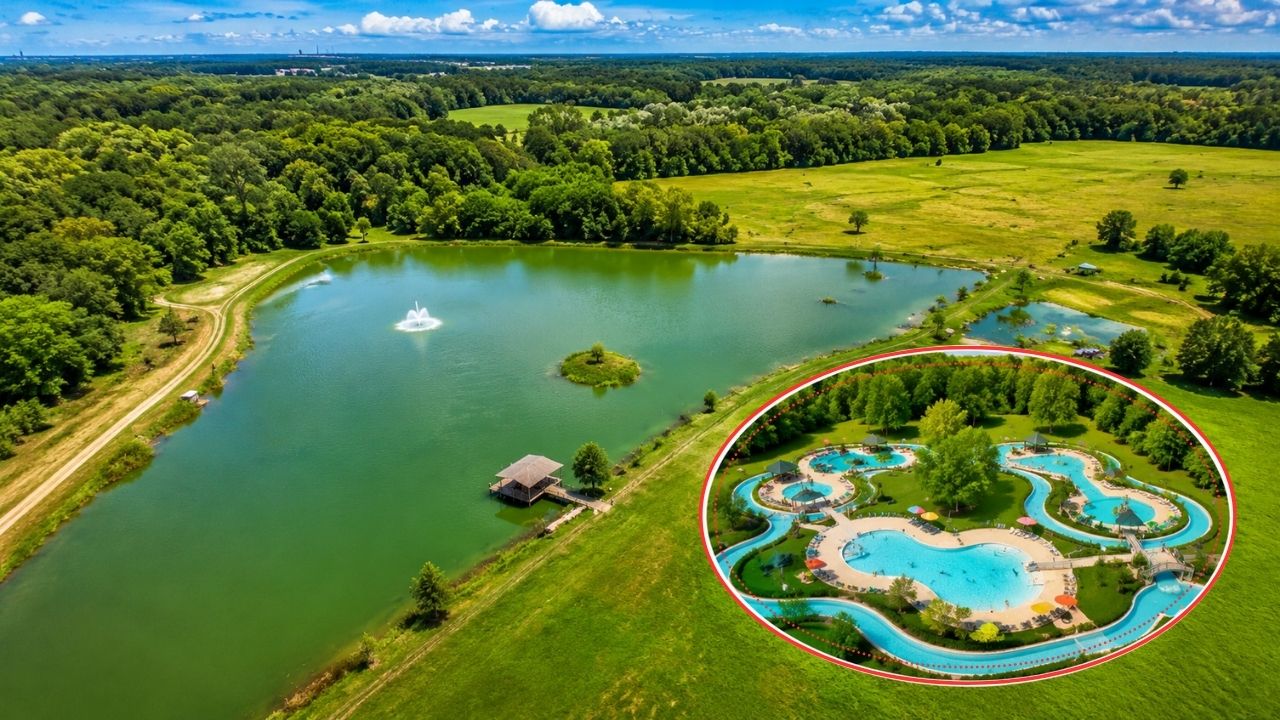
After building a 5-acre lake on his farm, the owner reveals plans for a new artificial lake with a flowing river, waterfalls, islands, and even an indoor version with a retractable roof to control light, temperature, and transform the rural landscape.

-
A giant is disappearing from the map: the Dead Sea, between Israel, Jordan, and the West Bank, loses 1.2 meters per year, has already shrunk by one-third in 50 years, and is 427 meters below sea level.

-
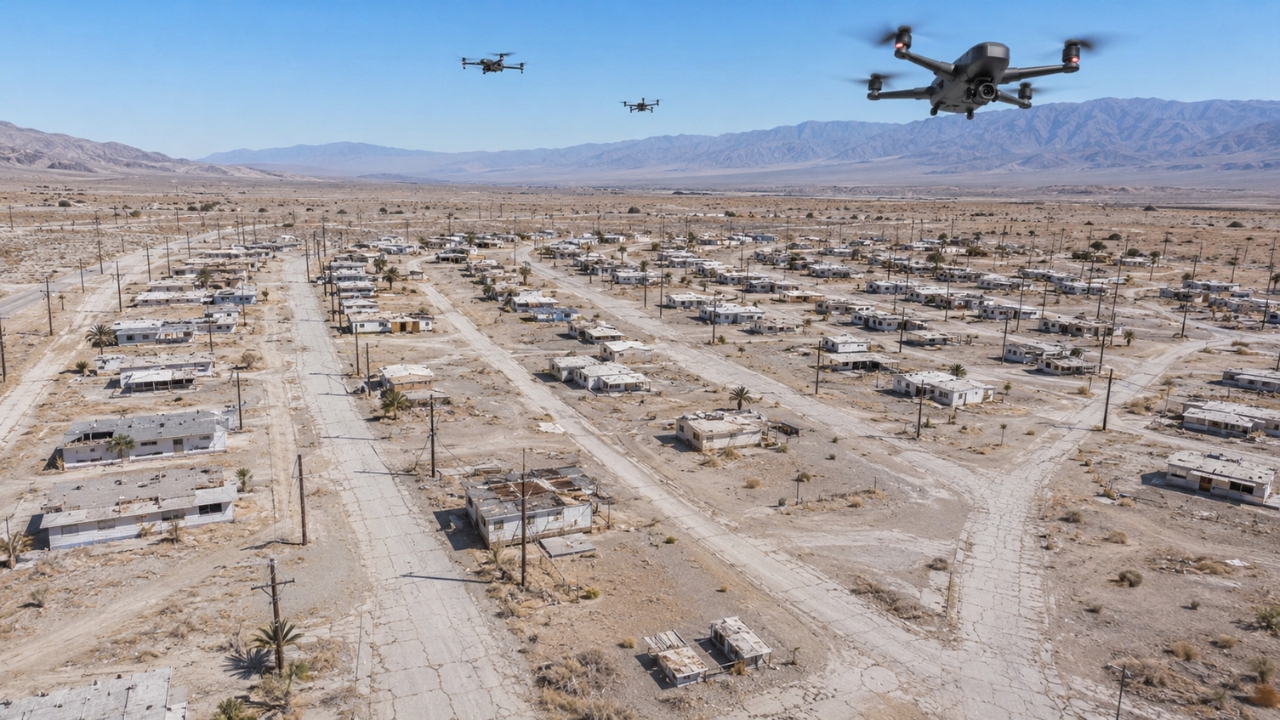
Ghost town of 4,000 residents, abandoned after the collapse of an iron mine, now becomes a drone training field for police, rescue, and emergency teams.
-
Colorectal cancer advances worldwide, but most cases can be prevented.




Operation is straightforward: each robot operates coupled to a hose and generates a water flow volume capable of suppressing flames in scenarios that would be lethal for an on-site firefighting team. The German company that won the bid provides equipment with an integrated design that simultaneously combines tactical ventilation, thermal suppression by water mist, and remote operation in critical environments. For Paraná’s Civil Defense, the advantage is clear: the robots preserve firefighters’ lives by taking the front line in occurrences where temperature, toxic smoke, or the risk of collapse make human presence unfeasible.
The overturned injunction and the competition that created the impasse
The purchase of the robots was almost canceled by a first-degree injunction obtained by a company that participated in the bidding and did not win. The process blocked the acquisition under the argument of technical irregularities, supported by a report that, according to the judge’s decision, was unilaterally produced by a managing partner of the competing company itself, which compromised the impartiality of the document.
By overturning the injunction, Lídia Maejima considered that maintaining the suspension represented a risk of serious harm to public order, public economy, and public safety. In the court’s assessment, the plaintiff was not seeking to protect the collective interest, but rather to dispute a specific contract for their own benefit. The decision restored Paraná’s Civil Defense’s autonomy to proceed with the purchase of the robots, and the acquisition process resumed normally, now backed by a higher instance of the Court of Justice.
Drought throughout Paraná and the race against time
The context surrounding the purchase of the robots does not allow for delays. The Drought Monitor of the National Water Agency registered drought throughout Paraná, a climatic condition that turns dry vegetation into fuel and multiplies the risk of forest fires in practically all regions of the state. With winter approaching and relative humidity falling, the Civil Defense projects a significant increase in occurrences in both rural areas and urban and industrial zones.
The acquisition of the 26 robots is part of the Mutual Aid Plan developed by Paraná’s Civil Defense precisely to address this increase in recorded occurrences. The plan’s logic is to strategically distribute the equipment throughout the state, ensuring that each region has technological response capability for large-scale fires without exclusively relying on the displacement of teams from the capital or larger cities. With the drought already established and a dry winter at the doorstep, each day of delay in the delivery of the robots is one more day in which Paraná firefighters face extreme scenarios without the protection that technology already offers.
And you, did you know that Paraná is buying firefighting robots on this scale? Do you believe that Civil Defense should expand this type of technology to other states that also face increasingly severe droughts and fires? Leave your comment and say whether robots should become standard equipment for firefighters throughout Brazil.


Be the first to react!