Portuguese
  Spanish


With internet censorship and internet blackout reaching Moscow and St. Petersburg, the Kremlin expands Telegram blockade, intensifies VPN hunt, and tries to draw the population to the pre-installed Max app, while defending “security” on state TV and facing backlash even within its own base.
Russia is shutting down its own internet, with blackouts that, according to residents’ reports, have started to interrupt connection and even basic services like calls and SMS for hours, days, and even weeks in large cities like Moscow and St. Petersburg. On April 23, Vladimir Putin went on state television to defend the continuation of the cuts, saying that the measure seeks to “protect Russian society” and prioritize the safety of citizens.
The move goes beyond isolated failures: WhatsApp was blocked in February, Telegram went down starting April 1st, and VPNs are being hunted one by one, while the government encourages migration to Max, a state messaging application that comes pre-installed on devices sold in the country and is described as integrated with government services. The backdrop is an escalation of informational control in a country at war, with high economic costs and signs of political wear just months before legislative elections.
Internet in blackouts: how the cuts moved from the border to the heart of metropolises
Until early 2026, internet cuts were more common in regions near the border with Ukraine, such as Belgorod, Bryansk, Kursk, and areas near strategic military bases. The operational justification cited is that long-range Ukrainian drones use mobile phone networks for navigation over targets inside Russia, and that taking down the signal in risk areas would hinder this guidance.
-
U.S. Women’s History Museum Stalled in Congress Amid Gender Identity and Diversity Debate

-
European Parliament Approves Digital Euro, Aiming to Challenge Visa and Mastercard’s Dominance and Transform Payments Across Europe by 2029
-
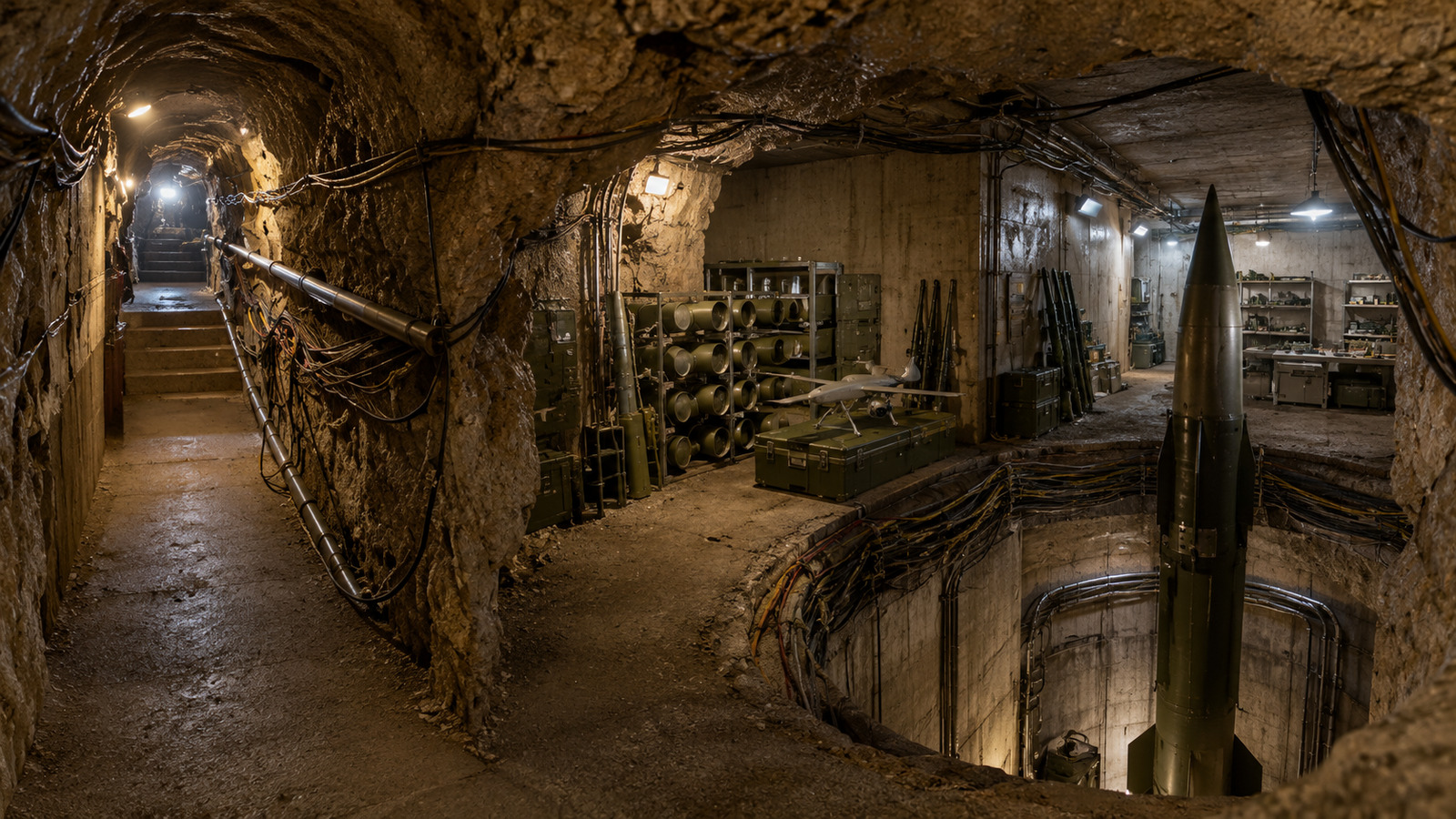
Israel finds Hezbollah militarized tunnel over 200 meters long under village, with 4 missile launch shafts, 12 chambers, anti-tank missiles, drones, and weapons depots at a depth of 25 meters.

-
Ukraine launches largest drone attack on Moscow since 2022, Russia claims to have intercepted nearly 200 aircraft near the capital, Kapotnya refinery targeted again, and offensive reignites alert about war reaching the Russian energy heart just a few kilometers from the Kremlin.



From March, however, the pattern changed: blackouts began to affect the center of Moscow and the center of St. Petersburg, cities hundreds of kilometers from the nearest Ukrainian border. In this phase, the impact ceased to be merely military and became daily, with residents reporting that they could neither make calls nor send SMS for days on end.
WhatsApp blocked and Telegram taken down: why the blow was bigger than it seems
On February 12, Kremlin spokesman Dmitry Peskov announced the complete blocking of WhatsApp in Russian territory. The official justification was that Meta, owner of the application, did not comply with the requirements of Russian legislation. Along with the announcement, the government suggested that citizens migrate to Max, the state messenger.
On April 1st, came the blocking of Telegram, described as the heaviest blow for Russians. Created by Russian Pavel Durov, Telegram was considered the most used messaging application in the country and had practical and strategic functions: it was a communication channel between soldiers on the front and their families, served for municipalities near the conflict zone to issue air raid alerts, and sustained the Russian “military blogosphere,” both pro-Kremlin and critical.
The pre-installed Max: what the state app is and why it became a central part of the plan
Max is described as a messaging application developed by Roscomnadzor, the Russian state telecommunications agency. It comes pre-installed on all devices sold in Russia and is integrated with government, school, and banking services, increasing the practical incentive for the population to use it daily.
Security experts cited in the material point to Max as being monitored by the FSB, the security service heir to the KGB. Pavel Durov stated that Russia would be restricting Telegram to force citizens to migrate to a state-controlled application, specifically designed for surveillance and political censorship. There are reports that even high-ranking Russian officials keep separate devices and SIM cards to use Max, precisely because they do not trust the security of the government-promoted application itself.
Hunt for VPNs and pressure on app stores: how the Kremlin closes escape routes
In addition to messenger blockades, the Russian Ministry of Digital Development confirmed in March that it is carrying out a systemic campaign to reduce the use of VPNs. The material states that more than 400 VPN services had already been blocked by mid-January, indicating a continuous effort to cut off tools that allowed circumvention of censorship.
Another point mentioned is the participation of distribution platforms: Apple, complying with a Russian court order, removed VPNs from the App Store that helped circumvent restrictions. For the analysts mentioned, the strategy is not just to prevent access to websites and apps, but to try to “re-educate” Russians on how to use the internet, limiting both platforms and means of evasion.
The drone argument and the technical controversy that weakens the justification
When defending the cuts on April 23, Putin said he supported the measures when linked to operations to prevent terrorist attacks. The argument presented is that Ukrainian medium and long-range drones, especially those that hit refineries and fuel depots, partly use 4G mobile networks for guidance, and that shutting down the signal in the target area would degrade this capability.
The material, however, points out a technical problem with this explanation: most deep-strike Ukrainian drones would not rely on mobile internet, using inertial navigation combined with GPS and, in some cases, on-board optical imaging for final corrections. This divergence fuels the criticism that the blackouts and blockages are not sustainable merely as a military measure and expand a control that affects the mass population.
The numbers that explain the bill: 37 thousand hours of blackouts and billions in losses
In 2025, Russia was described as by far the country that cut off the internet the most in the world. According to a survey by the Top 10 VPN group cited in the material, there were more than 37,000 hours of blackouts throughout the year, with an estimated loss of almost US$12 billion for the Russian economy.
Locally, the impact also appears in currencies and routines: in Moscow alone, estimated losses would be around 5 billion rubles in just a few days of blackout. In addition to the direct damage to businesses and services, reports of people without connection, without calls, and without SMS for days on end give a sense of the practical shock when the internet begins to fail as basic infrastructure.
Reaction from within the system: when the internet becomes political wear and tear before elections


The escalation is described as deeply unpopular, even among Putin’s support base. Vyacheslav Gladkov, governor of Belgorod, a region under constant Ukrainian drone attacks, went on TV to ask live who would be responsible for the deaths of people who could not receive attack alerts because the mobile internet was cut off.
The reaction also came from the pro-war sphere: the Two Majors channel, cited as one of the most influential, stated that for groups responsible for combating drones on the front, Telegram was the only operational communication channel available and released videos of masked Russian soldiers asking the Kremlin to back down. The Duma, described as historically submissive, even put to a vote a demand for the government to formally justify the blocking of Telegram.
According to the material, polls indicate the biggest drop in Putin’s approval since the start of the war in 2022. And the Kremlin’s party, United Russia, appears with less than 30% of voting intentions five months before the legislative elections, placing the internet control agenda at the center of internal political risk.
What this means: the accelerated construction of a closed digital space
Overall, what is happening is described not as isolated technical measures to combat drones, but as the accelerated construction of an information control architecture reminiscent of the Chinese model, only improvised under the pressure of a war that does not end.
The material summarizes the strategy in three simultaneous fronts: disconnecting Russians from global platforms where independent information about the war in Ukraine circulates; pushing the population towards a domestic application where communication would be monitored by the FSB; and degrading access to evasion tools like VPNs, which until recently were the escape for more than a third of the population.
Given the economic cost and political wear and tear, resistance within the elite itself and among allies of the regime suggests that the Kremlin sees an internal risk that it considers more urgent than keeping the informational space open.
And for you: how far can a country “turn off” its own people’s internet before the economic and political cost becomes too great?