





 Portuguese
  English
  Spanish
  5 min of reading
  0 comments


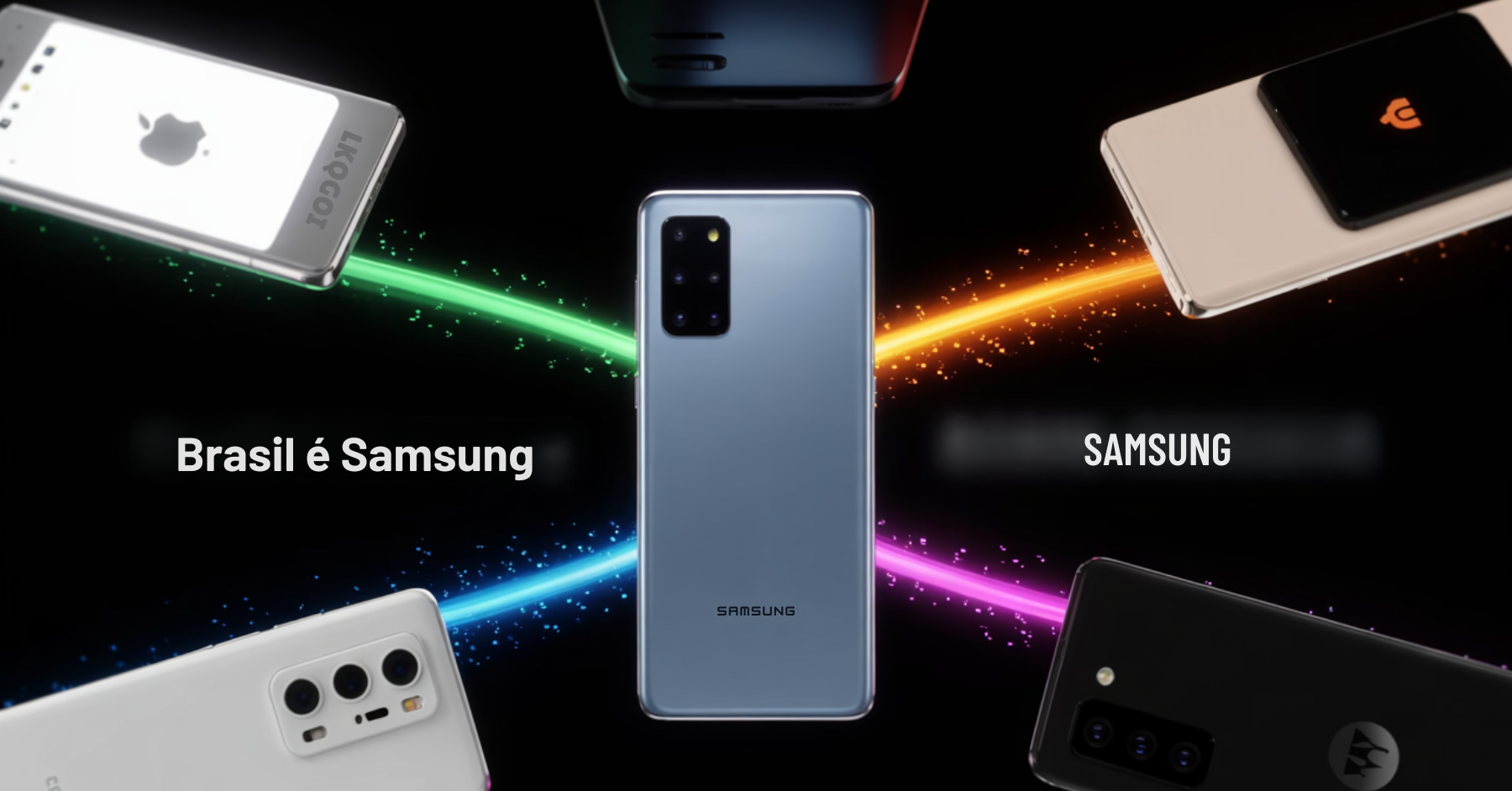
Samsung Dominates The Mobile Market In Brazil With 43% Market Share, Surpassing Apple, Xiaomi And Motorola. Brazil Grows While Latin America Shrinks In 2025.
While the Latin American mobile market faced a 4% decline in the first quarter of 2025, Brazil surprised by registering a 3% growth in smartphone sales during the same period, according to a survey by Canalys. The country not only avoided the decline observed in neighbors like Argentina, Chile, and Mexico, but also consolidated its position as the largest mobile market in Latin America, accounting for about 28% of all shipments in the region.
This growth, although modest, drew attention for occurring in a global scenario of contraction and economic uncertainties. According to Miguel Pérez, senior analyst at Canalys, “the market adjustment was already expected after a period of rapid expansion for regions such as Central America and Ecuador.”
Samsung Takes Absolute Leadership In The Mobile Market In Brazil
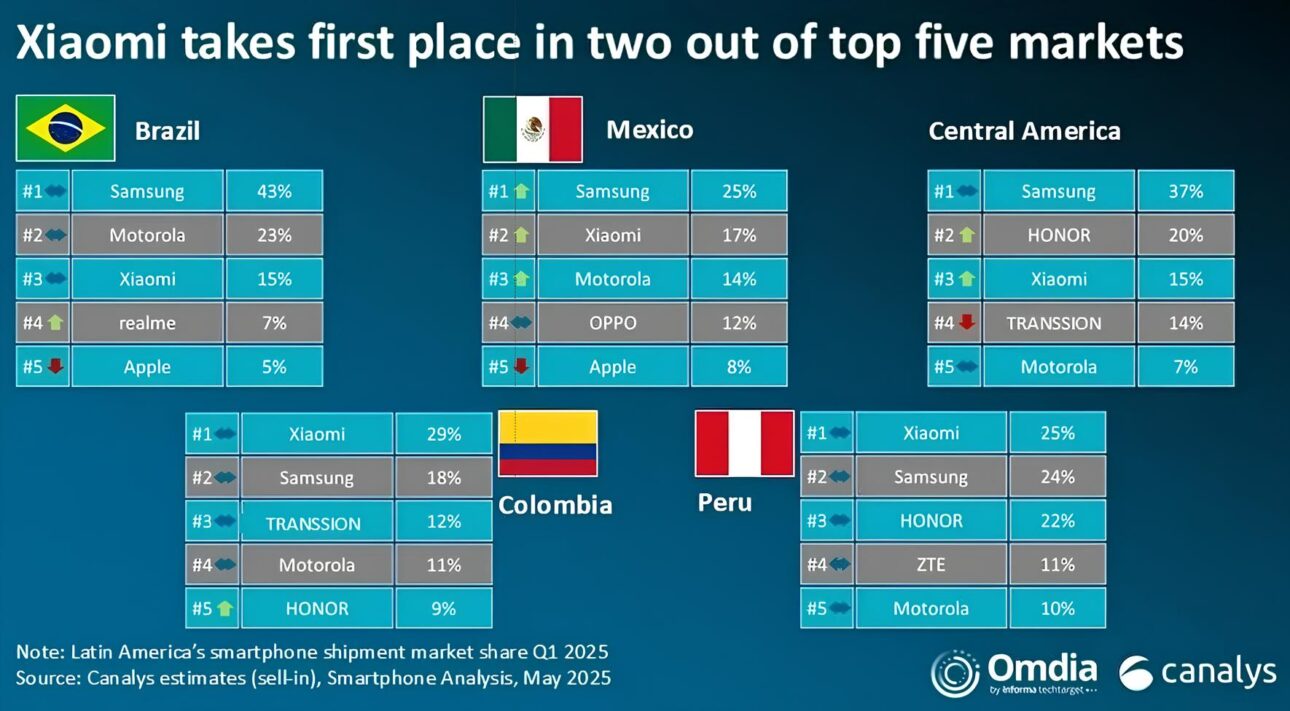
The highlight of the Canalys report was Samsung. The South Korean giant maintained its dominance with a 43% market share in Brazil, widening the gap with competitors.
-
Colombian creates a machine that mimics human lungs, captures CO₂, nitrogen dioxide, and sulfur dioxide from the air, and transforms pollution into biodegradable raw material for bags, packaging, and coatings.

-
Lake Erie began to turn green, and NASA satellites revealed a stain that doubled in a few days: it was neither paint nor dirt, but something gigantic advancing over one of the largest lakes in North America.
-
Nicknamed Pemba, a humanoid robot from Unitree braved the extreme cold and altitude to reach the summit of the Chimborazo volcano at over 6,000 meters, with an eye on Everest, even though it had to be carried by the team on the steepest parts of the ascent.
-
Government authorizes and state acquires first machine guns in history: Israeli weapons used in more than 60 countries arrive with a record package of R$ 338 million, 3,200 weapons, 1,245 vehicles, and armored vehicles for special operations.



Samsung’s leadership is supported by a broad portfolio ranging from entry-level models — such as the Galaxy A series — to premium devices like the foldable Galaxy Z Fold and Z Flip, as well as the traditional Galaxy S.
With this presence across all segments, the brand has managed to cater to the wide diversity of Brazilian consumers, consolidating itself as the national preference in mobile phones.
Updated Ranking: Motorola, Xiaomi And Realme Lose Ground; Apple Appears In Fifth Place
Check out the ranking of market share in the Brazilian mobile market in Q1 2025, according to Canalys:
| Manufacturer | Market Share (%) |
|---|---|
| Samsung | 43% |
| Motorola | 23% |
| Xiaomi | 15% |
| Realme | 7% |
| Apple | 5% |
The most surprising data is the position of Apple, which occupies only the fifth place in the ranking, even behind the emerging Chinese brand Realme, which bets on cost-effective models.
This reflects Apple’s strategy of operating only in the mid-range and premium smartphone segments, which limits its reach in Brazil — a highly price-sensitive market dominated by entry-level phones.
Why Apple Fell Behind In Brazil?
Unlike Samsung and Xiaomi, which operate with affordable product lines like Galaxy A04, Redmi 12C, and models under R$ 1,000, Apple still focuses exclusively on higher segments. The most affordable model currently, the iPhone SE, costs over R$ 3,000.
In addition, the iPhone 16e, recently launched, has not had a significant impact on sales. With prices exceeding R$ 6,000, it does not compete directly with the most popular Android smartphones.
This narrow focus prevents Apple from advancing on Brazil’s largest market share: consumers who prioritize cost-effectiveness.
Chinese Growth: Xiaomi, Honor And Oppo Invest Heavy In Brazil
Despite not being at the top of the ranking, Chinese brands continue to have a strong presence and high expectations for growth.
- Xiaomi maintains 15% market share with models from the Redmi and Poco lines, which blend good performance with competitive prices.
- Honor and Oppo intensified their investments in 2025, with highlights for the Honor X8b and Oppo Reno 11F models, which began being sold in national retailers and marketplaces.
The bet of these companies in Brazil is explained by the relative economic stability and the size of the consumer market. “Brazil is seen as the main base of Latin America by Chinese manufacturers,” says Pérez from Canalys.
Strategies Of Samsung To Dominate The Brazilian Market
Samsung has employed an aggressive and multifaceted strategy to maintain its leadership in Brazil. Among the brand’s main differentiators in 2025 are:
- Frequent launches: The new Galaxy A15 and Galaxy M15 have been well received in the entry-level segment.
- Investments in marketing and partnerships with major retail chains.
- Integrated product ecosystem: The compatibility among smartphones, TVs, smartwatches, and earphones has captivated consumers seeking connectivity.
- Wide technical assistance in Brazil, with repair centers in all capitals.
This combination of factors makes Samsung a brand present in the daily life of Brazilian consumers, whether in the R$ 900 or R$ 9,000 range.
Brazil As A “Safe Haven” For Manufacturers In 2025
With a 3% growth in the first quarter, Brazil was the only country in Latin America to register an increase in mobile phone sales. This performance contrasts with the 4% drop in the region as a whole and makes the country a safe haven for manufacturers in times of instability.
According to Canalys, the outlook for the rest of Latin America is a 1% contraction for the entire 2025, pressured by the rise of the dollar, inflation, and political instability in neighboring countries.
With a consolidated market, expanding digital retail infrastructure, and policies favoring local industrialization (such as in Manaus), Brazil continues to attract factories, distribution centers, and marketing investments.
Popular Lines That Boosted Samsung
Among the best-selling devices of Samsung in Brazil in 2025 are:
- Galaxy A15 and A25: an absolute success in retail, with prices starting at R$ 899
- Galaxy M14 5G: above-average performance for less than R$ 1,300
- Galaxy S24 and S24 Ultra: leaders in the premium Android segment
- Galaxy Z Flip5: a reference in foldables, increasingly present in capitals
Variety is one of the major advantages of the brand: it serves all consumer profiles, something no other manufacturer can do with the same efficiency in Brazil.
Motorola Still Holds 2nd Place, But Pressure Is Increasing
Even while maintaining second place with 23%, Motorola faces pressure from both sides: from Samsung at the top and Xiaomi right behind. The brand, which led the market a few years ago, needs to frequently renew its Moto G and Edge lines to stay relevant.
The perception that Motorola devices quickly become outdated compared to those from Samsung and Xiaomi may affect its numbers throughout the year.
Trends For 2025: Growth In Brazil, Retraction In The Rest Of Latin America
The Canalys report points out that the smartphone market in Latin America is expected to shrink by 1% throughout 2025, mainly due to:
- Persistent inflation
- Restricted access to credit
- Weakening consumption in classes C and D
On the other hand, Brazil may continue to grow — albeit modestly — based on three pillars:
- Demand for cheaper devices
- Consolidation of e-commerce
- Continuous investments from Asian brands
With 43% of the market, Samsung consolidates its position as the absolute leader in the mobile market in Brazil. The country’s growth in an adverse regional scenario reinforces the strategic role that Brazil plays for global brands.
Meanwhile, Apple languishes in fifth place, with only 5% market share, and urgently needs to reassess its business model in the country. The lack of entry-level devices and the limited portfolio place the company at a disadvantage compared to competitors better adapted to the Brazilian reality.
The competition for the market continues, but for now, the color that dominates Brazilian mobile phones is not silver, gold, or blue — it is Samsung.





-

-

2 people reacted to this.