





 Portuguese
  English
  Spanish
  3 min of reading
  0 comments


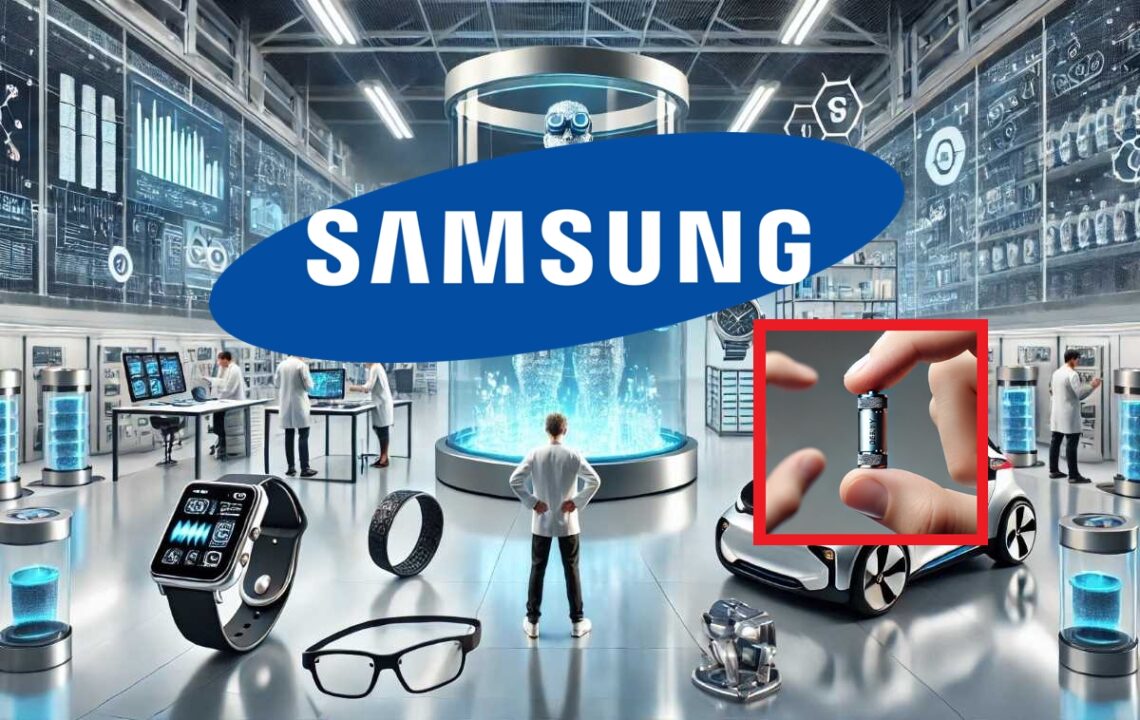
Samsung Reveals An Ultra-Small Solid-State Battery Specifically Designed For Wearable Technologies
Samsung has revealed a significant breakthrough in battery technology by introducing the world’s first ultra-small solid-state battery for wearable devices.
The innovation was announced after three years of research and development by Samsung Electro-Mechanics, which is now entering the testing phase with selected clients.
The expectation is that mass production will begin in 2026, with the new battery debuting in devices like the Galaxy Watch.
-
China tests a 10-megawatt nuclear reactor that fits in a truck and can provide energy for decades to islands, military bases, remote areas, and even artificial intelligence data centers.

-
A meteor shower will occur this week and no one in the world will be able to see it, but they will be able to hear it.

-
Scientists create concrete made from seafloor sediment for robots to print 3D structures underwater, aiming to transform the ocean floor into a submerged construction site for bridges, ports, and maritime bases.

-
Owner of ChatGPT enters the stock market queue and could be worth $1 trillion, while Anthropic and SpaceX accelerate their own plans in a race that promises to test if the market is still willing to bet heavily on artificial intelligence.


Advancements In Solid-State Technology
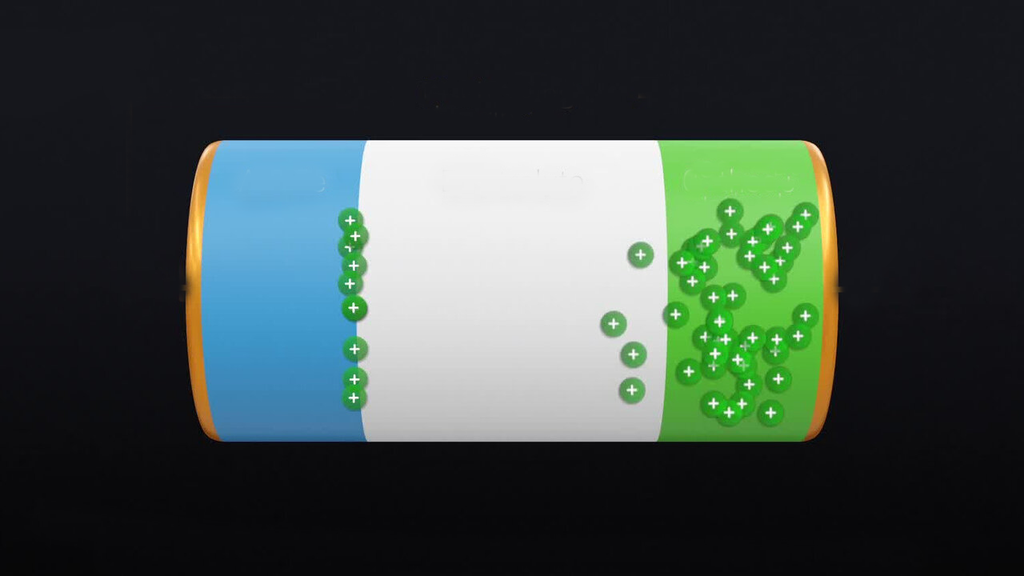
Solid-state batteries are at the forefront of energy storage innovation, offering numerous advantages over traditional lithium-ion batteries.
The new Samsung battery has an energy density of 200 Wh/L, significantly higher than that found in current lithium-ion batteries.
This allows the battery to be not only more powerful but also ultra-compact, meeting the demands of modern wearables, which are becoming increasingly thin and light.
One of the main challenges in creating batteries for wearable devices has always been size. Space limitations make it difficult to develop powerful and long-lasting batteries, but Samsung has managed to overcome this barrier.
The new battery can be produced in sizes ranging from millimeters to centimeters, providing flexibility in design and adaptation to a variety of devices.
Enhanced Safety And Durability
One of the biggest advantages of solid-state batteries is their resistance to external shocks. Since the solid electrolyte used is non-flammable, there is a lower risk of explosion or leakage, significantly improving device safety.
Additionally, this technology allows batteries to have a longer lifespan and greater thermal stability, operating efficiently across a wide range of temperatures.
Samsung has applied a production technology that uses multilayer ceramic capacitors. In this process, thin layers of material are alternately printed and stacked, avoiding wrinkling issues that occur with conventional batteries.
This allows for minimal volume change during charging, eliminating the need for extra space to accommodate battery expansion.
Reduction Of Carbon Footprint
Another important benefit is that solid-state batteries have a significantly lower carbon footprint compared to traditional ones.
Samsung positions this new technology as a more sustainable alternative, aligning with the increasing demand for eco-friendly products.
In addition to being safer and more efficient, solid-state batteries contribute to sustainability by reducing the environmental impact associated with battery production and disposal.
Challenges And Opportunities
Although the advantages of solid-state batteries are many, the development of this technology faces challenges, mainly regarding production costs.
Currently, the manufacturing process is more expensive than that of conventional batteries, which could influence the final price of devices.
However, Samsung and other companies in the sector are investing in research to reduce these costs, and the expectation is that as technology advances, solid-state batteries will become more affordable.
Continuous Progress And The Future Of Wearables
Samsung has made significant progress in solid-state battery technology since it introduced this technology in 2020.
At that time, the company highlighted the potential for higher energy densities and greater safety with solid electrolytes.
In July 2024, Samsung launched a pilot production line for solid-state batteries for electric vehicles, which can power cars with a range of up to 600 miles and with a charging time of just nine minutes.
For wearables, this new battery represents a significant shift, allowing devices to be even lighter and thinner, with greater autonomy and safety.
The flexibility of solid-state batteries enables more innovative designs, opening doors to new possibilities in the wearable device market.
In summary, Samsung continues to lead the way in battery innovation, and the introduction of the world’s first ultra-small solid-state battery for wearables promises to positively impact the sector by offering a more efficient, safe, and sustainable alternative.





Be the first to react!