Portuguese
  Spanish


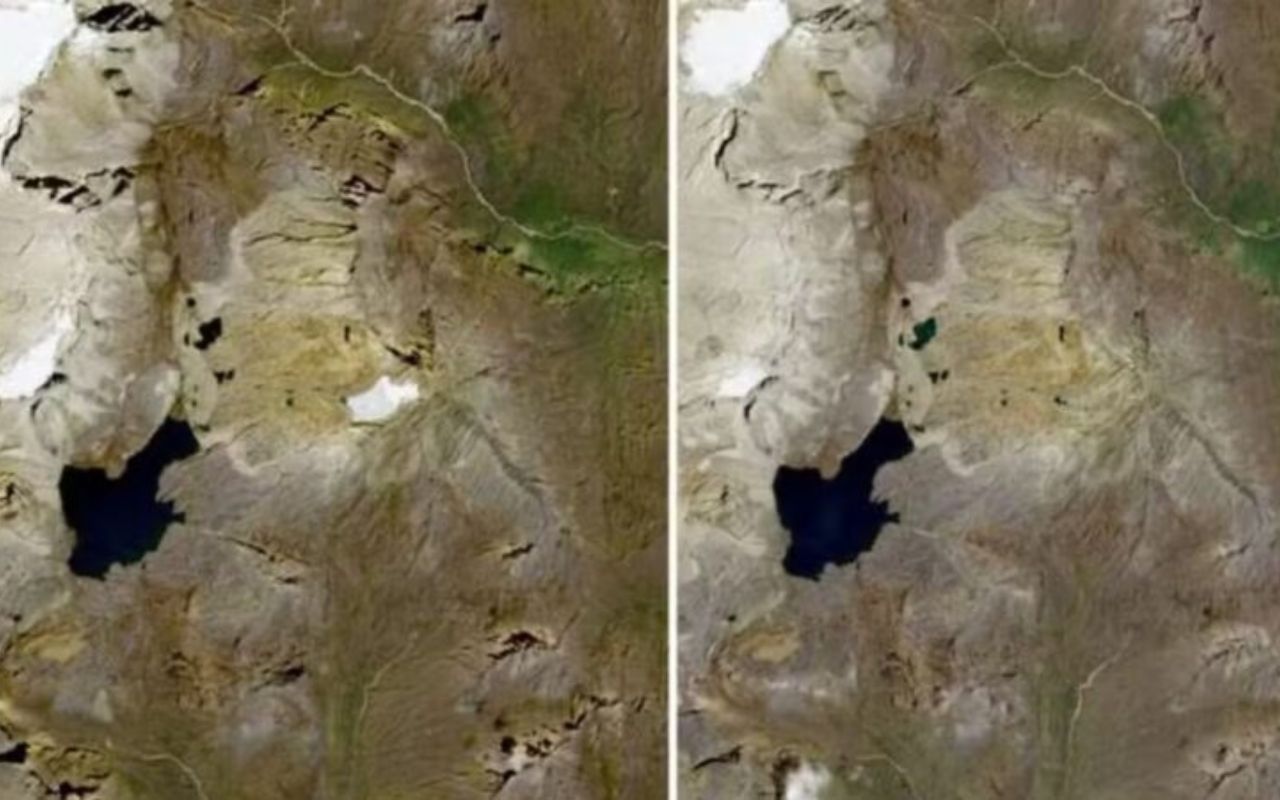

The Cerros de la Plaza glacier was declared extinct by IDEAM. Learn how global warming caused the disappearance of this icon in the Sierra Nevada del Cocuy.
An irreversible milestone of climate change was recorded in the last week in the Sierra Nevada del Cocuy, Colombia. The Institute of Hydrology, Meteorology and Environmental Studies (IDEAM) officially declared the extinction of the glacier in the Cerros de la Plaza, after satellite monitoring confirmed that the ice mass completely disappeared in March of this year.
The phenomenon, which transformed white peaks into bare rock, is the result of an accelerated melting process that intensified in the last decade, eliminating a formation that, in the 19th century, covered an area of five square kilometers.
Heat records and the influence of the Cerros de la Plaza
The destruction of the ice cover was severely driven by a scenario of global climate extremes. According to the Copernicus Climate Change Service of the European Union, the last 11 years have been the hottest ever recorded in history.
-
Brazilian Engineers Lead $200 Million Project to Bring Water from São Francisco River to Transform Supply in Northeastern Cities

-
Brazilian University Tests Recycled Plastic Component for Homes, Aiming for More Sustainable Single-Family Housing Construction
-
Apple, Samsung, and Sony Warn: Wet Bluetooth Earbuds Can Be Damaged if Stored Before Fully Drying
-
Brazil Develops AI-Driven Technology to Measure Brain Pressure Non-Invasively, Detecting Nanometric Deformations in Real Time to Aid Early Medical Intervention


This record warming acted as a catalyst in the Sierra Nevada del Cocuy, destroying almost the entire snow layer in a short period of time.
Moreover, science warns that this is a global-scale phenomenon. Recent studies indicate that half of the planet’s glacial masses are expected to melt by the end of the century, even if the world manages to meet the Paris Agreement goal of limiting global warming to 1.5ºC.
The end of the glacier in the Cerros de la Plaza anticipates this bleak scenario, showing that the most pessimistic forecasts are already becoming reality in tropical territories.
Impacts on the ecosystem and local biodiversity
The transformation of the landscape in the Colombian Andes has serious consequences that go far beyond the aesthetics of the mountains. The absence of permanent ice alters the life cycle of various species and compromises the regulation of high-altitude ecosystems.
As IDEAM highlighted in its official statement: “Climate change is a reality that is already transforming our territories. And what is at stake is not just the landscape, but the very balance of these ecosystems.”
Below, we list the main points of impact caused by this environmental loss:
- Risk to native fauna: Iconic animals, such as the Andean condor, face degradation of their natural habitat.
- Water change: The lack of gradual thawing can harm water supply for lower regions.
- Exposed soil: Without ice to reflect sunlight, exposed rocks absorb more heat, raising the local temperature.
- End of the natural reservoir: The region loses its historical function as a reservoir of frozen freshwater.
The end of the Cerros de la Plaza glacier in the Colombian Andes
Although the announcement of extinction has occurred now, the signs of collapse have been visible for years. Satellite image records show that, since 2015, the shrinking of the ice layer in the Cerros de la Plaza has become constant.
What was once a landscape dominated by absolute white has gradually given way, meter by meter, to a gray and rocky scene. Therefore, what is seen today in the Sierra Nevada del Cocuy is the conclusion of a degradation process that reduced the glacial area from five square kilometers to zero.
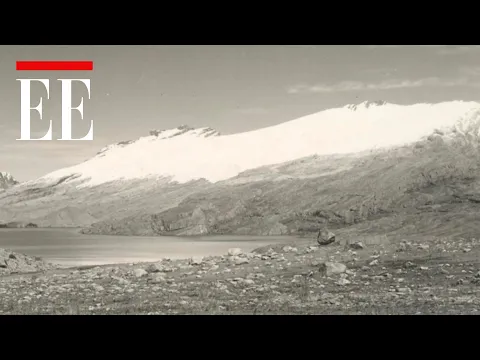

This decline reflects how formations that seemed immutable are, in fact, extremely vulnerable to rising atmospheric temperatures. Thus, Colombia loses one of its most important natural climate indicators. The situation in Colombia serves as an urgent warning for the rest of the Andes mountain range.
The disappearance of ice in the Cerros de la Plaza highlights that tropical mountains are on the front lines of damage caused by global warming. Where explorers and scientists once found snow, today only traces of an ecosystem that could not withstand the heat of recent decades remain.
With information from Revista Galileu