






 Portuguese
  Spanish


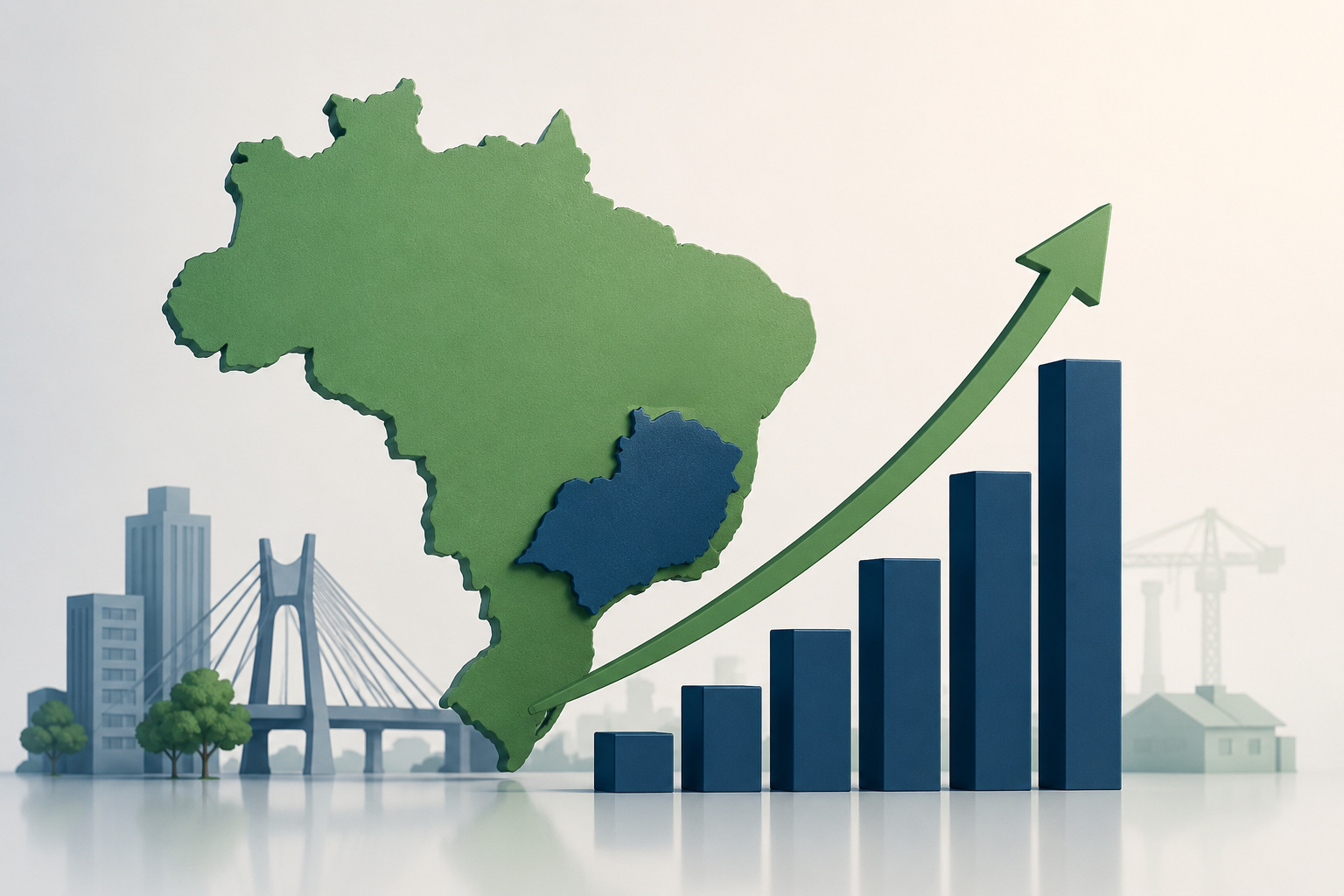

The economic performance of Brazilian states is back at the center of discussions after a new survey by CLP (Centro de Liderança Pública) pointed out that São Paulo presented the best economic performance in Brazil in the last three years. The study, based on data between 2023 and 2025, reinforces the state’s position as the country’s main financial powerhouse and highlights its ability to attract investments, generate jobs, and maintain high levels of competitiveness.
Furthermore, the survey also highlights the progress of other states, such as Espírito Santo and Paraíba, which recorded significant growth and improvement in economic indicators. The scenario shows how factors such as infrastructure, public management, and the business environment directly influence regional development.
São Paulo maintains economic leadership in Brazil
According to the study released by CLP and reported by Exame magazine, São Paulo led the main economic indicators analyzed between 2023 and 2025. The state maintained consistent performance in areas such as wealth generation, investments, competitiveness, and economic development.
-
Brazil’s 2026 Tax Refund: Record 9.58 Million Filers in Largest Payout Ever, But a Key Detail on Priority Recipients Draws Nationwide Attention

-
Itaú Alters Hybrid Work Model, Increasing Office Days from 2028, Prompting Employees to Adjust to New Routine
-
Facing Labor Shortage, Japan Plans to Invest $34 Million to Attract Foreign Workers in Construction, Healthcare, Industry, and Commerce

-
Brazilian City Makes Remarkable Leap, Becomes 4th Wealthiest in the Country with GDP of R$ 134.1 Billion




This leadership is not recent. Historically, São Paulo concentrates a large part of the national economic activity, bringing together strategic sectors of industry, services, technology, and the financial market.
Furthermore, the state has robust infrastructure, high logistical capacity, and a strong business presence, factors that directly contribute to its economic performance.
What the CLP study analyzed
The CLP survey used economic data and indicators related to the competitiveness of Brazilian states over the last three years.
Among the factors evaluated are:
- Economic growth
- Investment capacity
- Job creation
- Business environment
- Infrastructure
- Efficiency of public management
- Regional development
According to the analysis, states that manage to combine strategic planning, economic stability, and infrastructure investments tend to show better long-term results.
Why São Paulo remains the main financial powerhouse
São Paulo concentrates the largest Gross Domestic Product (GDP) in the country and plays a strategic role in the national economy.
Furthermore, the state houses important financial, industrial, and technological centers. The capital of São Paulo, for example, is considered the main financial hub in Latin America.
Another important factor involves economic diversification. Unlike regions highly dependent on a single sector, São Paulo has a strong presence in different areas of the economy.
In this sense, the combination of industry, services, agribusiness, and technology further strengthens its position.
The impact of infrastructure on economic performance
Infrastructure appears as one of the main factors for São Paulo’s good economic performance.
The state has an extensive road network, strategic airports, logistics centers, and easy access to the country’s main consumer markets.
Furthermore, continuous investments in transport, technology, and energy help maintain regional competitiveness.
According to specialists, states with better infrastructure can attract more companies, generate jobs, and expand investments.
Espírito Santo and Paraíba also stand out
Although São Paulo leads the ranking, the CLP study also draws attention to the progress of other Brazilian states.
Espírito Santo showed significant growth in recent years, driven mainly by investments in logistics, industry, and foreign trade.
Furthermore, the state has been strengthening policies aimed at competitiveness and the modernization of public management.
Paraíba also appears among the highlights of the survey. The state recorded an improvement in economic indicators and expanded its capacity for regional development.
This advance demonstrates that efficient public policies can generate relevant results even in historically less industrialized regions.
The importance of economic competitiveness
The concept of state competitiveness involves several factors that directly influence economic growth.
Among them are infrastructure quality, legal certainty, regulatory environment, education, and administrative efficiency.
More competitive states tend to attract more private investments and expand employment and income opportunities.
In this context, São Paulo maintains a historical advantage due to the combination of a consolidated economic structure and innovation capacity.
The role of public management in economic growth
Efficient public management also appears as a central element in the CLP study.
According to experts, states that manage to balance public accounts, invest in infrastructure, and improve services tend to achieve better economic indicators.
Furthermore, policies aimed at innovation and bureaucratic simplification help strengthen the business environment.
In this sense, economic performance depends not only on the size of the economy but also on the quality of public administration.
Regional inequalities in Brazil
The survey also highlights the economic differences between Brazilian regions.
While some states manage to attract investments and increase competitiveness, others face deeper structural challenges.
Issues related to infrastructure, education, logistics, and fiscal capacity directly influence this scenario.
Furthermore, experts point out that regional inequalities continue to be one of the main obstacles to the country’s balanced growth.

The impact of São Paulo’s economy on Brazil
São Paulo’s economy has a direct influence on national performance.
When the state grows, various sectors of the Brazilian economy are also positively impacted.
Furthermore, São Paulo concentrates a large part of the country’s financial, industrial, and business operations.
Therefore, economic fluctuations in the state usually generate repercussions in different regions of Brazil.


The advancement of investments and innovation
Another important point highlighted by the study involves the advancement of innovation and investments in more competitive states.
São Paulo, for example, concentrates a large number of startups, technology centers, and companies linked to innovation.
Furthermore, the state receives national and international investments in different strategic areas.
This movement further strengthens its economic position and expands the generation of qualified jobs.
The role of education and professional qualification
Workforce qualification also directly influences state economic results.
States with greater access to education and technical training tend to show better productivity and greater innovation capacity.
Furthermore, universities and research centers help boost technological development and competitiveness.
In this scenario, São Paulo maintains an advantage due to the strong presence of academic institutions and innovation centers.
What to expect from the Brazilian economy in the coming years
Experts assess that the coming years will continue to be marked by competition among states for investments and competitiveness.
Furthermore, factors such as technology, sustainability, and infrastructure are expected to gain even more relevance.
States that manage to advance in innovation and administrative efficiency will have greater chances of consistent growth.
In this context, São Paulo tends to continue occupying a strategic position in the national economy.
What this study reveals about Brazil
The CLP survey shows that the economic performance of Brazilian states is directly linked to the combination of infrastructure, public management, competitiveness, and investment capacity.
Furthermore, it shows that regional economic policies have a significant impact on local development.
Although São Paulo remains the country’s main financial powerhouse, the progress of states like Espírito Santo and Paraíba shows that economic growth can also emerge in different regions.
Finally, the study reinforces that the future of the Brazilian economy will increasingly depend on the states’ ability to innovate, attract investments, and improve the business environment.









