Portuguese
  Spanish


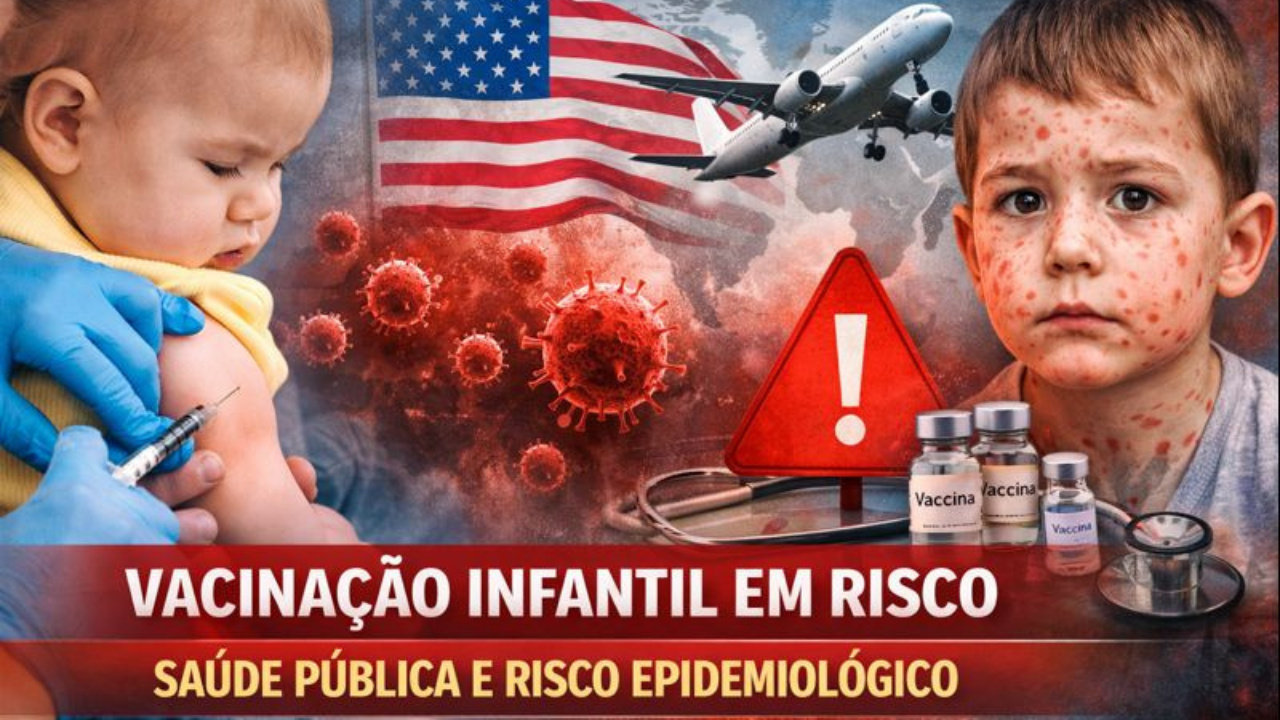


Experts Warn That Reduction in Childhood Vaccination in the U.S. May Increase Epidemiological Risk and Favor Infectious Diseases.
In recent days, a decision made in the United States has reignited the global debate on childhood vaccination, public health, and epidemiological risk.
The U.S. government announced the withdrawal of six vaccines from the recommended vaccination schedule for children.
The measure, announced this week, worries doctors and experts, including in Brazil, as it may increase the circulation of infectious diseases in an increasingly interconnected world.
-
Viral Video of Giant Gold Nugget in Brazil’s Oiapoque Revealed as Painted Rock by French Guiana Miner

-
18th-Century Treasure Uncovered in Brazilian Amazon: 20 Réis Coin and Dutch Pipes Found at Construction Site
-
New York Resident Uncovers Complete Mastodon Jawbone in Backyard After Spotting Teeth Emerge from Ground
-
Young Treasure Hunter from Brazil’s Balneário Camboriú Finds $22,000 in Jewelry with Metal Detector, Aims for $1 Million, and Returns iPhone Found in Ocean


Making the alert is pediatrician Andréa Jácomo, a professor of medicine at the University Center of Brasília.
In an interview with the CB.Saúde program, a partnership between Correio and TV Brasília, she emphasized that local decisions can have global effects.
“Viruses and diseases travel by plane,” said the doctor, explaining why the issue transcends national borders.
The change announced by the U.S. involves vaccines against hepatitis A and B, flu, meningococcus, respiratory syncytial virus, and rotavirus.
According to specialists, the impact can be immediate, especially in countries with high traffic of people, like Brazil.
Childhood Vaccination and the Change in the U.S. Vaccination Schedule
The decision came from the Centers for Disease Control and Prevention (CDC), the agency responsible for public health guidelines in the United States.
In practice, this shifts responsibility to parents. Furthermore, the U.S. does not have a universal public system like Brazil’s SUS.
Therefore, many families will have to pay for the vaccines, which are costly, potentially reducing adherence to childhood vaccination even further.
Public Health Under Pressure and Lack of Scientific Evidence
One of the most critical points, according to Andréa Jácomo, is the lack of scientific basis for the withdrawal of the vaccines. “This time, there are no studies justifying the withdrawal,” she stated.
Historically, global public health has advanced with broad vaccination strategies.
One example cited by the specialist is the eradication of polio, which began in the 1980s with the famous “drops,” an oral vaccine with attenuated virus. This model saved millions of lives around the world.
Infectious Diseases: Proven Impacts of Vaccination
Among the withdrawn vaccines, the one against hepatitis B is considered one of the most sensitive.
The disease can be transmitted from mother to baby during childbirth.
After the introduction of the vaccine, there was an 89% reduction in cases in just one year, a result that no single medication can achieve.
Another example is the immunization against bronchiolitis caused by respiratory syncytial virus.
Rotavirus and Avoidable Costs for Health Systems
The withdrawal of the rotavirus vaccine is also concerning.
Even being a wealthy country, these hospitalizations generate high costs.
In Brazil, the experience has been positive.
In 2006, the introduction of the vaccine in the public system significantly reduced hospitalizations and deaths from childhood diarrhea, reinforcing the importance of childhood vaccination as a public health policy.
Meningitis, Measles, and Global Epidemiological Risk
The meningococcal vaccine is also at the center of the debate.
Brazil has recorded an increase in cases, even in the Federal District.
In 2025, the country reported over nine thousand cases of meningitis and more than a thousand deaths.
“The scenario changed completely after the vaccine was incorporated in 2010,” recalled Andréa Jácomo. Still, she warns that copying foreign models can be dangerous.
In the U.S., for example, measles has become a concern again, with more than two thousand cases and three deaths in the last season.
In Brazil, previous outbreaks have shown that a drop in vaccination coverage has direct effects. In 2018, the Northern region reported over nine thousand cases and 12 deaths, mainly among unvaccinated children.
Alert from Medical Entities and the Need for Vigilance
Thus, the decision by the U.S. was classified as dangerous and unnecessary by the American Academy of Pediatrics. In Brazil, the Brazilian Society of Pediatrics and the Brazilian Society of Immunization also expressed concern.
According to specialists, the epidemiological risk increases as the circulation of people intensifies.
In a globalized world, the message is clear: protecting childhood vaccination is protecting the public health of all.