Portuguese
  Spanish


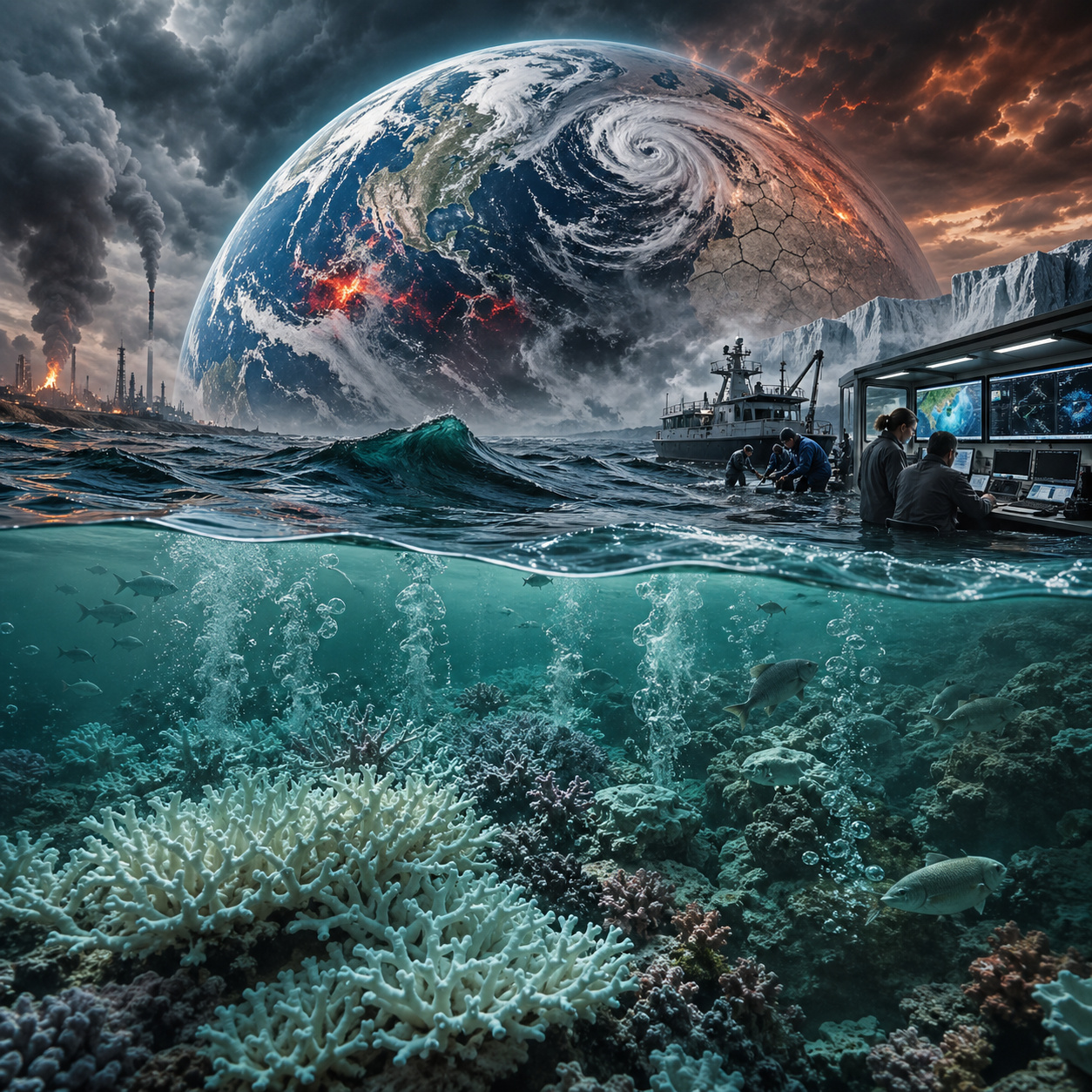

2025 Report Confirms 7 of 9 Planetary Boundaries Exceeded and Warns of Ocean Acidification at Unprecedented Rate.
On September 24, 2025, the Planetary Health Check 2025, an annual report developed by the Potsdam Institute for Climate Impact Research with international experts, confirmed that seven of the nine planetary boundaries have already been exceeded. The main new development in this update was the entry of ocean acidification into the risk zone for the first time, expanding the picture of pressure on the systems that sustain Earth’s stability. Summarizing the scenario, the institute’s director, Johan Rockström, stated that more than three-quarters of the planet’s support systems are already operating outside the safe zone.
According to the report’s executive summary, only two boundaries remain within the safe operating space: stratospheric ozone depletion, now described as stable, and the increase in atmospheric aerosol loading, which shows a global trend of improvement. For the other seven, which include climate, biosphere, land use, freshwater, biogeochemical flows, novel entities, and now ocean acidification, the assessment points to continuous worsening trends, indicating further deterioration of planetary health in the short term.
Concept of Planetary Boundaries Defines Critical Frontiers for Earth System Stability
The concept of planetary boundaries was proposed in 2009 by Johan Rockström and 27 other scientists in a study published in the journal Nature. The proposal redefined how human impact is analyzed.
-
8-Year-Old Finds 900-Year-Old Viking Bronze Buckle on Swedish Beach While Fossil Hunting
-
China Tests Giant 582-Ton Magnets to Contain Plasma Hotter Than the Sun’s Core, Aiming to Cut Superconductor Costs and Generate First Electricity from “Artificial Sun” by 2030
-
Lenovo Unveils Legion Y700 Tablet with RGB Backlighting, 5G, and SIM Card Support
-
Lenovo Unveils Legion Y700 Tablet with RGB Backlighting, 5G, and SIM Card Support
Instead of focusing exclusively on carbon emissions, the model identifies nine essential biophysical processes that maintain the planet’s stability. These processes include climate change, biosphere integrity, freshwater use, nitrogen and phosphorus flows, ocean acidification, among others.
For each of them, quantitative boundaries representing safety margins have been defined. Exceeding these boundaries does not mean immediate collapse, but indicates a significant increase in the risk of irreversible changes in the Earth system.
Simultaneous Exceedance of Multiple Planetary Boundaries Increases Risk of Global Systemic Collapse
The 2025 report highlights that the main risk is not just exceeding boundaries in isolation, but in the combination of multiple transgressions.


The interaction between these systems can generate cascade effects, where the degradation of one process intensifies the instability of others. This behavior increases the probability of tipping points, abrupt and irreversible changes that can affect the global functioning of the biosphere.
The concept is directly linked to the stability of the Holocene, a period of about 10,000 years during which the planet maintained ideal conditions for the development of human civilizations.
Climate Change and CO₂ Concentration Have Already Exceeded Safe Limits Defined by Science
Among the best-known boundaries is climate change. The concentration of carbon dioxide in the atmosphere has reached about 423 parts per million, a level not observed for approximately 15 million years.
The safe limit was set at 350 ppm, a value exceeded decades ago. The continued increase reinforces the scenario of global warming and the intensification of extreme weather events.
Biosphere integrity, which measures the health of ecosystems and biological diversity, is considered one of the central boundaries of the Earth system.
The current species extinction rate is between 100 and 1,000 times above the natural level. The WWF Living Planet Report indicates an average 68% reduction in wild vertebrate populations between 1970 and 2016.
This decline compromises essential ecological functions, such as pollination, climate regulation, and the maintenance of natural cycles.
Excessive Freshwater Use and Alteration of Terrestrial Systems Already Compromise Global Water Balance
The use of freshwater exceeded the safe limit in 2023, with extraction from rivers, lakes, and aquifers above the natural replenishment capacity in several regions.
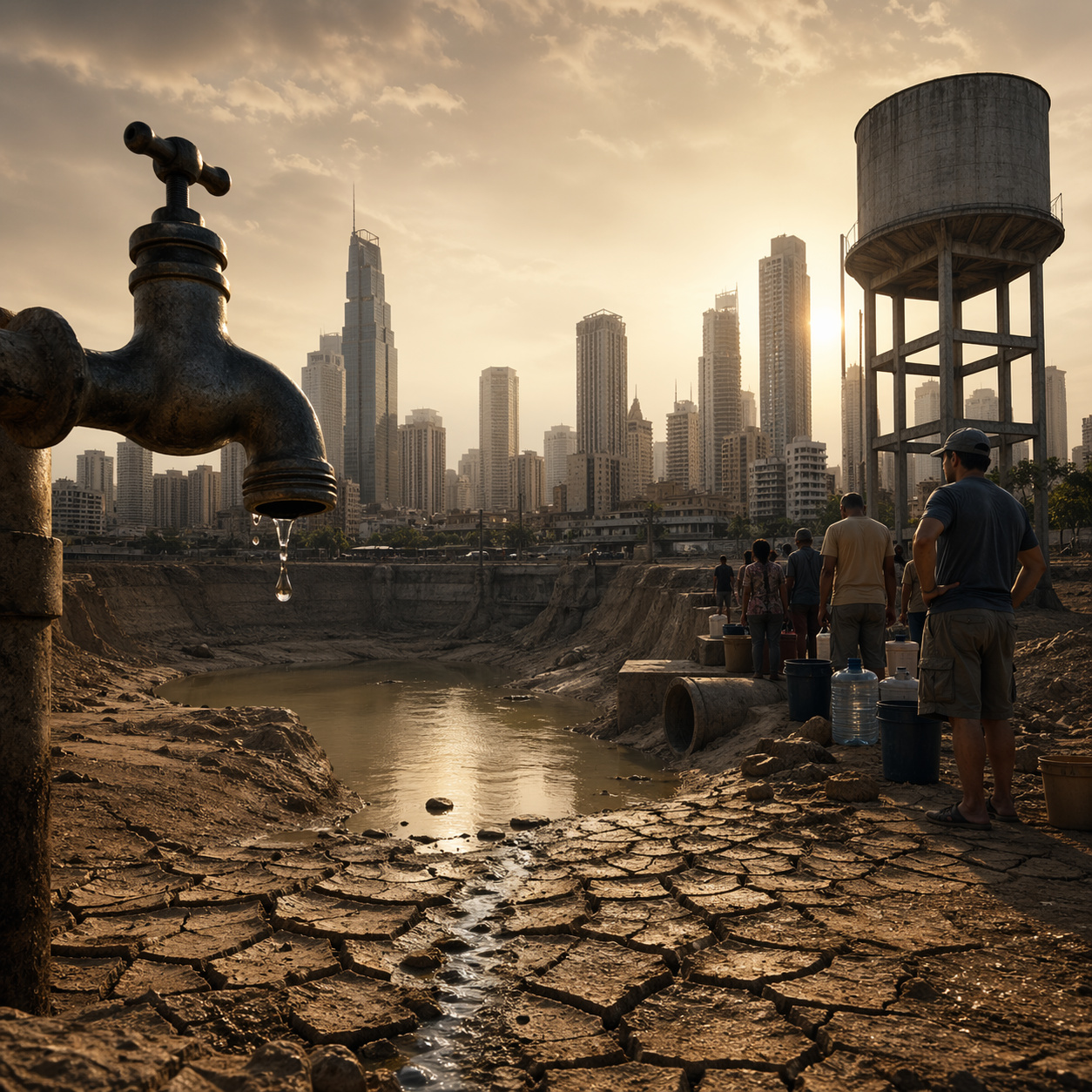
More than 4 billion people face severe water scarcity for at least one month per year, highlighting the pressure on water resources.
Changes to the Earth system, especially due to deforestation, also compromise regional and global climatic cycles.
Nitrogen and phosphorus flows represent the most violated limit due to intensive agriculture
Biogeochemical flows of nitrogen and phosphorus are among the most severely exceeded limits. Intensive use of fertilizers has raised nitrogen levels more than 200% above the safe limit, contaminating soils and water bodies and creating dead zones in coastal regions.
The introduction of synthetic entities includes plastics, pesticides, industrial compounds, and other substances that did not naturally exist in the environment.
The scale of production and dispersion of these substances exceeds the biosphere’s capacity to absorb and process these materials, creating risks that are still poorly understood.
Ocean acidification enters critical zone and accelerates chemical changes at historical pace
Ocean acidification was officially included in the list of exceeded limits in 2025. Oceans absorb about 25% of the carbon dioxide emitted by human activity. This process reduces the atmospheric concentration of CO₂, but directly alters water chemistry.

Since the beginning of the industrial era, the average pH of the ocean surface has fallen from 8.2 to 8.1. Although seemingly small, this value represents an increase of up to 40% in water acidity due to the logarithmic scale.
Paleoceanographic studies indicate that the current rate of acidification is comparable only to extreme events such as the Paleocene-Eocene Thermal Maximum, which occurred about 56 million years ago.
Even in that episode, the rate of change was significantly slower than what is currently observed. The geological record shows that this type of alteration can lead to the mass extinction of marine organisms, especially those that depend on calcium carbonate.
Acidification compromises coral reefs and threatens the base of the global marine food chain
Increasing acidity hinders the formation of calcareous structures used by various marine organisms. Coral reefs, responsible for sustaining a large part of oceanic biodiversity, are among the most affected systems.
More than 500 million people directly depend on these ecosystems for food, coastal protection, and income.
Furthermore, more than 1 billion people worldwide rely on the ocean as their primary source of animal protein, making the impact potentially global.
Acidification reduces the oceans’ capacity to continue absorbing carbon dioxide. This process creates a feedback loop: the more CO₂ is released, the lower the absorption capacity, further increasing atmospheric concentration.
The warming of surface waters intensifies this effect by reducing mixing between ocean layers.
The report highlights that not all systems follow a trajectory of degradation. The ozone layer shows clear signs of recovery, a result of the 1987 Montreal Protocol, which eliminated substances responsible for its destruction.
The global atmospheric aerosol load also remains within limits, albeit with regional variations.
Now we want to know: does exceeding seven planetary boundaries indicate a point of no return, or is there still room for reversal?
The diagnosis presented by the 2025 report points to a scenario of high pressure on Earth’s natural systems.
In your view, is there still time to reverse these trends, or has the planet already entered a phase of irreversible changes?