Portuguese
  Spanish


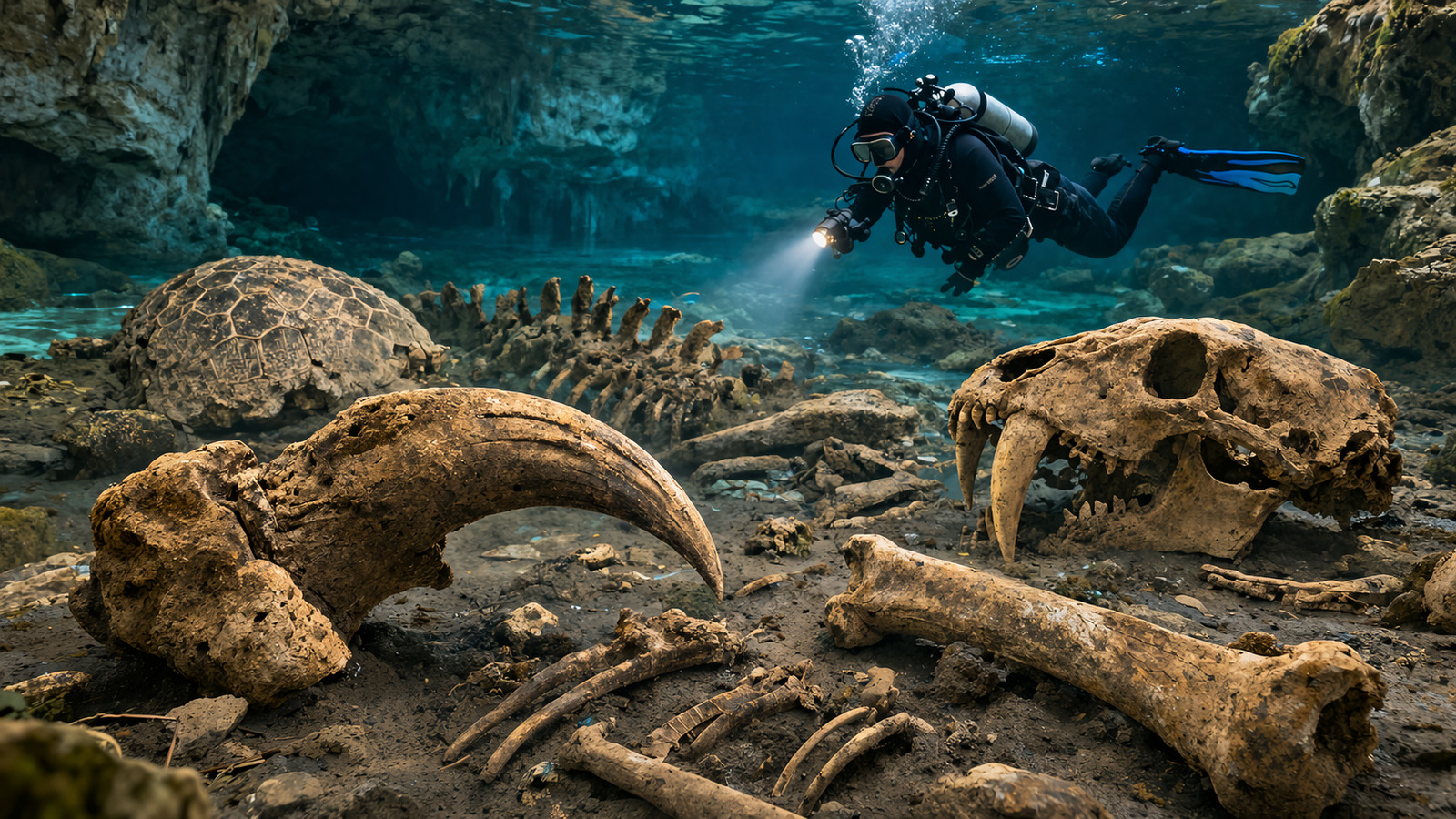


Fossils found in subterranean stream of Bender Cave, near San Antonio, indicate that central Texas may have been warm, humid, and forested
The discovery of fossils in Bender Cave, near San Antonio, revealed remains of extinct animals found between March 2023 and November 2024 and may change the understanding of the climate of central Texas about 100,000 years ago.
Find in subterranean stream
Researchers found fossils in a subterranean stream of Bender Cave, a system of water conduits on private property northeast of San Antonio.
Among the identified remains are bones, teeth, a giant sloth claw, fragments of giant turtle shell, and pieces of pampatherium armor, an ancestor of the size of a lion armadillo.
-
China Develops Custom 140-Ton Electric Mining Truck with 770 kWh Swappable Battery, Deploys 290 Units in Xinjiang’s Largest Zinc Mine

-
Meta to Launch Arena, a New Prediction App Targeting 3.56 Billion Users, Competing with Polymarket and Kalshi

-
Scientist Challenges Famous Human Evolution Theory, Argues Homo Sapiens Evolved Gradually Over Thousands of Years
-
15-Year-Old American Builds Ocean Generator with PVC Pipe and 3D-Printed Propeller for $12, Wins National Prize, Presents at White House, and Makes Forbes 30 Under 30 List




The fossils were scattered across the streambed, at many visible points. Some of the material also appeared to be emerging from the underwater mud.

How the work was done
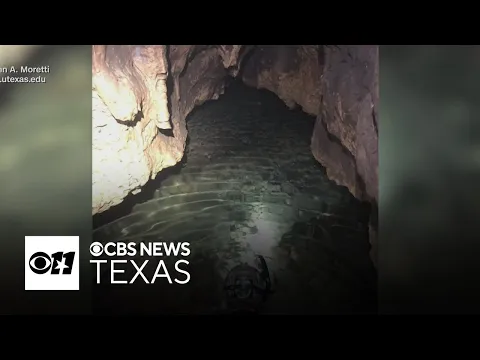
The site began to be visited after John Young obtained permission to enter the previously unexplored cave.
Young, a spelunker and paramedic, began locating fossils and sent photos to John Moretti, a paleontologist at the University of Texas at Austin.
Moretti began to accompany Young on the expeditions. Between March 2023 and November 2024, the two made six incursions to collect fossils and observe the distribution of the material.
As the stream generally had a few meters of depth, although it varied with recent rains, the expeditions were conducted with snorkels, diving goggles, and wetsuits.
Throughout the work, the duo explored 21 different zones of the cave. The fossils were collected in bags attached to their waists as the researchers advanced through the subterranean watercourse.
Unknown species in the region
In other caves in the region, researchers had found remains of bison, horses, camels, and mammoths. However, in Bender Cave, some of the fossils surprised by being unknown in that area.
Among the unexpected finds are the giant turtle and the pampatherium. Some species had never been found in that part of Texas, raising new questions about the environmental and climatic past of the region.
Moretti stated that there were fossils everywhere, in a quantity he had never seen in another cave.
David Ledesma, from St. Edward’s University, said that some specimens were unexpected for this region.
Difficulty in dating
The researchers suspect that the fossils were brought into the cave by sinkholes during erosion and flooding events thousands of years ago. Even so, they still do not know exactly when this deposit occurred.
Some physical similarities suggest that the materials may have been deposited approximately in the same period.
However, the absence of soil, rock, and other geological elements around makes precise dating difficult.
The chemical changes caused by immersion in mineral-rich water also complicate the analysis. Therefore, the team is working with a hypothesis based on the habitats of these extinct animals.
What the fossils indicate
The main hypothesis is that these animals lived in a relatively warm interglacial period, about 100,000 years ago.
Giant sloths and mastodons were associated with forests, while giant turtles and pampatheriums occupied areas of higher temperatures.
The fossils from the cave resemble interglacial specimens already known in the surroundings of Dallas and along the Gulf Coast. This reinforces the possibility of a different scenario for central Texas.
Together, the fossils indicate that the region may have been relatively warm, humid, and forested during interglacial periods.
If confirmed, this view contradicts the old idea of a dry, open, and cold landscape during much of the Ice Age.
Moretti said that the picture revealed by the cave is different from what is presented in textbooks and stated that the research opens a window to the natural history of central Texas.
With information from Smithsonianmag.