






 Portuguese
  Spanish
  5 min of reading
  0 comments


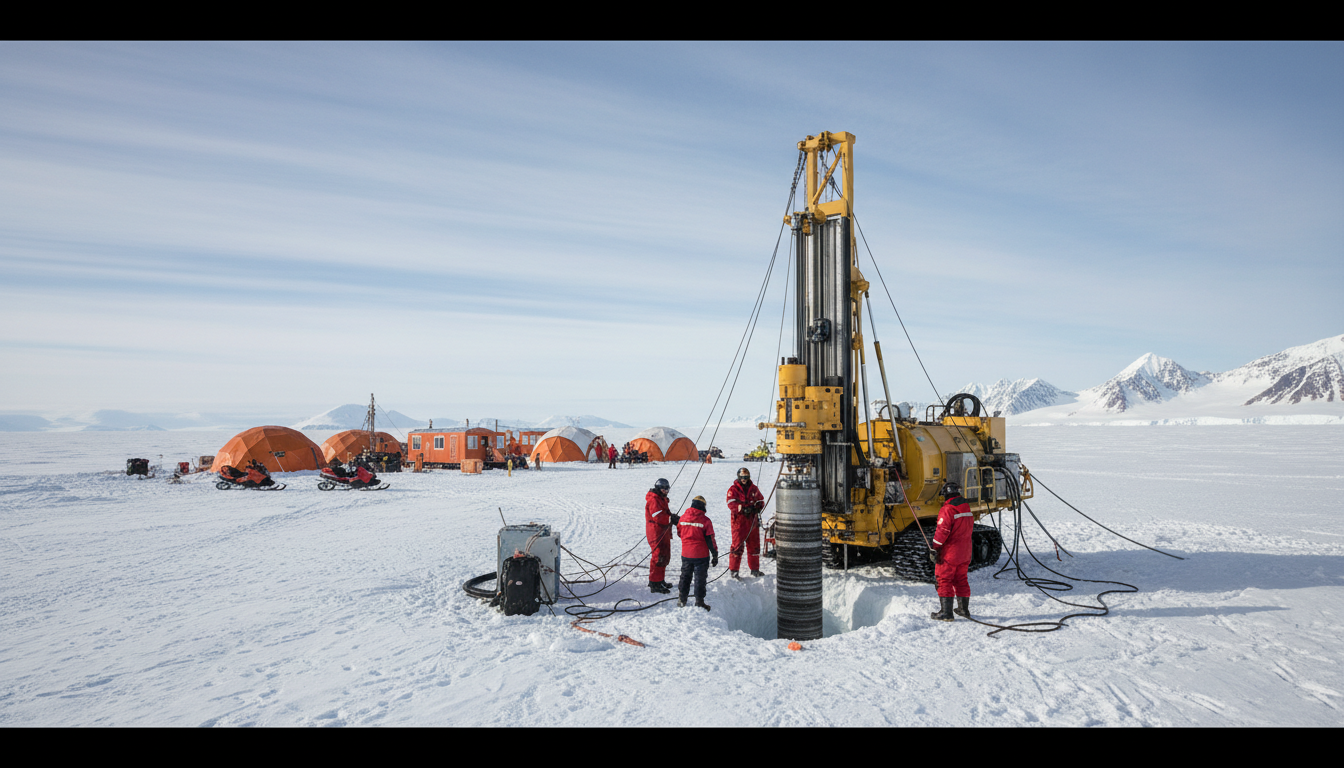
While international research ships barely retrieve 10 meters of sediments under a floating ice shelf, a global team drilled 228 meters of mud and rock under the Antarctic ice.
In fact, the core is 22 times longer than any ever collected. It was extracted from under 523 meters of ice in West Antarctica.
As reported by Phys.org in February 2026, the feat occurred at the Crary Ice Rise deep field camp. The operation was completed in January of that year.
-
Federal Police involved in the case to identify the person responsible for hacking the Civil Defense system, which sent ten false alerts, frightened residents of different capitals, and turned messages about real risks into notifications with “misanthropy” and even alien attacks.

-
Extreme drought causes ghost village to reappear at the bottom of the reservoir that supplies Athens, revealing houses, a school, and ruins swallowed since the 1980s as the lake shrinks and exposes the water crisis threatening the capital of Greece.

-
Space technology used to search for water on Mars is now hunting for invisible leaks under the streets of São Paulo, using satellites, AI, and chlorine signals to help Sabesp recover up to 6.7 billion liters of water.
-
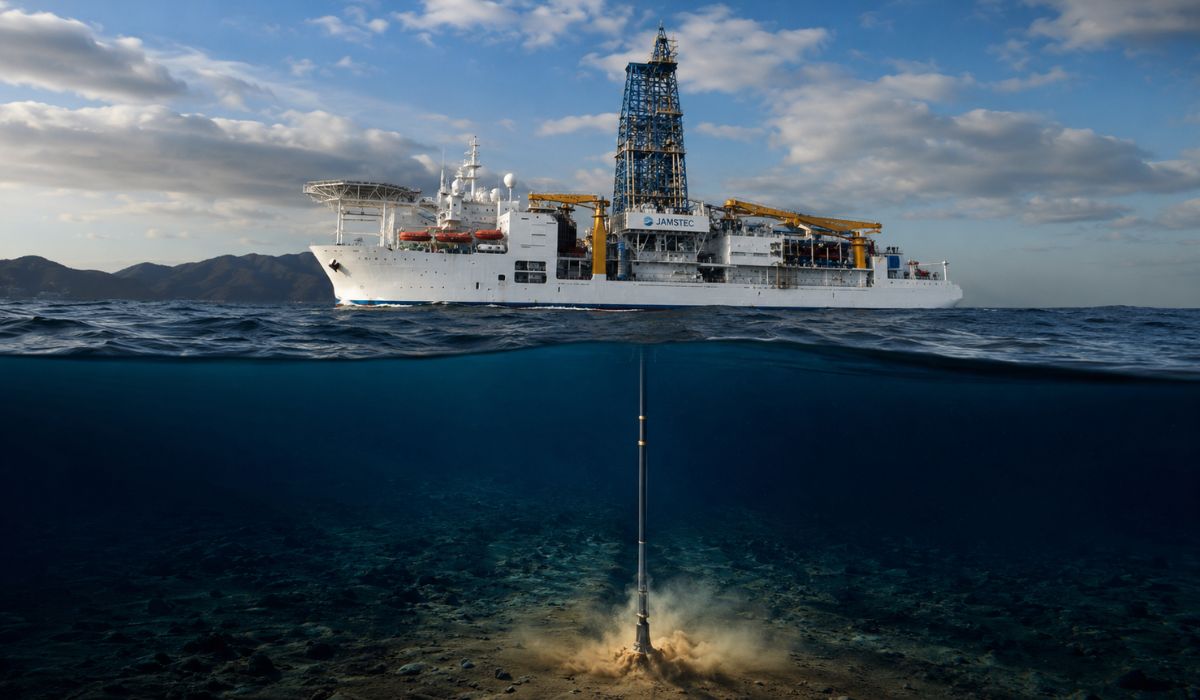
Japan sends ship to extract mud rich in rare earths at nearly 6,000 meters deep in the Pacific, attempts to lift 350 tons per day from the seabed, and transforms sediments near Minamitori Island into a strategic weapon to reduce dependence on China.


Indeed, the extracted rock cylinder contains a continuous record of 23 million years of the planet’s climate history. It includes periods when Earth was more than 2°C above pre-industrial levels.

The international program responsible for the achievement is SWAIS2C — an acronym for “Sensitivity of the West Antarctic Ice Sheet to 2°C”. It brings together universities from the USA, UK, Switzerland, and Germany.
According to the University of Exeter, drilling began in 2024 and was completed in January 2026.
“This is the longest continuous record ever recovered from beneath a continental ice sheet,” said Molly Patterson, co-chief scientist of the project and researcher at Binghamton University, in an official statement.
How the sediment core was extracted from under 523 meters of ice
The Crary Ice Rise camp is located on an internal elevation at the edge of the West Antarctic Ice Sheet. There, engineers first had to drill through the ice, then the submerged bedrock.
According to ETH Zurich, the temperature at the operating surface varied between -25°C and -45°C during the work.
Indeed, the equipment used is a cable probe developed specifically for this mission. The system traversed the ice sheet and then the continuous sedimentary bed.
Therefore, the record remains sealed and stratified, without contamination from surface waters. Each millimeter corresponds to a few years of intact geological deposition.
- 523 meters of ice drilled — first layer traversed by the probe
- 228 meters of core recovered — absolute record under an ice sheet
- 22x larger than previous cores — previous record was less than 10 meters
- 23 million years of record — covers the Miocene, Pliocene, Pleistocene, and Holocene epochs
- 4 countries involved — USA, UK, Germany, and Switzerland
Why this core is the most important ever extracted
The recovered cylinder contains geochemical markers from periods when Earth was warmer than today. It also has evidence of retreat and advance of the Antarctic ice sheet in cycles.

According to Imperial College London, the material will be analyzed in laboratories in four countries over the next 24 months.
Initial analyses show alternating layers of material deposited in open sea and in an ice-covered environment. This indicates that West Antarctica retreated and advanced multiple times.
As a result, polar retreat prediction models will gain unprecedented calibration data. Today, these models rely on indirect data such as ice probes and satellites.
What the study reveals about Antarctic ice melt
The West Antarctic Ice Sheet covers 1.9 million km². It contains enough water to raise global sea levels by 3.3 meters if it melted completely.
As a result, the extraction record helps to calculate the realistic timeline of melting.
According to EurekAlert, the study has already identified episodes of rapid retreat in periods with global temperatures similar to those projected for the 22nd century.
Therefore, these data serve as a reference for projections of current scenarios. Deep geology records exactly what happened the last times the planet warmed.
Likewise, the material may provide evidence of ancient ocean currents and atmospheric patterns. These elements directly influence rainfall regimes in the Southern Hemisphere.
Scientific impact and the logistics of the next phase
The cylinder was removed from the camp via a Twin Otter aircraft equipped with special skis. Each segment was transported in a refrigerated chamber to preserve the sediment intact.
As reported by Interesting Engineering, the material arrived at the laboratories in February 2026. The first slides are being prepared in frozen dark chambers.
Indeed, analyses of microfossils and isotopes may take up to 5 years to be published. Each subsection requires independent dating techniques.
This work is comparable to the first Antarctic cores, such as EPICA Dome C, which extracted 800,000-year-old ice in 2004.
On the other hand, EPICA Dome C only analyzed the ice — without reaching the bedrock. The SWAIS2C program was the first to integrate ice and bedrock in a single effort.
Likewise, the Crary Ice Rise region had never been explored with deep drilling. Its strategic location facilitated air logistics during the polar summer.
How Antarctic sediments compare to other polar cores
Brazil maintains the PROANTAR program with scientific bases in Antarctica, but does not operate subsurface probes of this scale. Brazilian presence focuses on biology, oceanography, and atmosphere.
Likewise, partners like Brazil can benefit from the sharing of public SWAIS2C data. The files will be released 36 months after the completion of the analysis.

As reported by Click Petróleo e Gás about the Southern Ocean, changes in the ocean and cryosphere are interconnected.
According to researchers from the US polar exploration program, these cores hold the largest known climate database.
Caveats and what has not yet been released
However, SWAIS2C has not yet released quantitative data on the speed of ice sheet retreat. Initial analyses are only qualitative.
Despite this, experts warn that radiometric dating work may adjust estimates. Each sample needs cross-validation before becoming a formal scientific publication.
Nevertheless, the engineering feat is undeniable. Extracting 228 meters of sediment core from under more than half a kilometer of ice will remain a landmark until a future project manages to surpass it.




-

-

2 people reacted to this.