Portuguese
  Spanish


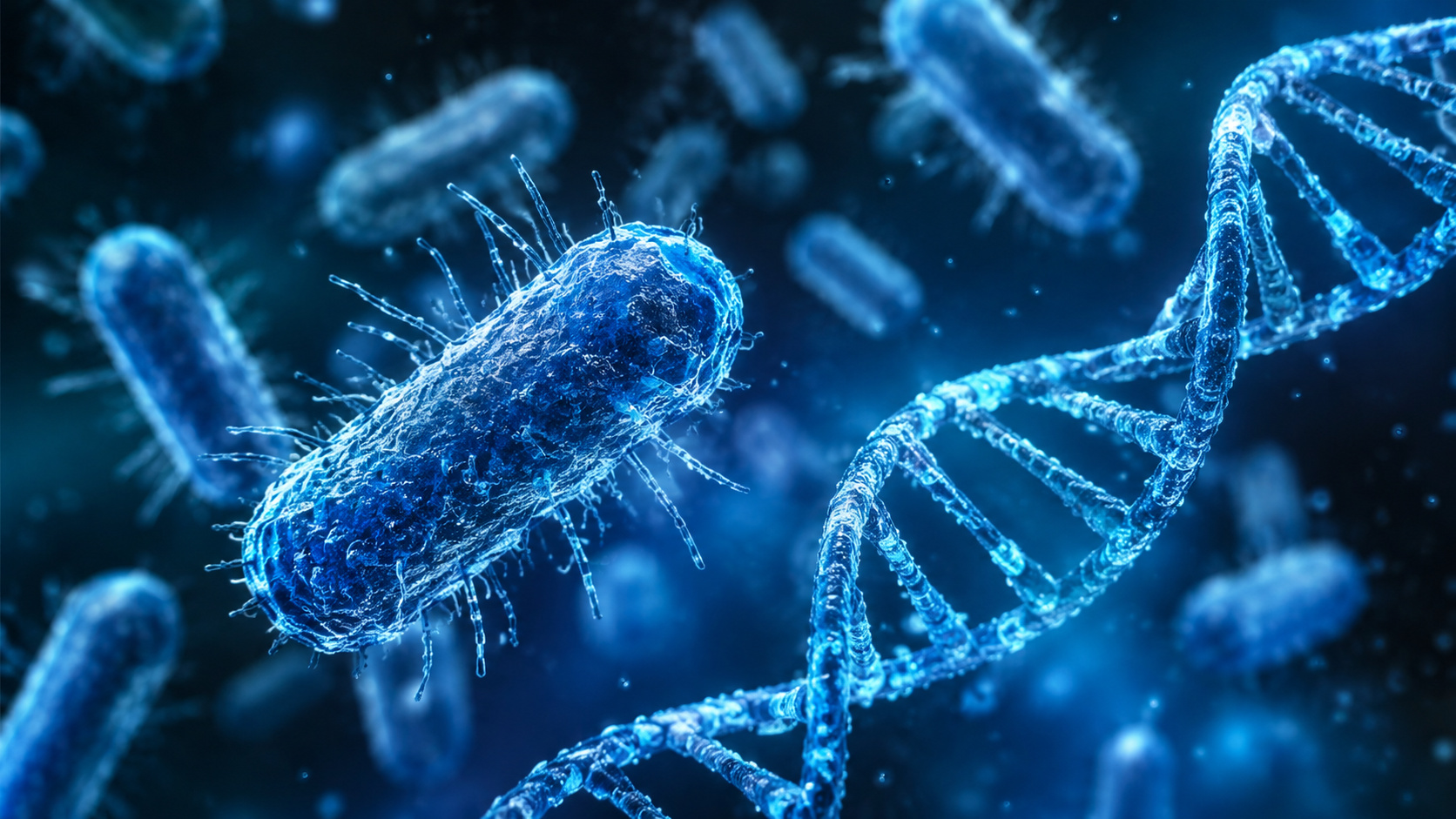

Study reveals genetic bacterium capable of creating DNA from scratch, an advancement that could transform synthetic biology and explain the origin of life.
Research published in the journal Science has put the scientific community on alert by revealing a biological mechanism considered extraordinary. Scientists from Stanford University, in the United States, identified a protein present in a bacterium capable of producing DNA from scratch, without using a pre-existing genetic sequence as a template.
According to Portal Terra on June 2, the discovery drew attention because it challenges a principle that has accompanied the evolution of life for about 4 billion years: the idea that DNA always arises from the copy of another DNA. The study opens new possibilities for understanding the origin of the first organisms on Earth and could have future impacts in areas such as synthetic biology, genetics, and biotechnology.
Scientific discovery reveals mechanism that seemed impossible
DNA is the molecule responsible for storing the genetic information of virtually all living beings. Since the advances of molecular biology in the 1950s, researchers have believed that new DNA molecules could only be produced from copying already existing sequences.
-
She spent 73 years breathing inside an iron lung, survived the aftereffects of polio, and became the last woman in the United States dependent on the equipment before dying at 78 years old.

-
Brazilian students created a $1 filter using pine bark, cotton, and 3D-printed parts to clean cassava wastewater, reduce the toxicity of a hazardous waste, and transform contaminated water into biofertilizer.

-
Astronaut from Artemis II steps down after mission to the Moon and decision surprises after a record of 406,771 km, a historic 10-day journey, and an unprecedented achievement for Canada.

-
A fossil kept for years in a small museum in Montreal concealed 450-million-year-old soft tissue, a discovery that has only happened once before in history.


Therefore, the new scientific discovery surprised specialists from different fields.
During an investigation into bacterial defense systems against viruses, the team led by researchers from Stanford University found a protein called Drt3b. The group included biochemist Alex Gao, one of the study’s authors.
What made the discovery so significant was the protein’s ability to create a genetic sequence without using a conventional template.


How the genetic bacterium builds a new molecule
The identified mechanism is part of a system known as DRT3, which operates in two stages.
In the first phase, a protein called Drt3a produces one of the DNA strands using a small genetic fragment as a reference, following a process already known to science.
The second stage is what intrigues researchers.
The Drt3b protein creates the other half of the molecule without resorting to any genetic template. Instead, its own structure serves as a guide to organize the nucleotides, which are the fundamental building blocks that form DNA.
In practice, the protein can assemble a long genetic sequence using only the information present in its molecular configuration.
This behavior has transformed the so-called genetic bacterium into one of the most fascinating examples ever observed by modern biology.
Main characteristics of the identified mechanism
- Produces a DNA sequence without a traditional genetic template;
- Uses the structure of the protein itself as a reference;
- Was found in a bacterial system of defense against viruses;
- Is the first known protein capable of creating long specific sequences in this way;
- May represent a new chapter in the understanding of molecular evolution.
DNA from scratch may help explain the origin of life
One of the biggest questions in science remains understanding how the first organisms on the planet emerged.
The ability to produce DNA from scratch may provide important clues about this process.
Scientists believe that similar mechanisms could have existed in the first billion years of Earth, when primitive forms of life were still developing.
Although the study does not directly prove this hypothesis, it shows that nature found much more creative ways to build genetic molecules than previously imagined.
Therefore, many researchers consider this discovery a possible path to investigate events that occurred approximately 4 billion years ago, a period associated with the emergence of the oldest known forms of life.
What the researchers involved in the study say
The discovery sparked immediate interest among specialists in the field.
Alex Gao highlighted that the team did not expect to find such a mechanism during investigations into bacterial immunity.
Meanwhile, biochemist Philip Kranzusch from Harvard Medical School, who did not directly participate in the research, classified the work as highly relevant to the understanding of molecular biology.
Another name involved in the debates is Rafael Pinilla-Redondo, a researcher at the University of Copenhagen. According to him, the observed mechanism does not overturn the fundamental principles of biology but demonstrates that evolution can develop extremely unusual solutions.
The consensus among experts is that there are still many unanswered questions about the complete functioning of this system.
Synthetic biology gains a new field of exploration
Besides the academic importance, the study has also sparked interest among researchers in the field of synthetic biology.
Currently, the artificial production of DNA depends on sophisticated laboratory techniques and generally requires the use of existing sequences.
The Drt3b protein suggests that nature has found an alternative path.
If scientists can understand this mechanism in detail, it could inspire new technologies for manufacturing personalized genetic molecules.
Despite the potential, the authors themselves highlight that there is still no evidence that the protein can be reprogrammed for practical applications.
Even so, the impact on synthetic biology is already considered significant.
The mystery about the true function of this DNA from scratch
Although the mechanism has been identified, its biological purpose remains unknown.
Researchers believe that the produced DNA may be part of a sophisticated defense system against viruses that attack bacteria.
Among the hypotheses currently being analyzed are:
- Functioning as a molecular trap for invading viruses;
- Acting as a biological signal within the cell;
- Formation of support structures for the defense system;
- Production of molecules capable of neutralizing viral components.
So far, none of these explanations have been definitively confirmed.
Therefore, the exact role of this DNA from scratch remains one of the main challenges for future studies.
Scientific discovery reignites debate over fundamental rules of biology
The release of the study has generated discussions about the so-called central dogma of biology.
This concept establishes that genetic information typically follows a specific flow: DNA, RNA, and proteins.
Some observers interpreted the discovery as a possible break from this rule.
However, experts claim that such a conclusion would be premature.
According to researchers, the Drt3b protein is not transforming proteins into genes. What occurs is a highly specialized mechanism capable of guiding the construction of a specific DNA sequence.
Thus, the scientific discovery broadens the understanding of biological processes without necessarily invalidating already established fundamental concepts.
The microbial dark matter that still challenges science
For many experts, the most impressive aspect of the research is what it reveals about human ignorance regarding the microbial universe.
Bacteria have been waging a constant battle against viruses for billions of years and, in this process, have developed extremely sophisticated mechanisms.
A large part of these strategies remains unknown.
Researchers describe this set of yet-to-be-understood processes as a kind of “microbial dark matter,” a vast reservoir of biological functions that remains hidden from science.
The identification of this genetic bacterium shows that many of evolution’s secrets still await discovery.
An advance that opens more questions than answers
The discovery of the Drt3b protein represents one of the most intriguing advances in biology in recent years. By demonstrating that a bacterium can produce DNA from scratch using its own protein structure as a guide, scientists have found a mechanism that few imagined possible.
More than providing definitive answers, the study expands the boundaries of scientific knowledge. The research strengthens investigations into the origin of life, bacterial defense systems, molecular evolution, and synthetic biology, while highlighting how much remains to be discovered in the microscopic universe that has inhabited the planet for about 4 billion years.