






 Portuguese
  Spanish
  5 min of reading
  0 comments


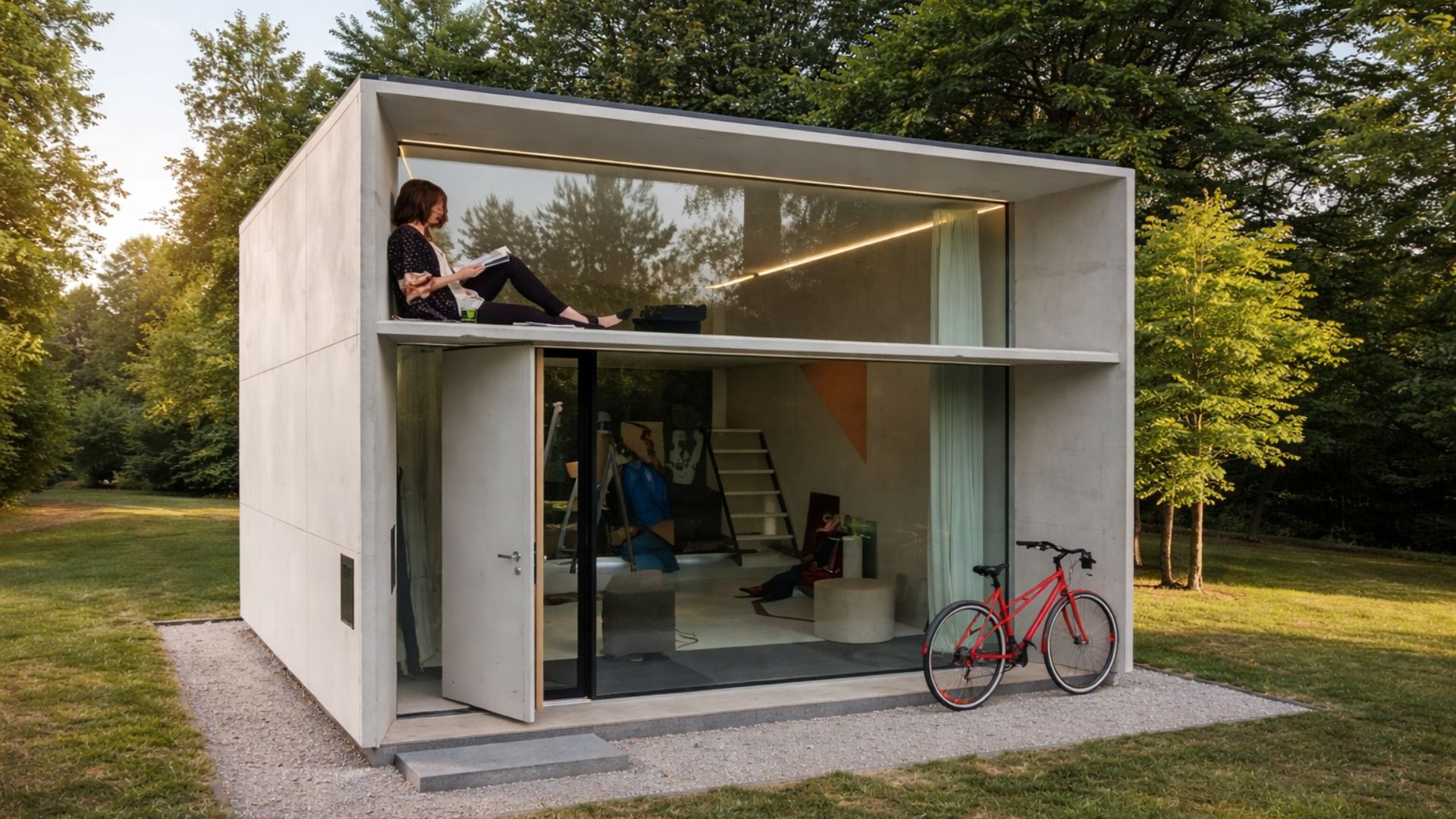
Compact Structure Manufactured in Industrial Environment Promises to Reduce Worksite to Final Positioning and Connections Stage, with Installation in Few Hours and Focus on Predictability, Mobility and Quality Control.
A modular microhouse manufactured almost entirely in an industrial environment and delivered on-site as a single piece has been gaining traction in architecture and construction discussions for reducing the traditional worksite to a final stage of positioning and infrastructure connections.
Known as KODA, the unit is developed by the Estonian company Kodasema and is presented as a compact solution that arrives practically ready, with interiors and systems pre-installed, to be placed with a crane and connected to water, sewage, and electricity.
By replacing the common sequence of foundation, masonry, concrete curing, and on-site finishing with a factory-focused process, the model aims to shorten deadlines and reduce interruptions, such as weather variations and rework, which often impact schedules.
-
Coal mine purchased for $2 million in Wyoming, the Brook Mine holds rare earth elements and critical minerals estimated at up to $37 billion, in an asset that the US is competing for with China.

-
The most common mistake when storing eggs is leaving them in the refrigerator door, where temperature fluctuations crack the shell, remove the cuticle, and cause them to lose freshness, with a risk of contamination.
-
A city has planted 880,000 trees and 2.5 million smaller plants since 2016, reduced the temperature by up to 3°C in some areas, and won an international award for using vegetation to combat urban heat in Colombia.
-
More than half of the residents of this city live underground to escape the brutal heat of 50°C: in the world’s largest opal hub, houses, churches, and hotels are carved into the rock and maintain around 23°C year-round in the Australian desert.



Quick Installation and Reduced Site Work
Instead of the construction progressing slowly on-site, the proposal is that most of the work occurs on a production line, with assembly and finishing under quality control, leaving for the site only the preparation of a leveled base and connection points.
According to Kodasema itself, the preparation of the site is described as minimal and installation can take less than a day, as long as there is crane access and the connections to infrastructure comply with local requirements.

In international reports and product presentations, the physical placement on-site is associated with deadlines of just a few hours, with recurring mentions of assembly and installation in about seven hours, varying according to logistics and access conditions.
Concrete, Wood, and Large Glass Panels Structure
The composition of the KODA is marketed as a system of composite panels with a concrete exterior and a wood interior, with layers of insulation between them, a combination designed for thermal performance and for a more controlled construction away from the site.
Besides the construction solution, the front facade with large glazed panels has become the project’s signature, reinforcing the idea of a compact unit with natural lighting, while the performance of the glass is presented as part of the efficiency package.
When it arrives at the site, the unit tends to already include walls, roofing, insulation, and part of the internal installations, which shifts the complexity to the factory and reduces, on-site, the need for lengthy and noisy steps typical of conventional construction.

Models for Housing, Office and Accommodation
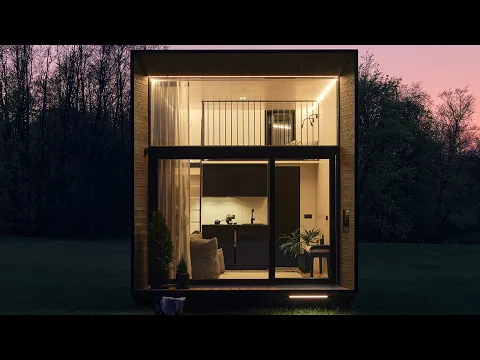
Kodasema positions the microhouse as a small-scale module that can serve housing, work, and accommodation, with layout variations that seek to accommodate integrated living room, bathroom, and, in some versions, lofts for sleeping or expanding the usable area.
There are models with different dimensions within the line, and market presentations mention compact versions close to 20 square meters, while others reach about 45.8 square meters, maintaining a focus on functional use of internal space.
As it is a modular product, the company also emphasizes the possibility of adapting the configuration to its purpose, such as an independent office, hotel unit, or residential annex, as long as the zoning and urban requirements allow for installation.
Mobility and Possibility of Reinstallation
One of the points often mentioned in specialized publications is that KODA was designed to be relocatable, with the idea that the unit can change addresses, as long as transportation, lifting, and new connections are feasible according to local regulations.

This characteristic brings the module closer to temporary or seasonal uses, especially where there is pressure for agility, but it does not eliminate logistical care, as movement depends on routes, authorizations, and crane operation compatible with the site.
In project descriptions, the unit is presented as self-sustained in the sense of not depending on deep fixation to the ground, although the base needs to be prepared and the set of connections, when a network is available, must follow technical and safety standards.
Growth of Modular and Industrialized Construction
The focus on manufacturing off-site accompanies a broader movement towards industrialization in construction, advocated as a way to reduce waste, improve standardization, and allow previously sequential steps to be done in parallel, shortening timelines.
In this type of solution, predictability is often marketed as an advantage, because the process in a controlled environment tends to reduce execution variations, while the work in the field becomes shorter and more dependent on the correct preparation of the site.
At the same time, the compacting of the program requires heightened care regarding thermal comfort, waterproofing, and ventilation, since flaws that would be diluted in larger areas can become more noticeable in reduced spaces.

Licenses, Zoning and Legal Requirements
Although the proposal reduces debris and direct intervention on the lot, installation is still subject to municipal rules, zoning, licenses, and connection standards to networks, which varies from country to country and may limit use in certain areas.
Preparatory steps remain, such as leveling and defining a compatible base, in addition to planning access for transport and lifting, factors that can be decisive, especially in dense urban areas with narrow streets.
The project gained international visibility in architecture and design circuits and is associated with presentations in Estonia, including the initial exhibition at the Tallinn Architecture Biennale, reinforcing the connection with a local ecosystem of digitized and industrialized solutions.
With the logic of “arriving ready” and transforming the worksite into technical completion, the modular microhouse challenges the model of long and fragmented construction, but remains dependent on logistics, regulation, and infrastructure to fulfill the promise of quick installation.


-

-

2 people reacted to this.