






 Portuguese
  Spanish
  4 min of reading
  4 comments


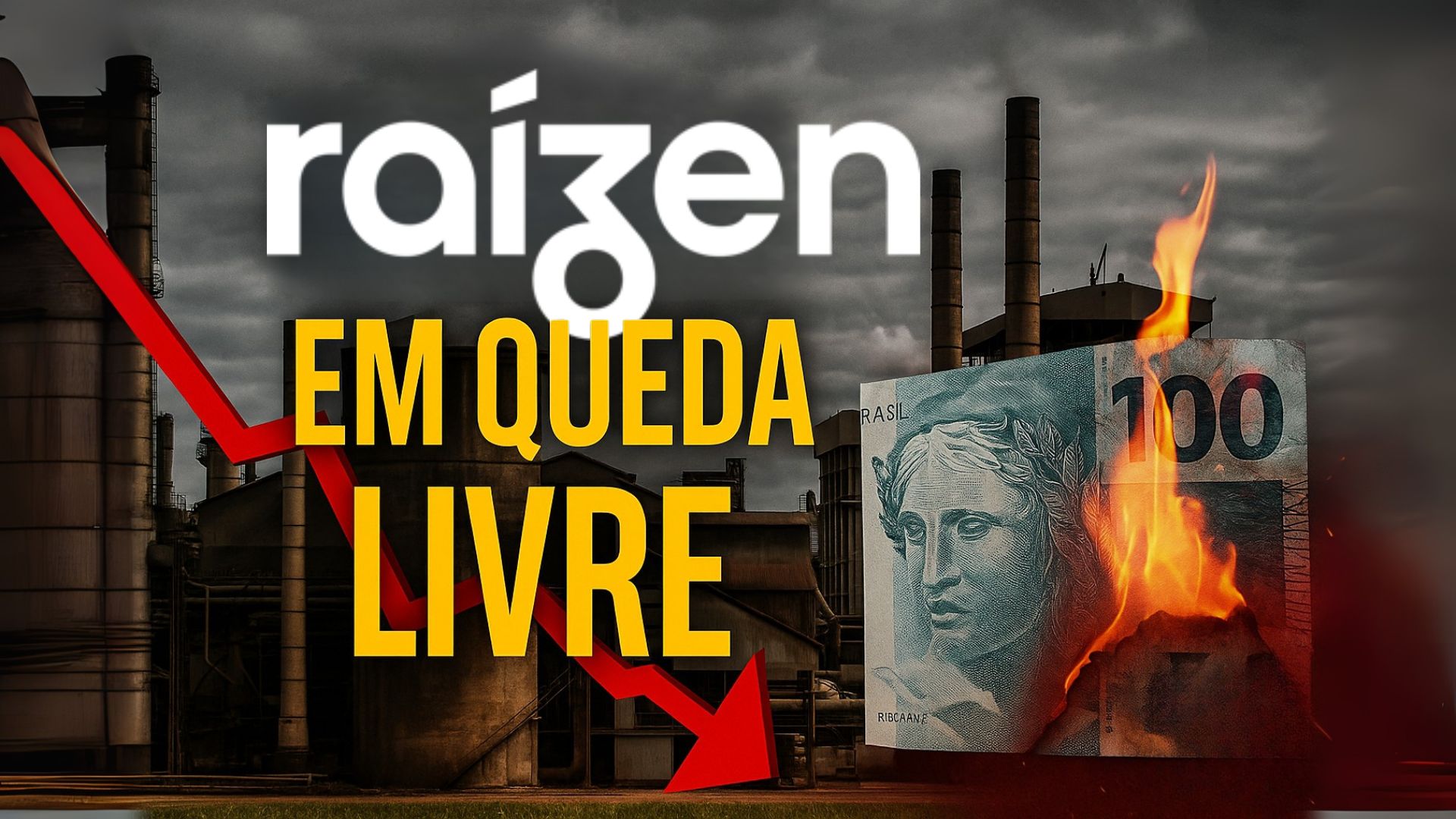


The Paralysis of the Santa Elisa Plant in Sertãozinho Exposed the Crisis of Raízen, Which Saw Its Debt Soar to R$ 49 Billion, Burned R$ 7 Billion in Cash, and Lost 70% of Market Value in Just One Year.
The decision, announced in July, put around 1,200 jobs at risk and clearly exposed the crisis faced by the company, which until recently was considered one of the largest forces in the global sugar-energy sector.
Founded in 2011 as a joint venture between Cosan and Shell, the company is going through its most delicate phase since the IPO held in 2021, which raised US$ 14.3 billion and was the largest public offering in Latin America that year.
-
Brazilian Joins Homeownership Consortium, Faces Decade of Dual Payments Totaling $141,000, Surpassing Traditional Mortgage

-
Land Rover to Halt Production in July, Putting 371 Jobs at Risk, as Chinese Automaker Negotiates to Convert Factory to 100,000 Vehicles Annually by 2027

-
Mexican Pest Threatens U.S. Cattle Herds at Historic Lows, Potentially Boosting Brazilian Beef Exports as Burger Prices Soar

-
Brazilian Freight Bill Progresses in Congress with $5,000 Minimum Wage, 70% Advance Payment, and Fines Up to $1 Million, as Agriculture and Industry Warn of Rising Costs and Legal Uncertainty


Today, four years later, the situation is quite different: the net debt soared to R$ 49 billion in June, and its shares plummeted to the lowest value in history, close to R$ 1.
Crisis Exposed in Sertãozinho
The impact of the closure of the unit in Sertãozinho was immediate.
The city, which had depended on the Santa Elisa for almost nine decades, saw its main source of income disappear.
“I felt anesthetized, I looked into the eyes of the people and saw sadness in them,” reported the instrumentalist Natã Nóbrega, a plant employee for two decades, in an interview with Bloomberg News.
The plant had already been considered the largest in Brazil, a country that leads global sugar production.
The cessation of its operations, although temporary, was interpreted by the market as an alarming signal of Raízen’s financial deterioration.
Growing Debt and Cash Burn
In a balance sheet released on August 14, the company’s financial director, Rafael Bergman, admitted that Raízen is seeking new resources.
According to him, the company “burned a pile of money” amounting to R$ 7 billion just in the quarter ending June 30.
The announcement immediately dropped the shares (RAIZ4) by up to 15%, causing the stock to hit R$ 1.02 on B3 — a value far from the peak of R$ 7.60 recorded on the day of its debut on the stock market.
In 12 months, the accumulated devaluation approaches 70%.
The situation has been exacerbated by rising interest rates, which have increased the cost of debt incurred at a time of strong expansion.
Over the past four years, the company doubled its investments in biofuels and new technologies, yet has not achieved proportional returns.
Frustrated Bet on Acquisitions and New Markets
In 2021, Raízen acquired Biosev, then controlled by Louis Dreyfus Holding.
The acquisition expanded production capacity but brought significant liabilities and plants with below-average performance.
At the same time, the company invested in second-generation ethanol, traceable sugar, and sustainable aviation fuel (SAF).
These initiatives, however, require long-term maturation and have been impacted by external barriers, such as the 50% tariff imposed by the Donald Trump government on Brazilian ethanol.
Meanwhile, competitors such as São Martinho and Jalles Machado have shown more solid performance, taking better advantage of the recent price cycle.
Possible Entry of New Partner
Until recently, the possibility of capitalization was seen as unlikely, as the control of Cosan, led by billionaire Rubens Ometto, has always been exercised rigidly.
However, in light of the current scenario, the holding itself has begun to acknowledge the need to seek partners.
“Bringing in a strategic partner is an option we like,” stated Cosan CEO, Marcelo Martins, on Friday (15).
He emphasized that the potential investor needs to be aligned with the strategies of both Cosan and Shell.
According to journalistic investigations, Shell is being advised by Lazard, while Cosan is being advised by Itaú in its search for investors.
Sale of Assets and Management Reformulation
To reduce its leverage, Raízen has already begun selling assets.
Among the deals concluded are the sugar plant in Leme, in Piracicaba, and 55 renewable energy generation units.
However, these divestments represent only 7% of the net debt.
The company is also negotiating the sale of refineries and gas stations in Argentina, along with plants in Mato Grosso do Sul, according to reports from Bloomberg News.
“We acknowledge that this is not a short-term journey,” affirmed Bergman.
At the same time, management has undergone changes.
Since 2023, the leadership has been in the hands of Nelson Roseira Gomes Neto, a career executive at Cosan.
Uncertain Future
Raízen, which was valued at US$ 14 billion at the IPO, is now worth just over US$ 2 billion.
The dependence on asset sales and the search for a strategic partner will be decisive in ensuring the group’s survival in an increasingly competitive market.
For Sertãozinho, the memory of Santa Elisa carries symbolism.
“I thought one day she could return to what she was,” said Maurílio Biagi Filho, a former executive at the plant and grandson of the businessman who acquired it in 1936.
“But economic factors outweigh any other scenario.”
Given the historical weight of the company and the magnitude of its problems, the question remains open: can Raízen reinvent itself, or is it facing a point of no return?





Fiz parte desta conquista , desde 1988 , e realmente vi que a partir do momento da Joint Venture com a Shell passou pouco tempo e as coisas mudaram, pessoas foram trocadas, exatamente o que foi postado acima , pessoas fazem a diferença, principalmente em um setor onde o Agro é 50 a 70 % do Orçamento, onde a expertise de um agricultor vale muito , planilhas aceitam tudo .
Tarifaço do Trump sobre o etanol? Isto é de agora e vai dizer que impactou a Raizen? Santa paciência
Quem faz a diferença são as pessoas e infelizmente a Raízen, diferentemente da São Martinho, teve muitas mudanças na suas equipes de gestão e deu altas responsabilidades a profissionais não preparados para tais desafios, além da política descontrolada que **** numa empresa de porte gigantesco como a Raízen.
É uma pena tudo isso!!!