Portuguese
  Spanish


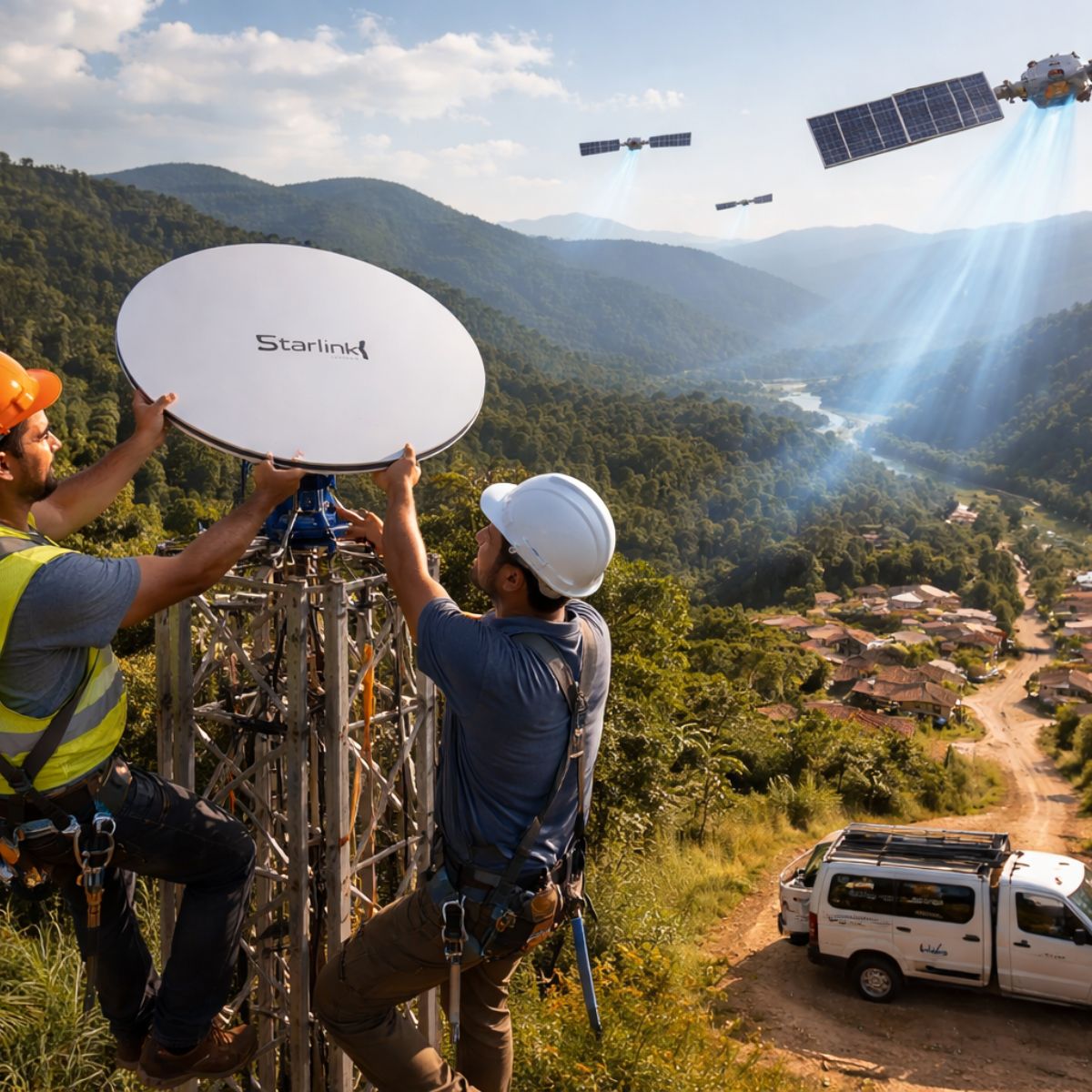

Starlink has signed an agreement with Alares, a provider present in seven states with over 230 cities, to sell satellite internet starting in May using physical stores in rural areas without fiber optic, with plans of up to 400 Mbps.
Starlink, the satellite internet arm of SpaceX, announced this Saturday (19) a commercial agreement with the provider Alares to expand the sale of its services in Brazil, especially in areas where fiber optic does not reach. The information was first reported by Estadão, and the official launch of the partnership is scheduled for May, with Alares offering the same plans that Starlink already provides in the Brazilian market, including connections ranging from 100 to 400 Mbps and options for use on the go and in properties with multiple access points. Denis Ferreira, who presides over Alares, stated to the newspaper that the agreement aims to eliminate geographic barriers and expand the limits of national connectivity.
The central goal is to reach locations where terrestrial telecommunications infrastructure has never been installed. Alares, based in São Paulo, has over 825,000 subscribers and was formed from the unification of about twenty regional providers, currently having more than 120 physical sales points in seven states. Starlink, in turn, had approximately 660,000 customers in the country until February, according to data from Anatel. The combination of the American company’s orbital coverage with Alares’ commercial reach creates a unique distribution channel for satellite internet in the interior of Brazil.
What Starlink gains by partnering with a regional provider

Elon Musk’s operator sells its services exclusively through digital channels, a model that is efficient in urban centers but insufficient to reach rural populations with little familiarity with online shopping. By partnering with Alares, Starlink inherits a commercial structure with dozens of stores spread across the interior of seven states, where consumers can see the equipment, talk to a representative, and sign up for the plan in person. This type of direct contact weighs heavily in the decision of residents in isolated areas, where investing in a satellite dish represents a considerable expense.
-
China takes a one-ton detector 2,400 meters under a mountain, uses cosmic particles to “X-ray” 3 km of rock, and transforms a 300,000 m³ underground laboratory into a giant scanner of the planet.

-
While medicine is still unable to transplant an eye capable of seeing, scientists have created a “heart-machine” that circulates liquid through the vessels and keeps a human eyeball alive for hours outside the body in a $5.3 million project.
-
China finds beneath a 4,500-year-old stone city six secret tunnels that descend 6 meters, cross concentric walls, and reappear outside the gates in a fortified complex of 138 hectares.
-
Scientists discover that the pressure between 2 and 6 kilometers deep in the ocean transforms “marine snow” into food, releasing up to 50% of the carbon and causing the amount of bacteria to grow 30 times in just two days.


Alares also offers scale. With a consolidated base in over two hundred municipalities and nearly one million active customers, the provider delivers to Starlink a commercial reach that would take years to build from scratch. The partnership does not alter prices or conditions of existing plans, which suggests that Starlink positions Alares as a sales arm, maintaining full control over technology, signal, and pricing. The parent company of Alares, the American manager Grain Management, has an investment profile in telecommunications infrastructure and likely sees the alliance as a way to add value to the portfolio without needing to invest in space technology.
Why fiber optics do not solve the problem that Starlink addresses

Bringing fiber cable to remote communities requires heavy investment in cabling, poles, distribution boxes, and ground equipment that rarely generate financial returns in low population density areas. Satellite internet eliminates this dependency because the signal comes from space: just install an antenna on the roof to receive a connection anywhere there is a direct line of sight to the sky. For rural residents, this means having access to the same type of connectivity available in urban centers, without waiting for a company to decide to bury kilometers of fiber optics to their property.
Brazil has millions of households in areas where no terrestrial operator intends to invest in the coming years. Starlink has already demonstrated that demand exists: the base of approximately 660,000 national subscribers has grown rapidly since the company began operating in the country. The partnership with Alares is expected to boost this number by facilitating access precisely for those who need it most and are least able to contract through digital means.
The available plans and what has not been revealed about the agreement with Starlink


The contract between the two companies stipulates that Alares will sell the same options already available in Starlink’s catalog. The offered speeds start at 100 and go up to 400 Mbps, with variants for those who frequently move and for properties that require coverage in multiple locations, a common scenario in agribusiness, where headquarters, warehouses, and planting areas are at considerable distances.
What remains confidential is the financial division of the agreement. Neither Starlink nor Alares have revealed how the revenues will be shared between the parties, information that will determine whether the partnership is profitable enough for the provider to invest in active promotion with its customer base. The fact that the announcement was made jointly with Estadão suggests that both companies consider the agreement relevant enough to justify exposure in the press even before the official launch.
What the Starlink partnership means for connectivity in rural Brazil
The alliance between a global satellite operator and a regional provider with a solid physical presence creates a model that can be replicated in other emerging markets. For traditional fiber optic operators, the move represents competition in territory they had dismissed due to lack of return. For rural consumers, it means having for the first time the real possibility of choosing an internet provider with on-site support and technology capable of functioning anywhere on the map.
By securing a business partner of Alares’ stature, Starlink transforms what was a promise of universal access into an operation with a store, address, and human support. The launch in May will be the real test: if demand in rural areas meets expectations, satellite internet could cease to be an alternative and become the primary connection in regions where fiber optic has never been and likely never will be economically viable.
And you, do you live in an area without fiber optic? Would you consider hiring Starlink through a physical store? Leave your opinion in the comments.