






 Portuguese
  Spanish
  6 min of reading
  0 comments


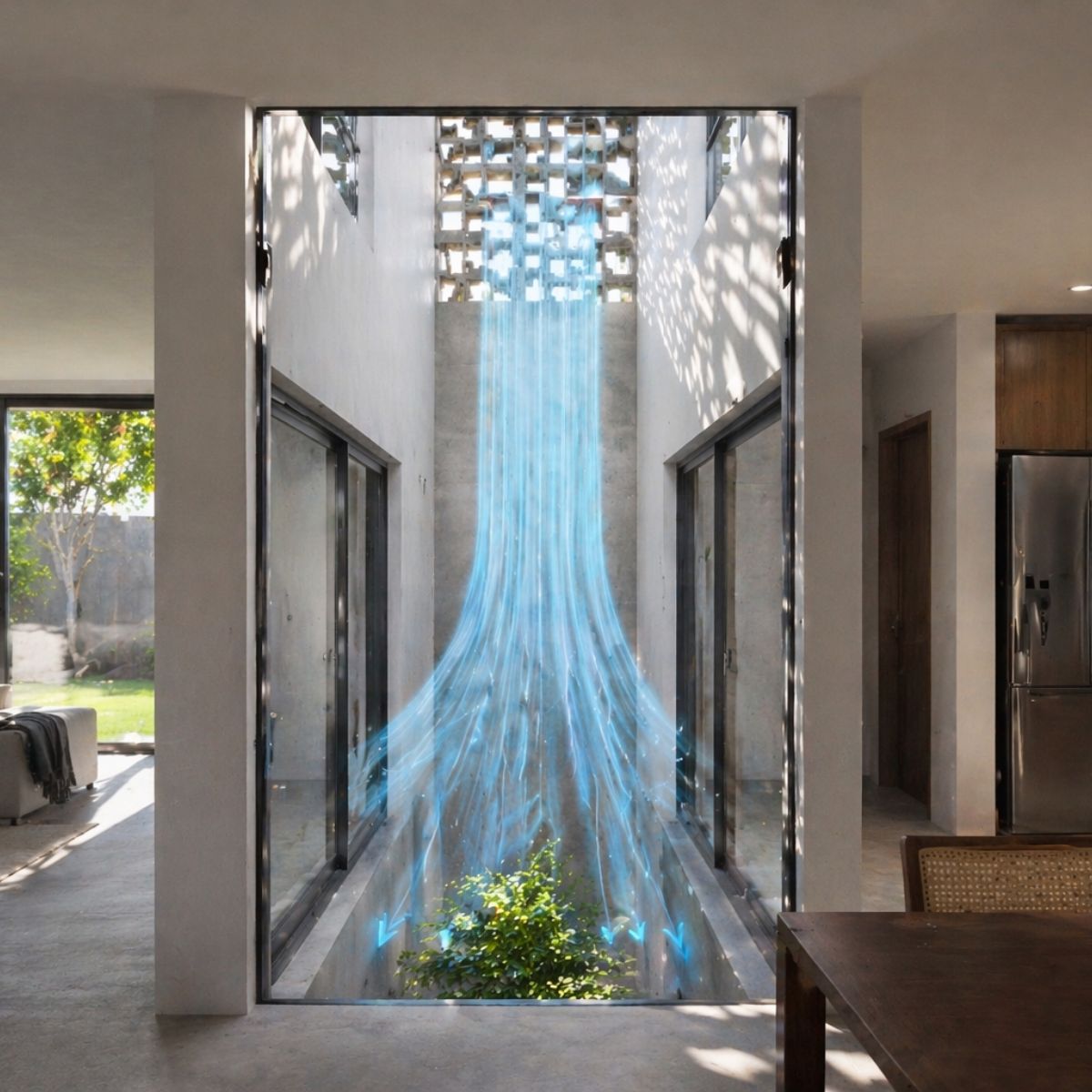
The solar chimney is a 3000-year-old Persian invention that reduces internal temperature by up to 15 degrees without consuming electricity, replaces air conditioning with zero moving parts, and was abandoned because the industry makes more profit from devices that break and generate electric bills.
The solar chimney is an invention that originated in the scorching plateaus of ancient Persia about 3000 years ago, in the city of Yazd, where temperatures regularly exceeded 45 °C. Persian architects developed vertical masonry towers called Badgir, which functioned as passive thermal engines: they took advantage of the pressure difference between shaded courtyards at the base and the sun-heated top of the towers to create a continuous displacement of fresh air through the living spaces, without any mechanical parts. In many cases, this invention was combined with underground water channels called qanats, which cooled the air by evaporation before it reached the indoor environments. For centuries, this was the standard for climate control in the hottest regions of the planet.
The physics behind the invention is elegant and requires no energy. According to the principle described in the thermodynamics of gases, when solar radiation heats the air inside a vertical shaft, the density of that air decreases and it rises rapidly toward the exit at the top. This upward movement generates a low-pressure zone at the base of the chimney, and since nature does not tolerate a vacuum, the building is forced to draw in fresh air through the lower openings, usually positioned on the shaded side. The result is a silent ventilation system that operates more powerfully precisely during the hottest hours of the day, when a mechanical air conditioner would be at its peak consumption, because the temperature difference between the collector and the external environment reaches its maximum.
How the Persian invention works in modern practice

In construction terms, a solar chimney consists of a vertical shaft with a dark surface absorbing plate positioned behind a high-transmittance glass layer. Solar light passes through the glass, hits the plate, and converts into heat, which warms the air trapped inside the shaft and pushes it upward. The speed of the air and the cooling capacity depend on two variables: the height of the chimney and the temperature difference between the inside of the shaft and the environment. The taller the shaft and the more intense the sun, the greater the volume of air displaced.
-
Brazilian military personnel spend weeks in extreme training in the Amazon and receive a badge reserved for Jungle Warriors during the celebration of the 60th anniversary of one of the most demanding and respected courses in the world.

-
After the divorce, a woman spent four years building a studio apartment with skylights, mirrors, a bathtub hidden under the sofa, and family mementos for a fresh start.

-
The “Rei do Bolão” of Fortaleza made 100 people millionaires at once in the Mega-Sena: the lottery office in Aldeota divided R$ 168 million in a pool and delivers a bet from São Paulo to Dubai.
-
After swapping sewing for cement, a woman from Paraná became a mason, spent 12 years on construction sites, started building her own house, and even gained fame for restoring old Opalas.




The invention is not just for summer. A well-designed solar chimney includes a bypass damper that, in winter, allows the upper outlet to be closed and redirects the heated air back into the building, turning the cooling tower into a solar-powered heating system. This seasonal versatility makes the technology a complete climate control solution that operates at both ends of the calendar without consuming a single watt of electricity.
The numbers that prove the efficiency of the invention

The performance data of the solar chimney is not anecdotal. In 1995, researchers from the University of Arizona monitored a residential installation in the Sonoran Desert and recorded that the indoor temperature remained at 24 °C while the outdoor air was 41 °C, a reduction of 17 degrees Fahrenheit achieved solely with the weight of the atmosphere and the heat of the sun. The system did not consume electrical energy at any point during the measurement.
Air quality is another point that differentiates the invention from conventional appliances. The EPA estimates that indoor air is often two to five times more contaminated than outdoor air, and a modern home with mechanical cooling provides less than 0.5 exchanges of fresh air per hour. The solar chimney delivers between 8 and 12 renewals per hour with 100% filtered outdoor air, eliminating the buildup of volatile organic compounds, CO₂, and humidity that medicine refers to as Sick Building Syndrome. A study from the University of Nottingham demonstrated that buildings equipped with this invention can reduce total energy consumption for cooling by up to 75%.
The carbon footprint that separates the invention from air conditioning
The environmental comparison between the two approaches is staggering. Manufacturing, installing, and operating a three-ton central air conditioning unit over its fifteen-year lifespan generates a debt of approximately 25 tons of CO₂. A solar chimney, built with high-density masonry, recycled aluminum, and glass, recovers its carbon cost in less than six months. After that, the operational impact is zero.
This difference transforms the invention into an environmental asset that adds value to the property while eliminating operational costs. Unlike a mechanical unit that requires annual technical visits, filter changes, and refrigerant recharges, the solar chimney has no components that wear out. Maintenance is limited to checking the air intake filters once a year and cleaning the glass to maintain maximum solar capture. It is a permanent structure, not an equipment with an expiration date.
Why the construction industry ignores this invention
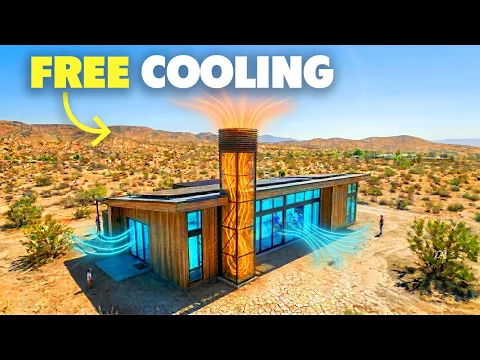

The answer lies in the business model that supports the sector. For a builder, it is more profitable to erect a simple box without proper thermal insulation and then hire an air conditioning installer, a standardized solution that does not require specialized architectural knowledge or integration into the building’s design. The mechanical system is modular and generates recurring revenue: annual maintenance, parts replacement, energy consumption, and eventual replacement of the entire unit every decade and a half.
The Persian invention, on the other hand, does not break, does not require a filter, and does not generate a monthly bill. Equipment manufacturers and utility companies have no incentive to promote a technology that eliminates consumer dependency. Furthermore, the building codes in effect in the United States, based on ASHRAE 62.2 standards, prioritize mechanical systems with industrial certification. Since the solar chimney is a passive architectural element and not an off-the-shelf product with a factory seal, most inspectors require the installation of a backup mechanical system, doubling the cost and nullifying the economic advantage of the invention.
Historical records that prove the invention saves lives
The effectiveness of the solar chimney was documented long before modern studies. In the 19th century, when the British Empire expanded into tropical regions, colonial engineers incorporated the Persian invention into hospitals and barracks in India and Africa. The British Medical Journal recorded that wards equipped with this system had significantly lower mortality rates during epidemics of diseases such as cholera and influenza, not for medical reasons, but for physical reasons: the constant renewal of air eliminated pathogens and moisture that proliferated in stagnant environments.
This historical evidence is relevant because it demonstrates that the invention is not just an archaeological curiosity. It is a solution tested under real conditions over millennia, validated by contemporary academic research, and capable of simultaneously addressing temperature, air quality, and energy consumption issues. The fact that it has been marginalized does not reflect a technical limitation, but an economic choice by an industry that profits more from selling machines designed to fail than from structures designed to last.
How to install the invention in your home
For already built homes, the most affordable option is a solar chimney mounted on a sun-facing wall. The structure consists of an insulated box with an absorber plate coated with selective paint, covered by low-emissivity glass, connected to the interior by two openings of about 15 centimeters, one near the floor and the other near the ceiling. For an area of approximately 45 square meters, the required capture area is around two square meters, and the cost for a DIY installation ranges between $300 and $500.
For new constructions, the invention can be integrated directly into the design as a vertical chimney embedded in the thermal mass of the sunlit facade. By combining the chimney with an underground tube of about 30 meters buried 1.8 meters deep, where the soil temperature remains constant around 12 °C throughout the year, it is possible to create a completely independent air conditioning system from the electrical grid. The suction generated by the chimney pulls air through the tube, and when it reaches the environment, it has already been naturally cooled by the soil. It is cooling that works even during complete blackouts.
And you, were you already familiar with the solar chimney? Would you build this system in your house or do you think that air conditioning is still irreplaceable? Leave your opinion in the comments.


Be the first to react!