






 Portuguese
  Spanish


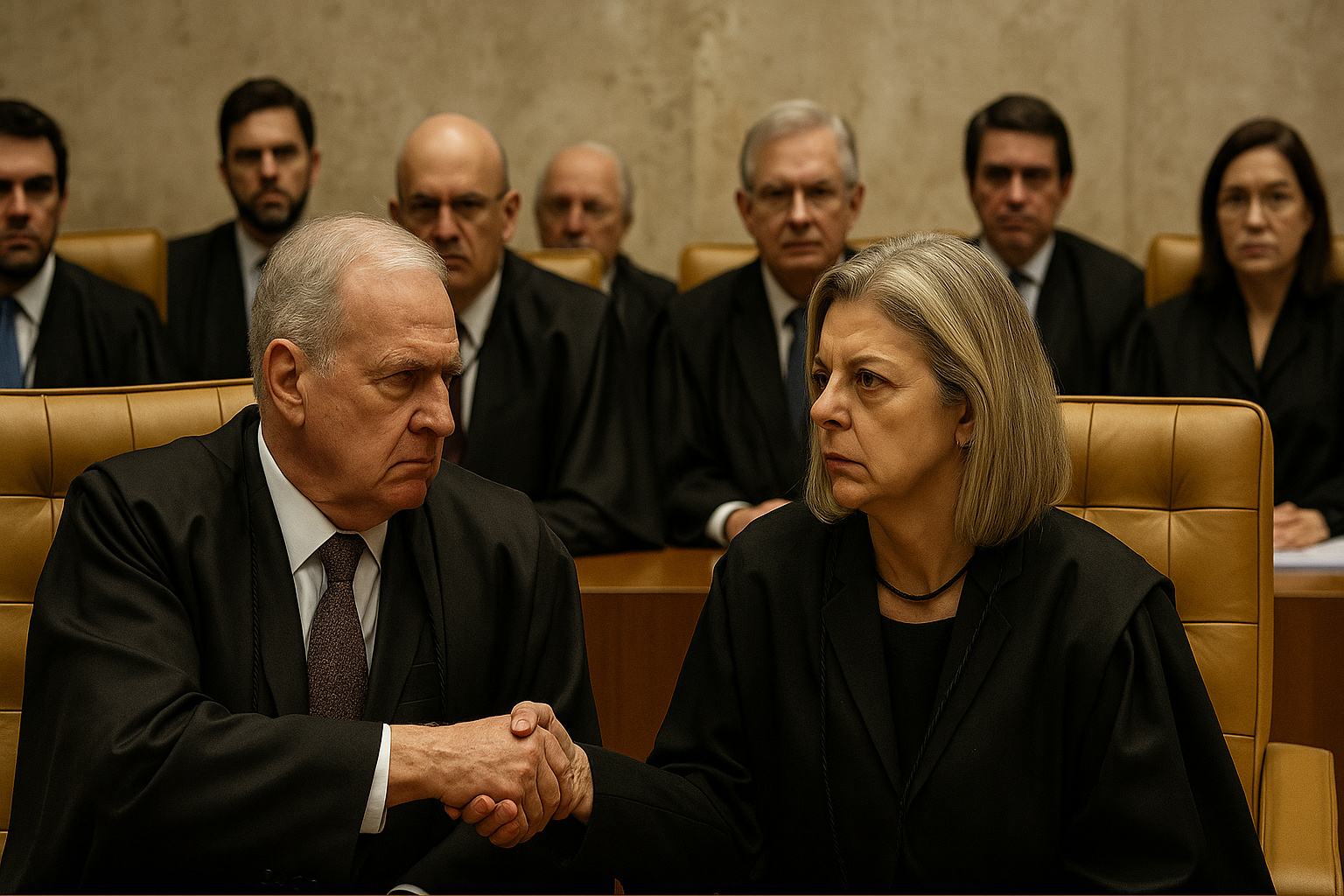


STF Forms Majority And Validates Appointment Of Relatives To Political Positions, Rekindling Debate Over Nepotism In Brazil.
STF Decides To Maintain Appointment Of Relatives To Political Positions
The STF (Supreme Federal Court) formed a majority of votes to maintain the appointment of relatives to political positions. So far, the score is 6 to 1 in favor of the decision, which is expected to directly impact city halls, state governments, and ministries throughout Brazil.
The voting was suspended this week but will resume on Wednesday (29). The decision, although still partial, rekindles the debate on nepotism and may set new directions for the occupation of public trust positions in the country.
Understand The Case That Rekindled The Debate On Nepotism
The trial began based on the Binding Precedent 13, created by the STF itself in 2008. This rule prohibits the appointment of spouses, relatives, and partners up to the third degree to commissioned or trusted public positions.
-
Cat banned from roaming in shopping mall wins court case and regains the right to roam freely in the place where it has lived for years.

-
Brazil Approves Proposal to Cap Vehicle Tax at 1% of Car Value
-
Brazilian Senate Approves Bill to Automate Child Support Payments Directly from Debtors’ Accounts

-
Brazilian Congress Advances Bill to Ensure Full Pension Benefits for Families Receiving Reduced INSS Death Benefits



However, over the years, the Supreme has made exceptions to the text, allowing appointments to political positions, such as ministers, state and municipal secretaries. These decisions, however, did not have General Repercussion, meaning they did not require other courts to follow them.
The topic returned to the agenda after a law passed in Tupã (SP) in 2013 allowed the appointment of relatives to municipal secretaries. The MPF (Federal Public Ministry) challenged the measure, and the case reached the STF after the TJ-SP deemed the law unconstitutional.
Rapporteur Defends Executive Autonomy To Choose Assistants
The rapporteur of the case, Minister Luiz Fux, voted to validate the municipal law and suggested a thesis that allows the appointment of relatives to political positions, as long as there are clear technical criteria and absence of cross nepotism.
According to Fux, the head of the Executive has the right to choose their political assistants. “The message from the Supreme is that the rule is the possibility; the exception is the impossibility. It is not a letter of freedom to appoint whomever they wish,” the minister stated.
Furthermore, the rapporteur argued that the decision should apply to all of Brazil, as the case proceeds with General Repercussion.
Majority Of Ministers Supports The Rapporteur
The vote of Luiz Fux was joined by Cristiano Zanin, André Mendonça, Nunes Marques, Alexandre de Moraes, and Dias Toffoli. Thus, a majority of six votes was formed in favor of maintaining the appointment of relatives to political positions.
In 2018, the Supreme had already recognized that the topic would have General Repercussion, which means that all judicial instances must follow the same understanding after the conclusion of the trial.
Flávio Dino Is The Only One To Diverge So Far
On the other hand, Minister Flávio Dino voted against the measure. In his statement, he was emphatic in asserting that “legality and affection do not combine”.
“A government meeting cannot be a Sunday lunch. That is beautiful for the family, in the garden, but not in the public square. In the public space, consistency in the rules is necessary,” Dino wrote in his vote.
The minister defended the principle of impersonality, according to which administrative decisions should not be influenced by personal or family ties.
Cármen Lúcia Warns Of Risk To Impersonality In Public Power
The Minister Cármen Lúcia, who has not voted yet, has already expressed critical views. For her, compliance with the principle of impersonality is a constant challenge in the public sector.
“The wife goes to the Court of Accounts to approve or not the accounts of her own husband, who was head of the Executive. This is completely contrary to what we discuss, although it is a political position,” she stated.
Ministers Edson Fachin, Gilmar Mendes, and Cármen Lúcia are expected to present their votes in the next session, scheduled for next Wednesday (29).
STF Decision May Redefine Public Positions In Brazil
With the majority already formed, the decision of the STF is likely to officially validate the appointment of relatives to political positions. If confirmed, it will become a national reference and will directly affect how mayors, governors, and the president appoint their secretaries and ministers.
Thus, the STF voting marks a crucial moment in the debate over nepotism and transparency in public positions. On the other hand, it also raises questions about the limits between political trust and administrative impersonality — a topic that is likely to divide opinions throughout Brazil.







O STF presta joga no latão do lixo tudo que o já se fez para combater o nepotismo.
Uma vergonha!