






 Portuguese
  Spanish


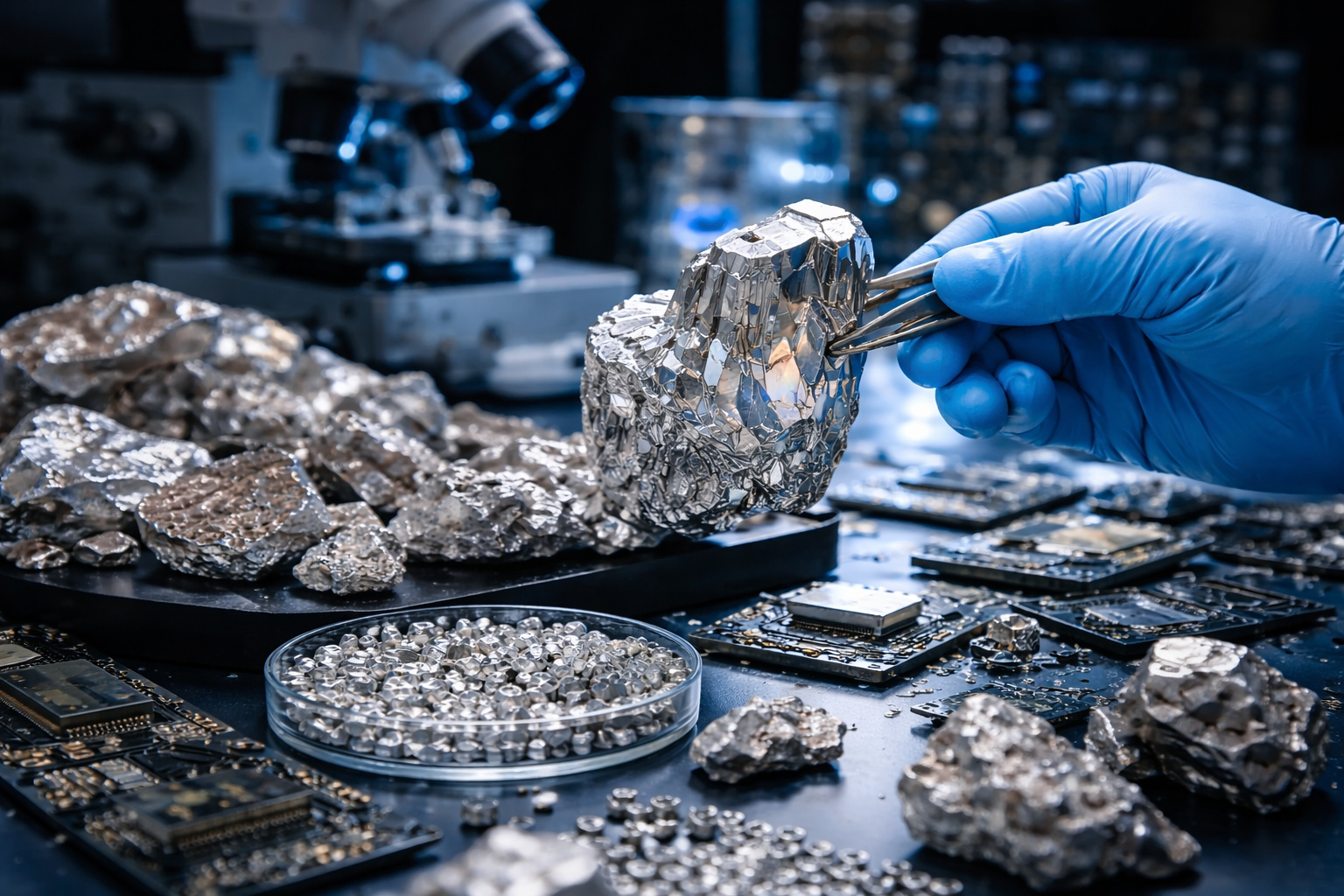


Scientific Discovery Shows How a Common Metal Can Reproduce Properties of Rare Elements and Transform Global Technological Production
A groundbreaking technological discovery is drawing the attention of researchers investigating new materials for advanced electronics.
Scientists have developed a sustainable super aluminum capable of mimicking the properties of rare minerals, paving the way to reduce costs in the global technology industry.
The advancement was featured in a study published in the scientific journal Nature in 2024, where researchers explain how to reorganize the structure of the metal.
-
China Develops Custom 140-Ton Electric Mining Truck with 770 kWh Swappable Battery, Deploys 290 Units in Xinjiang’s Largest Zinc Mine

-
Meta to Launch Arena, a New Prediction App Targeting 3.56 Billion Users, Competing with Polymarket and Kalshi

-
Scientist Challenges Famous Human Evolution Theory, Argues Homo Sapiens Evolved Gradually Over Thousands of Years
-
15-Year-Old American Builds Ocean Generator with PVC Pipe and 3D-Printed Propeller for $12, Wins National Prize, Presents at White House, and Makes Forbes 30 Under 30 List




By modifying the atomic arrangement of aluminum, scientists reproduce electronic characteristics found in noble metals and rare earth elements.
Thus, an abundant metal begins to perform functions that previously depended on scarce and expensive elements.
Therefore, this innovation could transform the supply chain of the electronics industry, especially in sectors that use advanced technological components.
Scientific Investigation Reveals Technological Potential of the Metal
The discovery emerged after experiments focused on manipulating the crystalline structure of aluminum.
According to the study published in Nature, researchers carefully adjusted the crystalline lattice of the metal.
With this controlled rearrangement of atoms, aluminum begins to mimic properties of rare elements used in advanced electronic circuits.
In this way, the material performs complex electronic functions without relying on hard-to-extract minerals.
Additionally, technical tests indicate better conductive efficiency and greater thermal stability in the material.
These characteristics are essential for modern electronic devices that require high performance.
The process involves three main stages:
• Atomic Reorganization: adjusting the crystalline lattice to mimic properties of noble metals.
• Technical Validation: testing conductivity and stability in integrated circuits.
• Industrial Scaling: integrating the material into production lines.
With these results, experts assert that large-scale industries can significantly reduce their production costs.
Industrial Benefits of the New Material
The main differentiator of the discovery lies in the very nature of aluminum.
This metal ranks among the most abundant elements in the Earth’s crust, ensuring broad availability for industrial applications.
When the industry transforms aluminum into a substitute for critical minerals, it reduces its dependence on complex supply chains.
Thus, companies mitigate risks associated with geopolitical crises or fluctuations in the price of rare metals.
Furthermore, aluminum presents an important environmental advantage.
The material has high recycling potential, favoring production models aligned with global environmental goals.
Among the main benefits identified by researchers are:
• Significant reduction in the manufacturing costs of electronic components.
• Less dependence on the mining of rare and expensive minerals.
• Better thermal efficiency in compact electronic devices.
• Recycling processes that are simpler than those for complex alloys.
For this reason, technology companies view the material as a foundation for the next generation of electronic devices.

Industrial Applications Across Different Sectors
The discovery could impact various segments of the global economy.
In the electronics industry, for example, the new material could replace expensive metals used in circuits and connectors.
In the energy and storage sector, researchers indicate that batteries could also benefit from the thermal properties of the material.
Moreover, the aerospace industry is evaluating applications related to weight reduction.
The potential gains include:
Electronics
Material replaced: special gold and copper
Main advantage: costs up to 70% lower
Batteries
Material replaced: lithium and cobalt
Main advantage: greater thermal stability
Aerospace
Material replaced: titanium alloys
Main advantage: structural weight reduction
With these applications, super aluminum presents itself as a strategic alternative for different industrial sectors.
Environmental Impact of Replacing Rare Minerals
Rare earth mining represents one of the most harmful activities to the environment.
This process often utilizes toxic chemicals and large volumes of water.
When the industry replaces these minerals with treated aluminum, it reduces the environmental impact of technological production.
Furthermore, this shift strengthens the circular economy, where recycling and repurposing gain priority.
Thus, companies in the technology sector respond to increasing global demands for environmental responsibility.
When Will the Technology Arrive in the Market
Despite the promising results obtained in the lab, industrial-scale production still requires technical adjustments.
Experts assert that casting processes and advanced thermal treatment still need to evolve.
Researchers involved in the study estimate that the first commercial prototypes may emerge in the next two years.
Meanwhile, investors and companies in the technology sector are closely monitoring patents related to the research.
The prospect of using a common metal with advanced properties is generating significant industrial interest.
If the results are confirmed on a large scale, super aluminum could transform the production of electronic components worldwide.
In light of this scenario, could an abundant metal really replace rare minerals and change the future of global technology?






