






 Portuguese
  Spanish


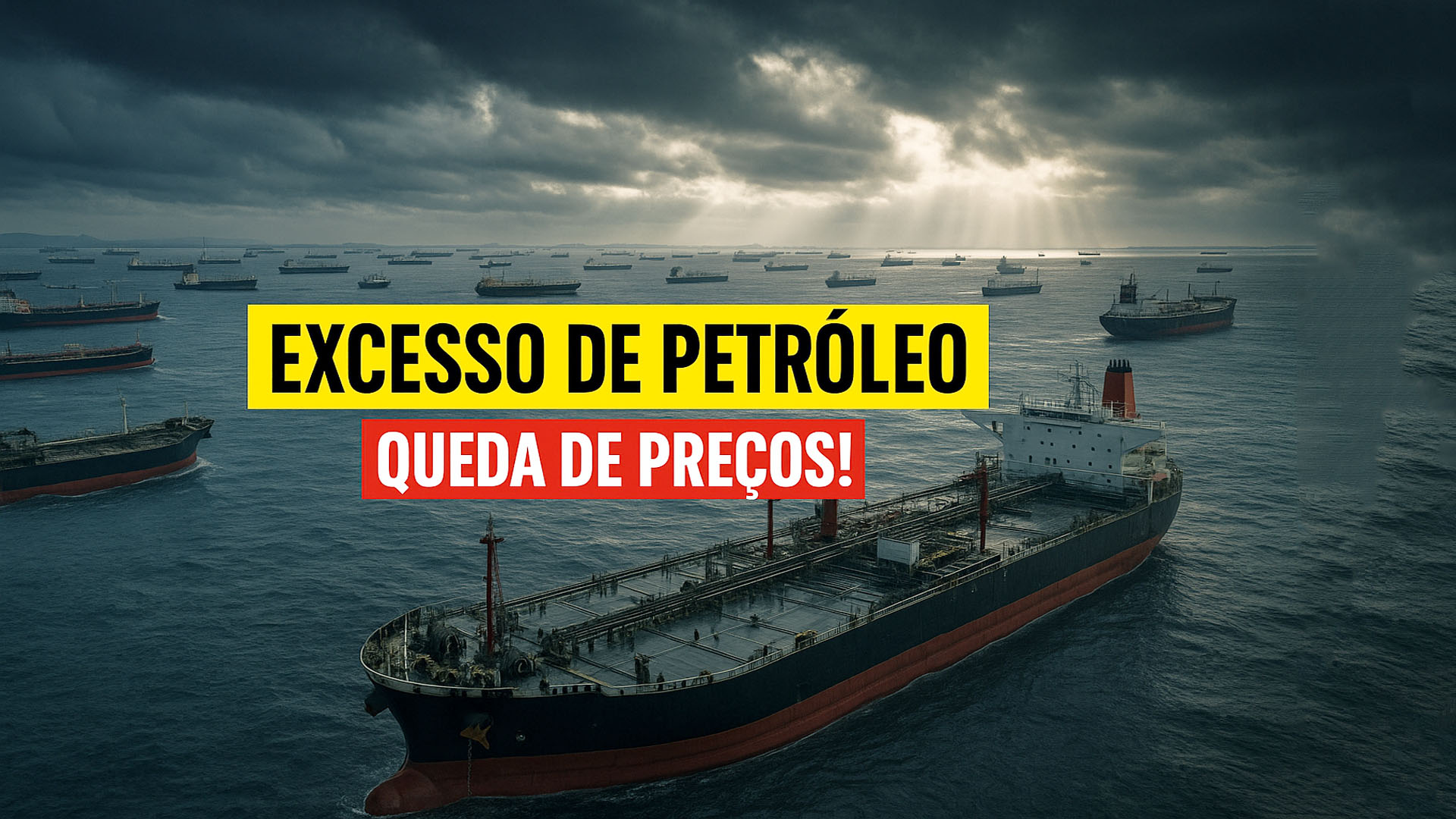
The World Fleet of Oil Tankers Registers the Highest Volume of Oil in Transit Since 2020, Signaling a Turning Point in the Global Energy Market. The Excess Supply Pressures Prices and Threatens Producers, While Consumers Can Benefit from Cheaper Fuels.
The global oil market is undergoing a significant transformation, mainly visible on the oceans. According to data from Vortexa, more than 1 billion barrels of oil are accumulated in the world fleet of oil tankers, marking the largest amount of oil in transit since 2020.
This phenomenon marks a structural change in the energy sector. During the COVID-19 pandemic, a price war between Saudi Arabia and Russia had led to a similar situation, flooding the market with excess oil.
The current situation confirms analysts’ projections about the growth of global production. The scenario points to an excess supply of oil that may redefine the dynamics of prices in the coming years, with direct impacts for Brazil and global consumers.
-
Petrobras and Engeko’s New Investment Plan Promises Billions and Thousands of Jobs, Capturing Market Attention

-
JBS Halts Beef Production for China as Brazil Exceeds 50% of 1.106 Million-Ton Quota; Tariff May Rise from 12% to 67%, Raising Concerns Over Cattle Prices.

-
Brazil’s Social Security Alters Biometric Rules for Pensions and Benefits, Sets 30-Day Deadline, Expands Requirements, and Clarifies Who Is Exempt from Immediate Update
-
Major Brazilian Supermarkets, Including Carrefour and Assaí, May Close Earlier to Prevent Price Increases


China Hid the Surplus for Months
During much of 2025, China played a crucial role in absorbing significant volumes of cheap oil for its strategic reserves.
This strategy temporarily masked the surplus in the international market, preventing the accumulation from being noticeable in the major Western storage hubs.
Russell Hardy, CEO of Vitol Group, the world’s largest independent oil trader, explained that the excess did not accumulate in Western hubs but was mainly directed to the Asian giant. The situation began to change in the second half of the year when OPEC+ production gradually increased.
Crude oil shipments from the Middle East are now struggling to find buyers. Countries like the United Arab Emirates and Qatar reported slower than usual sales, with some shipments still without a defined destination.
Prices Fall and the Market Enters Contango
Oil futures contracts hit a five-month low, close to US$ 60 per barrel. Ben Luckock, global head of oil at Trafigura Group, stated during the Energy Intelligence Forum in London that the excess anticipated for months is finally materializing.
The most evident change appears in the market’s price curve. In April, the predominant pattern was backwardation, indicating supply scarcity with more expensive immediate delivery contracts.
Currently, the market operates in contango, a classic signal of abundance, where future deliveries cost more than immediate ones.
According to the International Energy Agency, global stocks grew at a rate of 1.9 million barrels per day in 2025. JPMorgan Chase projects an average daily surplus of 2.3 million barrels for 2026, while the U.S. Energy Information Agency estimates 2.06 million.
U.S. Shale Producers and Saudi Arabia Under Pressure
The transition to a scenario of abundance of oil brings relief for consumers after years of fuel price inflation. However, it poses a real threat to U.S. shale producers and Saudi Arabia, which is facing an increasing budget deficit.
The United States has recorded rising inventories for three consecutive weeks, reaching the highest seasonal level since 2023.
Brokers report an increase in offers to secure space in storage tanks in Cushing, Oklahoma, starting in January, indicating that operators are preparing for a prolonged excess.
The Energy Information Agency forecasts that the growth of U.S. production may stagnate, with the possibility of the first annual decline since 2021. Current prices discourage investments in new wells, as many shale producers operate with reduced margins.
OPEC+ Accelerates Resumption of Idle Production
The scale of the surplus increased significantly in April when Saudi Arabia and OPEC+ partners announced a faster resumption of idle production. Saudi authorities sought to regain market share lost during the voluntary cuts period.
Toril Bosoni, head of oil industry and markets at the IEA, highlighted that significant increases occur in the context of <strong modest demand growth.
The adoption of electric vehicles in China is slowing fossil fuel consumption, while new barrels from Brazil, Canada, and Guyana increase global supply.
Despite the challenges, some OPEC+ members are unable to increase production as promised. Analysts at Morgan Stanley believe sharp price drops may force the group to implement new production cuts.
Brazil Increases Production Amid Transition
Brazil emerges as one of the main contributors to the increase in global oil supply. National production continues to grow, with Petrobras expanding operations in the pre-salt and resuming projects in different areas.
This position puts the country in an ambiguous situation: while increasing revenues from exports, Brazil also benefits from the decline in international prices for imported petroleum derivatives. The trend of lower prices may favor Brazilian consumers at the fuel pumps.
According to information from the Energy Intelligence Forum, major operators are preparing for further declines. Trafigura forecasts prices in the range of US$ 50 per barrel in 2026, with a recovery to around US$ 60 in approximately one year.
The Market Can Change Direction Quickly
Ryan Lance, CEO of ConocoPhillips, expresses skepticism about the more pessimistic projections. He notes that the physical market does not reflect the alarming scenario painted by some analyses, suggesting that the actual surplus may be smaller than the estimates.
Geopolitical factors could also alter the picture quickly. Restrictions imposed by the U.S. government on Indian purchases of Russian oil, for example, have the potential to tighten the market and sustain prices at higher levels.
Torbjorn Tornqvist, CEO of Gunvor Group, acknowledges that previous forecasts of a supply excess have not always materialized. However, he believes there is more basis for the narrative this time, considering the consistent increase in production and the slowdown in demand.
Do you think the excess of oil in the global market benefits or harms Brazil in the long term? Cheaper fuels ease the consumer’s burden, but falling prices may affect Petrobras’ strategic investments. Leave your opinion in the comments on how the country should position itself in this new energy scenario.





Be the first to react!