






 Portuguese
  Spanish
  3 min of reading
  0 comments


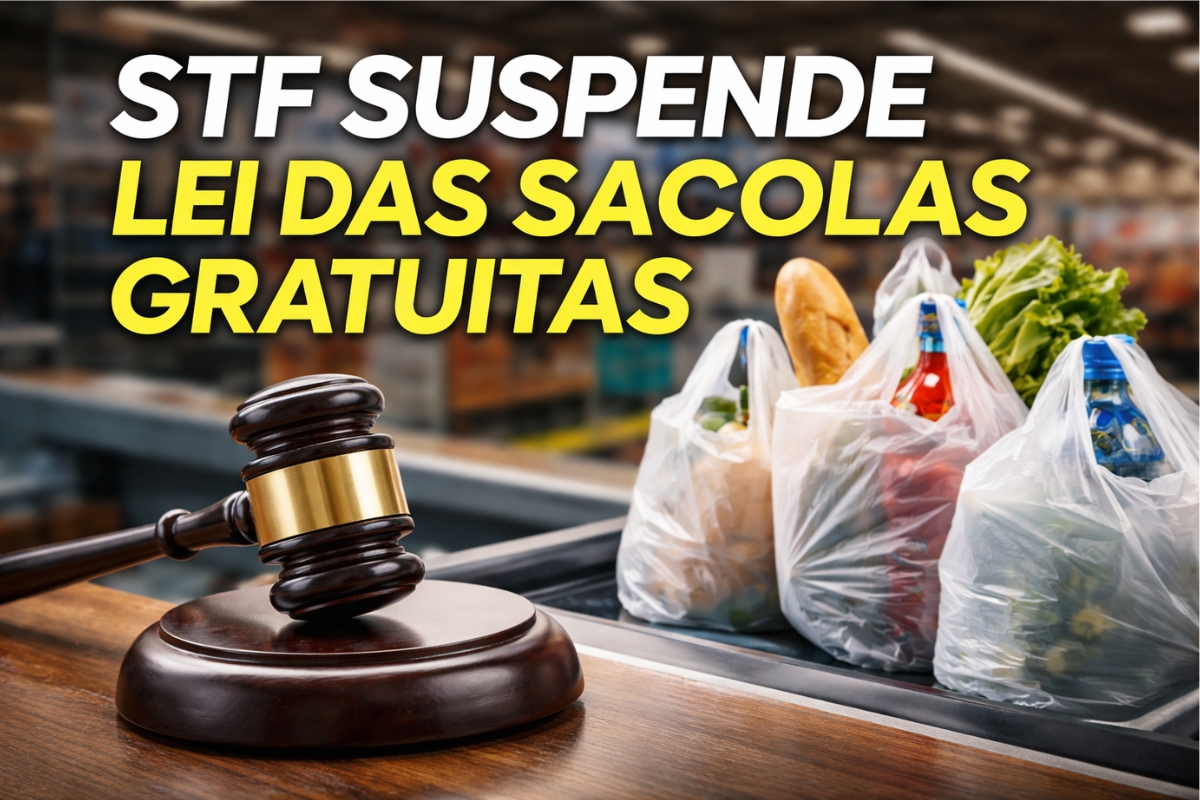
Supreme Court Measure Halts Requirement for Free Bags and Avoids Fines with Direct Impact on Commerce.
The Supreme Court suspended a municipal law from Salvador, Bahia, which required businesses to provide free plastic bags. The decision was signed by Minister Gilmar Mendes.
The measure temporarily halts the enforcement of a regulation that had been creating ongoing financial risk for businesses in the Bahian capital, with the possibility of fines and other administrative consequences.
The case is underway in Petition 15,042 and involves a request to suspend the rule until the judgment of an appeal in the State Court of Justice of Bahia.
-
Detran RJ starts requiring a toxicological test for those obtaining their first driver’s license in the car and motorcycle category starting June 29; see who will be affected.

-
Florida takes TikTok to court and accuses the Chinese giant ByteDance of ignoring the law that bars minors under 14, while parents and authorities demand more protection for children on social networks.
-
Chamber approves constitutional amendment reducing the age of criminal responsibility from 18 to 16 years; what now?

-
Justice confirms that old debts in tax executions that have been stalled for more than 15 years can no longer be collected through judicial or administrative means.


What Happened and Why It Attracted Attention
Minister Gilmar Mendes ordered the suspension of the municipal law that imposed the provision of free bags to consumers.
The decision took into account that there were criteria for a precautionary measure, that is, a provisional decision used to prevent harm while the case is under review.
The key consideration was the risk of ongoing harm to local commerce, with impacts that could accumulate over time.
What Changes in Practice for Salvador’s Commerce
With the suspension, the obligation to provide free plastic bags is no longer required while the legal discussion progresses.
This reduces immediate pressure on establishments that could have been fined for non-compliance with the municipal rule.
The decision also decreases the risk of more serious administrative measures related to the accumulation of debts.
What Are the Rules, Values, and Conditions That Influenced the Decision
The law imposed fines for non-compliance ranging from R$ 900.00 to R$ 9 million. This range was regarded as a relevant factor in characterizing the risk of ongoing financial harm.
In addition to fines, there was emphasis on consequences that could arise from formalizing charges, increasing the potential impact on businesses.
The scenario includes indirect effects that could impact the normal functioning of establishments.
How the Process Works and What Is a Precautionary Measure
The decision granted a precautionary measure, which acts as a temporary suspension to avoid harm before the final judgment.
The request came from the Bahian Supermarkets Association, asking for the norm to be suspended until the appeal process in the State Court of Justice of Bahia progresses.
The analysis considered the urgency and the need to prevent effects that could be difficult to reverse later.
Points of Attention Regarding Active Debt, Protest, and Permits
The decision highlighted the risk of debt registration in active debt and protest, which can create restrictions and hinder the financial operations of the establishment.
There was also mention of the risk of suspending or revoking permits and even closing establishments in situations related to collections and sanctions.
These effects increase the seriousness of the problem because they can affect business operations, not just cash flow.
What Might Happen from Now On
The suspension remains in effect while the appeal is analyzed in the State Court of Justice of Bahia and while the topic continues to be debated in the Judiciary.
The decision referenced a precedent in the STF, citing ADI 7,719, which addressed a similar issue and ended with a declaration of unconstitutionality of a rule that imposed the provision of bags in supermarkets and hypermarkets.
This history reinforces the continued legal questioning regarding norms of this kind.
The suspension of the law in Salvador changes the immediate landscape for commerce by temporarily removing the requirement for free plastic bags.
At the same time, the decision reduces the risk of penalties ranging from R$ 900.00 to R$ 9 million, as well as consequences such as active debt, protests, and issues with permits, while the case remains under review in the Judiciary.





Be the first to react!