






 Portuguese
  Spanish


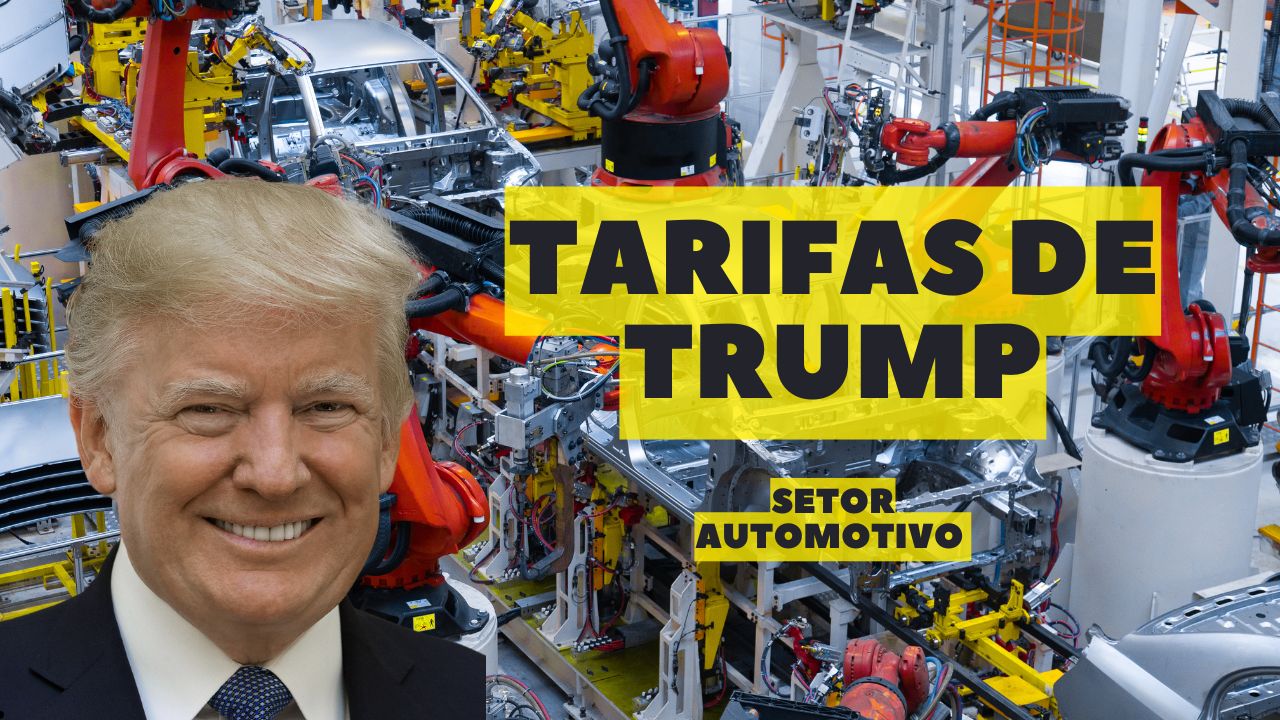

Automotive Sector Becomes Trump’s New Tariff Target and Could Experience Increases of Up to US$ 10,000 in the U.S.
With the subtlety of a tractor in reverse, Donald Trump has once again shaken the global economy. This time, the automotive sector has been chosen as the new epicenter of his economic strategy: the former president and Republican presidential candidate announced the imposition of 25% tariffs on all imported cars — in addition to a long list of essential components used in the automotive industry. For consumers, this could mean an increase of up to US$10,000 in the price of a car in the United States. For the rest of the world? Another turbulent chapter in the already extensive saga of the American trade war.
The measure, according to Trump, aims directly to reduce the U.S. trade deficit and boost the domestic industry, with an estimated revenue of around US$100 billion per year. But, as always, between theory and practice lies an abyss — and this time, it is paved with imported steel, chips from Asia, and much international discontent.
Trump’s New Tariffs and the Direct Impact on the Automotive Sector
The decision to apply Trump’s tariffs on the automotive sector rekindles the trade protectionism that marked his first term. With elections approaching, Trump is betting again on measures of nationalistic appeal, seeking to please industrial workers and unions in key regions like Michigan and Ohio.
-
Brazilian Actress Turns Waxing Clinic into 400-Unit Chain with $50 Million Revenue, Sells Stake After 13 Years

-
Major Company Shuts Down 70-Year-Old Factory in Brazil, Relocating Production and Impacting Over 100 Families
-
Toyota Shuts Down Brazilian Plant After Producing Over 1 Million Vehicles, Plans Special Destination for Final Corolla Produced Following $2.1 Billion Investment and Expansion.
-
Shoe Factories Close, Leaving 528 Workers Jobless in Sudden Turn of Events Affecting Hundreds of Families After Decades of Operation.


According to him, by taxing foreign vehicles, the U.S. will be encouraging domestic production, protecting jobs, and making the American economy less dependent on countries like China, Mexico, and Germany. The plan seems simple on paper: cars made in the U.S., by Americans, for Americans. But the reality of the current automotive supply chain is much more complex.
Even “made in the USA” vehicles often have, on average, 60% of their parts coming from abroad. Engines from Japan, semiconductors from Korea, batteries from China — all of this crosses oceans before turning into an American sedan. The tariffs, therefore, end up increasing costs throughout the supply chain, not just for finished imported vehicles.
The Immediate Effect: Price Increase and Drop in Stocks
The market’s response was immediate — and negative. The stocks of major automakers fell globally, driven by forecasts of declining demand and rising production costs. Manufacturers like Ford, General Motors, Toyota, BMW, and Stellantis reported losses in their home markets. Investors fear that the new costs will not be fully passed on to consumers, which could pressure margins and hinder investments in innovation.
For the end consumer, the calculation is even more direct. Analysts estimate that the average increase in the price of a new car could reach US$ 10,000, especially in models that rely heavily on foreign parts. In a country where automotive financing is already under pressure due to high interest rates, this price jump could lead to a significant decrease in sales.
A Global Industry with Parts Crossing Borders
The automotive sector is perhaps the best example of a global value chain. A modern car can involve more than 30,000 components, coming from various countries and assembled in different stages. The tariffs imposed by Trump directly impact this machinery, making logistics operations more expensive, slower, and more bureaucratic.
Automakers that have invested in factories in the U.S. but keep their supply chains outside the country will now have to rethink their strategy — or absorb the costs. This includes companies like Tesla, which, despite having significant domestic production, still relies on Chinese and Korean inputs, especially for electric vehicles.
The Geopolitical Stage: Retaliation on the Horizon
As expected, the decision has generated immediate reactions in the international arena. Japan and Canada have already threatened to impose retaliatory tariffs on American products, while France and Germany are pressuring the European Union for a coordinated response. The fear is that this will escalate into a new trade war in 2025, with significant impacts on global supply chains.
Additionally, there are concerns about the repercussions on the U.S.-Mexico-Canada Agreement (USMCA), which provides tariff exemptions for a portion of joint production among the countries. Trump’s new measures may be seen as a violation of the terms — and open legal disputes at the WTO.
The Future of the Automotive Industry Under Trump’s Tariffs
Despite the turbulence, Trump believes the measure will be beneficial in the long run. The rhetoric is about strengthening the American industry and creating jobs. But recent numbers indicate that the automotive world is changing — and fast. In 2024, BYD, the Chinese electric car giant, surpassed Tesla in revenue, with US$ 107 billion compared to US$ 98 billion for the American rival. In other words, even with protectionist measures, global competition is not retreating.
The challenge for the U.S. will be to balance protectionism and innovation. While Trump’s tariffs target protecting American manufacturing, they could stifle companies that need to compete with highly efficient giants, such as the Chinese. Ultimately, the automotive sector may end up becoming the final battleground between economic nationalism and globalization.
Whether you are an investor, consumer, or car enthusiast, one thing is certain: Trump’s tariffs have put the automotive sector at the center of the global trade dispute. And the developments are just beginning.
Source: thenews





Esse Trump acha que pode montar um novo império romano. Se acha muito poderoso, o dono do mundo mas, está redondamente enganado pois, está desafiando o resto do mundo com essa guerra comercial e logo vai arcar com as consequências pelas suas inconsequencias totalmente ilogicas.