





 Portuguese
  English
  Spanish
  4 min of reading
  0 comments


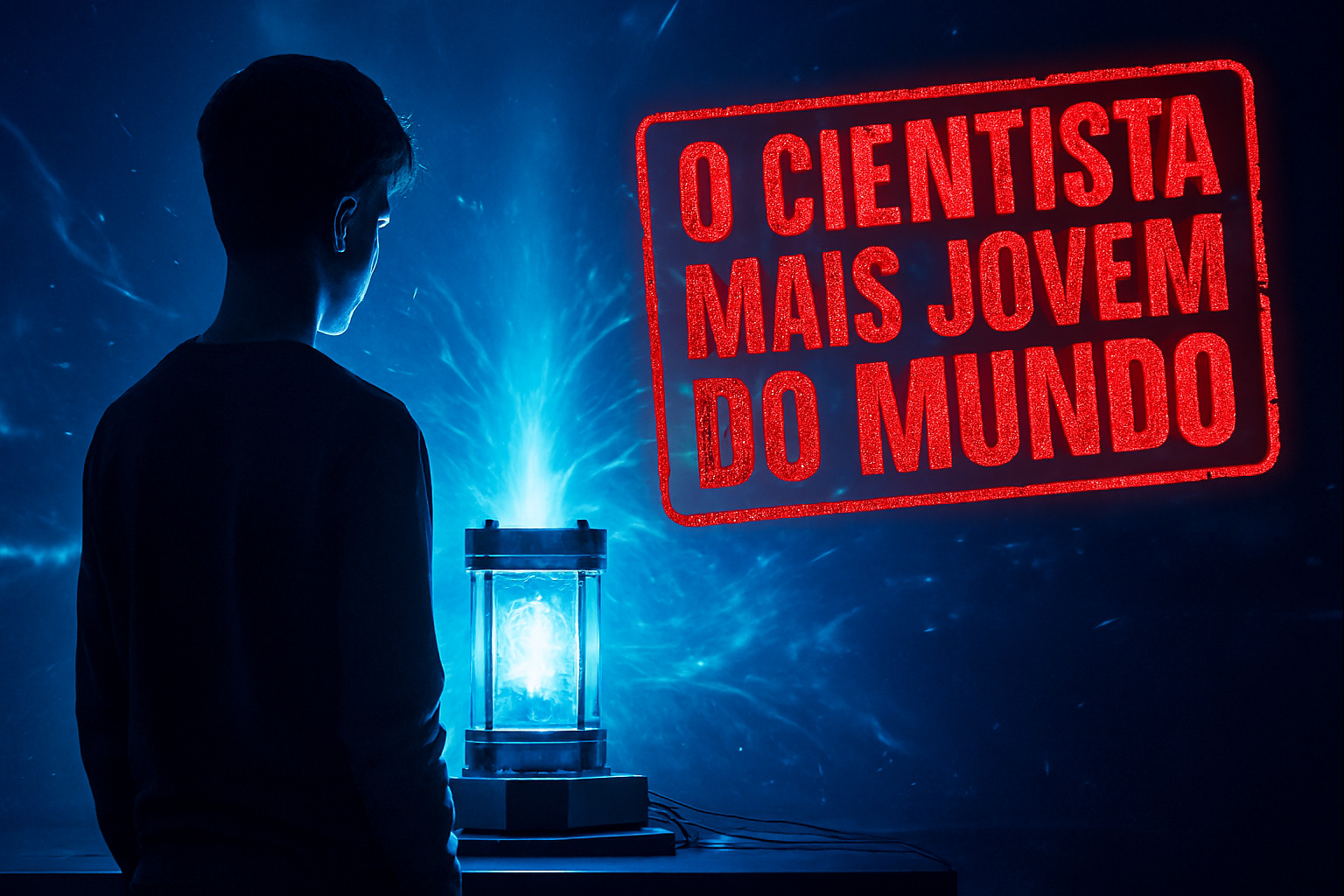
At 14, Taylor Wilson Built a Homemade Nuclear Reactor and Achieved Nuclear Fusion, Becoming the Youngest Scientist in the World to Accomplish This Feat, According to The New York Times and Popular Science.
In 2008, the name of a teenage boy only 14 years old began circulating among scientists, journalists, and curious individuals around the world. The American Taylor Wilson, from Arkansas, accomplished what seemed unthinkable: he built a homemade nuclear reactor capable of achieving controlled nuclear fusion, becoming the youngest in history to achieve such a feat outside of an academic or industrial setting.
According to the New York Times and the magazine Popular Science, Taylor joined the select group of young individuals who managed to safely reproduce the process that occurs inside stars — the fusion of light atoms to form heavier ones, releasing enormous amounts of energy.
Who Is Taylor Wilson
Born in 1994, Taylor always demonstrated an interest in science. From an early age, he read advanced books on nuclear physics, spent hours dismantling electronic equipment, and navigated online forums about atomic energy.
-
Bright red auroras are spotted in the skies of Japan, revealing much more aggressive hidden solar storms than scientists believed and triggering an international alert for the integrity of satellites in Earth’s orbit.

-
New York tourist finds a diamond the size of a human tooth after three weeks of searching in a volcanic park in the USA; the rare 2.30-carat stone became the third largest find of the year in the famous 83-acre crater.
-
China ceases to be just the “world’s factory” and achieves a record surplus of US$ 1.5 trillion while dominating batteries, electric cars, and solar energy, expanding strategic competition with the US and accelerating the transformation of the global economy.
-
Pelé’s favorite beach has ‘medicinal powers’ and was once prescribed by doctors in the 20th century; located between channels 4 and 5 of Santos, its waters were used to treat skin and nervous system diseases.


According to a TED Talk in 2012, the young man shared that his passion for physics began in childhood when he dreamed of working with rockets. By 10 years old, he had shifted his focus to nuclear energy, believing it could be the path to solving the planet’s energy problems.


The Challenge of Homemade Nuclear Fusion
Nuclear fusion is an extremely complex process that requires extremely high temperatures and controlled environments. In natural scale, it is what has kept the Sun shining for billions of years. Reproducing this in a laboratory is already a gigantic challenge for experienced scientists — and almost unimaginable for a teenager.
However, Taylor Wilson succeeded. Using repurposed parts, legally purchased scientific materials, and improvised equipment, he built a homemade nuclear fusor in his garage. The device uses electric fields to accelerate deuterium atoms (a hydrogen isotope), colliding them at high speeds until fusion occurs.
According to Popular Science, the experiment was conducted under supervision and followed safety protocols, avoiding any risk of radioactive accidents.
Worldwide Recognition
The accomplishment gained international attention in 2008. Outlets like the New York Times classified him as a prodigy and compared his genius to that of other young scientists who revolutionized their fields.
Just a few years later, in 2011, Taylor presented his ideas at innovation conferences, and in 2012, he took the stage at TED Talks to share his story. The talk went viral, solidifying his image as one of the most promising young figures in global science.
Career After Nuclear Fusion
After his success, Taylor Wilson did not stop. He pursued a career as a researcher and entrepreneur, focusing on compact and portable nuclear reactors, with applications in both energy generation and safety.
According to subsequent interviews, his goal was to develop a reactor small enough to power isolated communities or missions in remote locations, but safe enough to avoid the risks of nuclear proliferation.

He also worked on projects for portable nuclear detectors, capable of identifying illegal radioactive materials, helping governments combat terrorism and nuclear smuggling.
Why Does the Story Impress So Much?
The case of Taylor Wilson draws attention for several reasons:
- Age: achieving such a technical and complex feat at 14 years old is extremely rare;
- Sensitive Topic: nuclear energy is one of the most restricted and controlled fields of science;
- Persistence: the construction required years of study, dedication, and experimentation;
- Future Impact: his career demonstrated that it was not just a matter of childhood curiosity, but of consistent scientific talent.
According to experts consulted by the NYT, stories like Taylor’s are proof that access to information and the right encouragement can reveal geniuses anywhere in the world.
Comparisons with Other Young Prodigies
Taylor was not the only teenager to attempt building a fusion reactor, but he is the most famous for succeeding at such a young age. Other recorded cases occurred in the United Kingdom and the United States, with young individuals who, between the ages of 15 and 17, also achieved homemade nuclear fusions under controlled conditions.
However, most of these experiments took place years later, inspired precisely by Wilson’s achievement. He was a pioneer, paving the way for other young scientists to believe that it was also possible.
Cultural and Educational Impact
The story of Taylor Wilson is often used in lectures, reports, and books to demonstrate the power of scientific curiosity. More than a record, it inspires children and adolescents to explore science without fear of complexity.
According to Popular Science, Wilson always advocated that science should be democratized and accessible, allowing young people to have contact with equipment, mentorships, and real projects from an early age.
The Legacy of Taylor Wilson
Today, as an adult, Taylor remains connected to the worlds of science and innovation. He is a reference in safe and sustainable nuclear energy, participating in research projects aimed at finding alternatives to reduce dependence on fossil fuels.
His story is a powerful example of how genius can emerge at any age, as long as there is support, opportunities, and the courage to challenge limits.




-

-

-

-

5 people reacted to this.