






 Portuguese
  Spanish


Advanced Technology in Maritime Transport Captures CO2 from Ships, Converting It into Safe Bicarbonate for the Ocean
The startup Calcarea, a spin-off from the prestigious California Institute of Technology (Caltech) and the University of Southern California (USC), is at the forefront of sustainable innovation with the development of a revolutionary reactor. This reactor is capable of transforming carbon dioxide (CO2) emitted by ship engines into a harmless salt, opening new possibilities for significantly reducing CO2 emissions in the maritime sector. This advancement could be crucial for the shipping industry to achieve the ambitious goal of carbon neutrality by 2050.
A Sustainable Solution for the Future of Maritime Transport
The technology developed by Calcarea offers a promising solution to one of today’s biggest environmental challenges: carbon capture and storage. The reactor converts CO2 emissions into bicarbonate salts, capable of safely storing carbon for up to 100,000 years. This process is inspired by a natural reaction that occurs in oceans, but the technology from Calcarea can accelerate it to happen in minutes, instead of thousands of years.
According to Jess Adkins, chemical oceanographer at Caltech and co-founder of Calcarea, “this is a process that the planet has been carrying out for billions of years. By accelerating it, we can create a safe and permanent way to store CO2.” This advancement may be a determining factor for the International Maritime Organization (IMO) and the shipping industry as a whole to achieve their sustainability goals, establishing a new standard for carbon capture in the sector.
-
Pigeons Trained to Detect Cancerous Changes in Medical Images Astonish Scientific Community

-
Plastic Waste from Beaches and Poor Communities in Kenya Transformed into School Desks, Replacing Wood in Classrooms and Turning Marine Litter into Durable Study Tables

-
Your Old Gmail Address Might Be Obsolete Soon: Google Introduces Feature Changing Account Usage.
-
Lost Fossil Found in Brazil Unveils 240-Million-Year-Old Reptile Predating Dinosaurs, Redefines Evolutionary Map and Highlights Southern Brazil’s Role in Understanding Crocodile and Dinosaur Ancestors


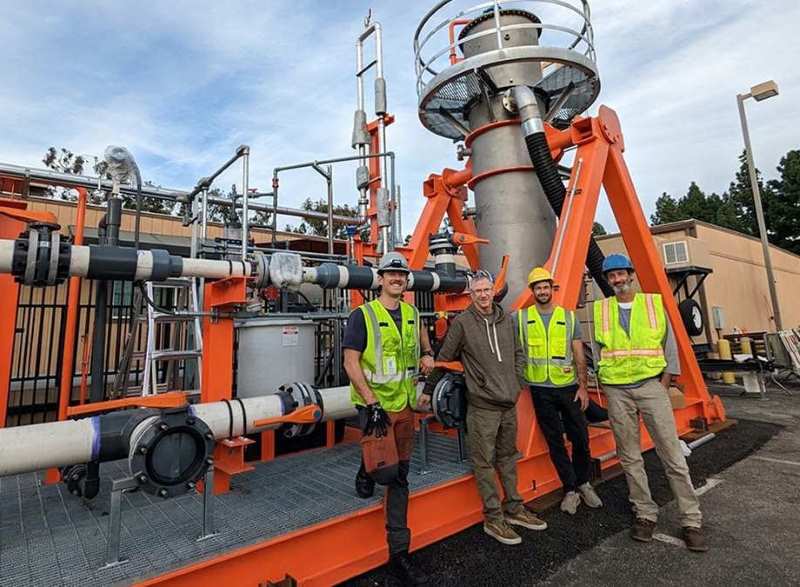
From Carbon Dioxide to Natural Salts: The Innovative Process of Calcarea
The principle behind Calcarea’s technology is simple yet powerful. Seawater naturally absorbs about one-third of the CO2 released into the atmosphere, which leads to increased ocean acidity and the dissolution of calcium carbonate, a vital component for the formation of corals, shells, and marine sediments. Currently, the oceans contain approximately 38,000 gigatons (38 billion tons) of bicarbonate.
Inside Calcarea’s reactor, which is installed in the hulls of ships, exhaust gases are mixed with seawater and limestone, a rock rich in calcium carbonate. This mixture triggers a chemical reaction that converts CO2 into bicarbonate salts, resulting in saline water. What is truly impressive is that this process, which would normally take over 10,000 years under natural conditions, is completed in about one minute in Calcarea’s reactors. The saline water produced can be returned to the ocean with no negative impact on marine life or the chemical balance of the waters.
The Future Impact of Decarbonization in the Maritime Transport Sector
In addition to its primary function of capturing CO2, Calcarea is exploring the integration of a pre-filter into its systems. This additional component would be responsible for removing other contaminants present in ship exhaust gases, such as particles and unburned fuel residues, before the water is returned to the ocean. This not only improves the efficiency of carbon capture but also enhances the quality of the released water.
So far, Calcarea has built two prototypes of its reactors: one located in the USC parking lot and another at the Port of Los Angeles. Last May, the company announced a collaboration with the research and development arm of Lomar, a renowned international maritime company. This partnership could lead to the installation of the first full-scale reactor aboard a ship, representing a significant step towards the decarbonization of the shipping industry.
Jess Adkins is confident that this technology will allow ships to compete with traditional underground CO2 storage solutions. He states that “ships specifically designed to collect CO2 and limestone at a port, and then carry out the reaction at sea, will be dedicated machines for efficiently and safely storing carbon in the ocean as bicarbonate.”
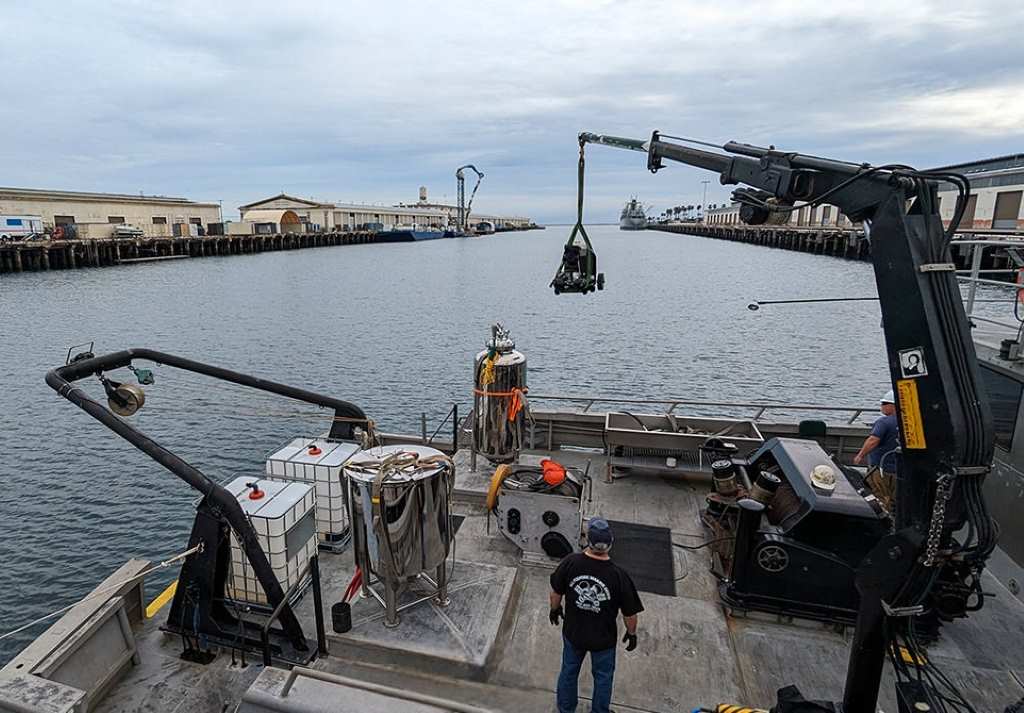
Implications and Opportunities for a More Sustainable Future
The large-scale implementation of Calcarea’s technology could radically transform the maritime sector, making it a global leader in sustainable practices. In addition to significantly contributing to climate change mitigation, this innovation can set a new standard in carbon capture and storage, encouraging other industries to follow suit.
In a world where sustainability is increasingly a priority, technologies like Calcarea’s become essential for finding a balance between economic development and environmental preservation. Carbon capture in the shipping sector is not just a possibility – it is a necessary reality to ensure a healthy and sustainable future for our planet. With this technology, Calcarea is paving the way for a cleaner and more responsible global maritime transport.
More Information: calcarea.com


