Portuguese
  Spanish


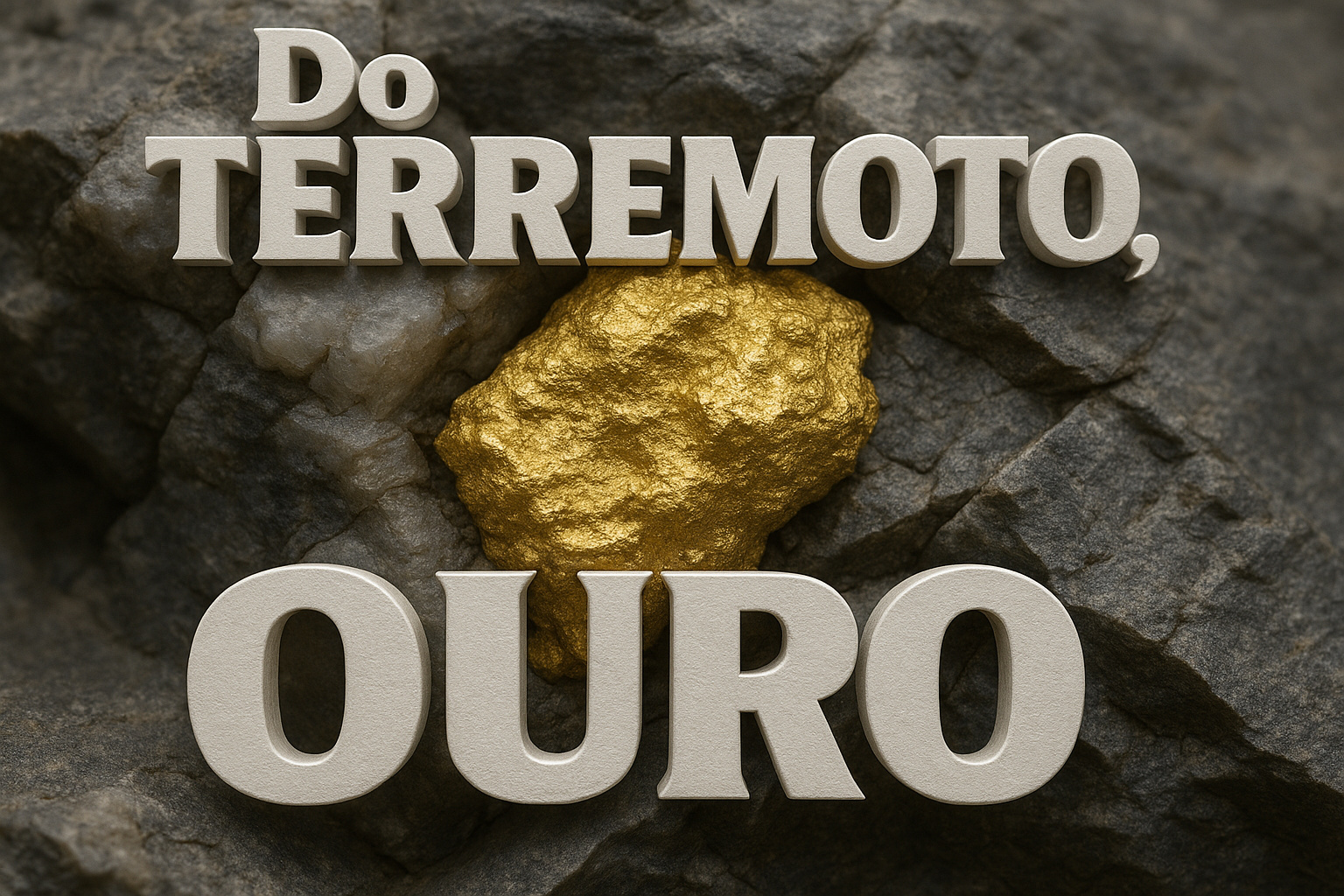

Research Suggests How Earthquakes Can Reorganize Metallic Fluids and Influence Gold Formation
The formation of gold nuggets has always sparked enormous interest, and thus, continues to attract geologists and scientists trying to explain localized concentrations.
These deposits challenge traditional hydrothermal models, and therefore, keep the scientific community focused on understanding the process.
Despite the advancement of research, and thus, although geology offers several theories, the irregular distribution of gold still intrigues.
Nuggets appear at specific points of quartz veins, and therefore, reinforce the need for new analyses.
Technical Investigation Reveals Unique Behavior of Quartz
Researchers analyzed quartz subjected to tectonic stresses, and therefore, sought to understand how piezoelectric properties interfere in gold formation.
The mineral generates voltages when stressed, and therefore, can alter the distribution of circulating metals.
-
She spent 73 years breathing inside an iron lung, survived the aftereffects of polio, and became the last woman in the United States dependent on the equipment before dying at 78 years old.

-
Brazilian students created a $1 filter using pine bark, cotton, and 3D-printed parts to clean cassava wastewater, reduce the toxicity of a hazardous waste, and transform contaminated water into biofertilizer.

-
Astronaut from Artemis II steps down after mission to the Moon and decision surprises after a record of 406,771 km, a historic 10-day journey, and an unprecedented achievement for Canada.

-
A fossil kept for years in a small museum in Montreal concealed 450-million-year-old soft tissue, a discovery that has only happened once before in history.


This behavior allowed for the formulation of a new hypothesis, and thus, suggested that seismic events directly influence gold nucleation.
The piezoelectric voltage reorganizes metallic particles, and therefore, explains specific concentrations within the veins.
The experiments reinforced the importance of fracturing, and therefore, showed that sudden episodes of stress reactivate hydrothermal circulation.
Metal-rich fluids move between fault zones, and therefore, renew the precipitation environment.
Geological Impacts of Seismic Activity
When earthquakes occur, and therefore, when the rock breaks, quartz reacts immediately.
The sudden stress produces electric fields capable of redistributing metals, and thus, explains point concentrations.

This behavior helps to understand why deposits do not follow a uniform pattern, and therefore, reinforces the seismic hypothesis.
Studies indicate that repeated seismic events rekindle metallurgical transport, and thus, favor the gradual growth of nuggets.
New enriched fluids reach the system, and thus, feed continuous deposition.
This process repeats in orogenic deposits, and therefore, represents a constant mechanism of formation.
Scientific Reactions to the Phenomenon
The theory broadens the understanding of the role of earthquakes, and therefore, strengthens the argument that geological stresses are crucial to understanding the nuggets.
The piezoelectricity of quartz emerges as a central factor, and therefore, gains importance in the proposed model.
The results also reinforce the need for new experimental studies, and therefore, encourage investigations into different seismic scenarios.
Tectonic dynamics exhibit distinct behaviors depending on the region, and therefore, require varied observations.
Gold Formation from the Tectonic Perspective
- The piezoelectricity of quartz influences the distribution of metals, and therefore, changes the behavior of fluids.
- Seismic fractures create new pathways for hydrothermal circulation, and therefore, intensify the transport of gold.
- Nuggets may increase after successive seismic events, and therefore, grow as new fluids arrive.
- The irregular concentration of gold reflects active tectonic stresses, and therefore, results from electric fields generated at critical moments.
What Does This Hypothesis Represent for Geology?
The research suggests that earthquakes can be key agents in nugget formation, and thus, may play a larger role than previously thought.
The interaction between quartz, stress, and fluids defines metallic precipitation, and therefore, represents a fundamental element of the process.
Understanding this mechanism depends on the continuous advancement of laboratory studies, and therefore, requires observations in tectonically active regions.
These areas concentrate successive fracturing, and therefore, allow to follow the real dynamics of the phenomenon.
Geology continues to seek comprehensive answers, and therefore, remains focused on the combination of pressure, temperature, fluid, and natural electricity.
The formation of gold remains a topic of great complexity, and thus, continues to be studied with care.
In light of this, what do you believe should prevail: new research focused solely on the piezoelectric stress of quartz or broader studies involving the entire tectonic dynamic?