Portuguese
  Spanish


Elon Musk’s Initiative Faces Resistance and Raises Alerts About Safety, Transparency, and Accountability in the Age of Autonomous Vehicles
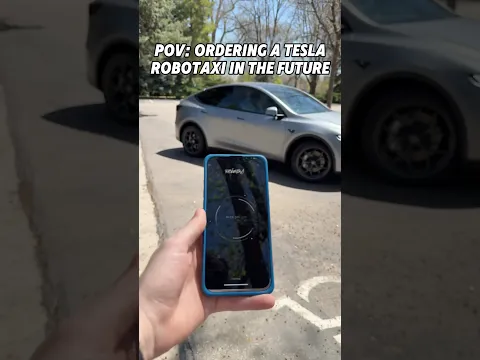
Tesla has begun testing Model Y robotaxis in Austin, Texas, in the first half of 2025.
The vehicles, equipped with autonomous driving systems, are being evaluated to operate without drivers in specific areas of the city.
However, the initiative, announced by Elon Musk in January of this year, has raised a series of questions.
This is because the company is attempting to block access to documents that detail the operation and risks of the technology.
Communications with local authorities have been requested through the Freedom of Information Act.
But, since then, they remain shrouded in secrecy.
This stance has caused great concern among experts, media outlets, and entities related to road safety.

Companies Claim Industrial Secrecy to Block Disclosure
According to information released by Reuters in June, Tesla and third-party companies claim that the documents are “confidential, proprietary, commercially sensitive, and/or classified as industrial secrets.”
This justification was sent to the city of Austin, which, under legal authority, submitted the case to the Attorney General of Texas.
-
Electric and Hybrid Cars Set to Transform Brazilian Streets: A New Era Begins

-
Chinese Giant Invests $1.3 Billion in Brazil to Produce 50,000 Cars Annually, Create Jobs, Develop Local Suppliers, and Manufacture Electric, Hybrid, and Combustion Models by 2027

-
Unprecedented achievement in India: a colossal 650-ton, nearly 3,000 hp excavator is transformed into 100% electric, marking a new phase in heavy mining.
-
Frightened by the speed of Chinese manufacturers, Renault decided to mimic the pace, made the new electric Twingo in just 21 months, wants to repeat the feat with 36 models by 2030, and along the way, will cut up to 2,400 engineering positions.

The stated objective of Tesla is to preserve strategies and processes for deploying robotaxis.
However, the attempt to conceal generates controversy.
Critics argue that the lack of transparency may hinder healthy public debate.
Especially given the already documented risks related to driver assistance systems, such as Full Self-Driving (FSD), which has been in beta phase in the United States since 2019.
History of Failures Reinforces Alert About Public Safety
Various incidents related to FSD increase the concerns.
Since 2021, U.S. authorities have been investigating the technology for not adequately identifying risk situations, such as pedestrians or stopped school buses.
These errors have called into question the safety of the autonomous systems developed by the automaker.
Even more serious is the fact that, according to state legislation enacted in 2017, cities in Texas, including Austin, are prohibited from directly regulating or restricting autonomous vehicles.
In other words, even though there are evident risks, the municipality does not have the authority to intervene preventively.
This legal gap compromises oversight and amplifies the sense of insecurity among local residents.
Final Decision Will Be by the Attorney General of Texas
The case is now under review by Attorney General Ken Paxton, who is expected to issue an opinion in the coming days.
As required by law, it is up to Paxton’s office to decide whether the requested documents should be released to the public.
The city of Austin, for its part, has stated that it does not have a formal position on the content but fulfills its legal obligations.
However, analysts indicate low expectations for the material to be disclosed.
The Attorney General’s political history has been marked by decisions aligned with corporate interests.
This reduces the hope for a resolution favorable to transparency.
Population Without Answers and Insecurity Grows
As the impasse drags on, Austin residents face the prospect of coexisting with autonomous vehicles on the streets.
This happens without knowing the operating criteria or emergency plans in case of failure.
Uncertainty grows, especially since Tesla itself considers that the disclosure of information could jeopardize its operation.
This stance raises doubts about the maturity of the technology employed.
If the developers themselves still consider the system unstable, how can we trust that these vehicles will be able to make correct decisions in unpredictable scenarios?
At every corner, a robotaxi may appear, and the hope is that, at least, it knows how to stop in time before a child crossing the street.