Portuguese
  Spanish


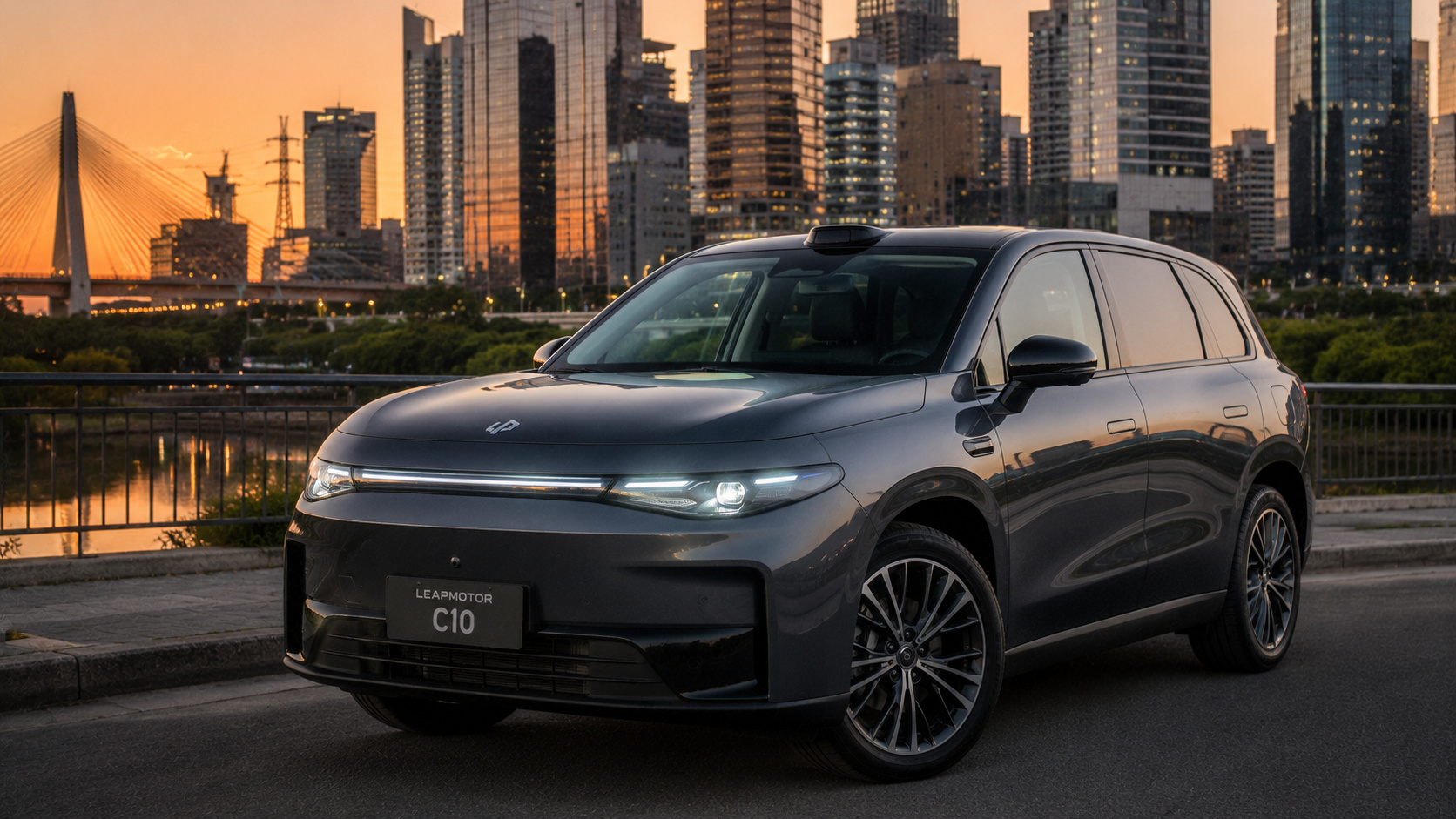

Leapmotor’s Electrified SUV Arrives in the Brazilian Market with Special Conditions for Entrepreneurs and Rural Producers, Offering a Range of up to 950 km, Advanced Technology Package, and Price Below Popular Rivals in the Compact Segment
The Brazilian market for electrified SUVs has just gained a new chapter that promises to directly shake up the competition in May 2026. Leapmotor decided to expand its commercial strategy in Brazil and began offering an aggressive discount of R$ 22,000 for CNPJ clients and rural producers interested in the Leapmotor C10 REEV. With this, the electrified model dropped from the conventional table price of R$ 219,990 to R$ 197,990 in direct sales.
The information was released by “Mundo do Automóvel para PCD,” specialized in the Brazilian automotive sector, highlighting that the commercial campaign strengthens the presence of the Chinese manufacturer in the premium hybrid and electric SUV segment in the country. Furthermore, the action places the Leapmotor C10 in an extremely competitive price range compared to traditional models already established in the national market.
While several manufacturers adjust prices due to the growth of Chinese competition, Leapmotor bets on an aggressive commercial policy to win over entrepreneurs, rural producers, and consumers seeking technology, high range, and more competitive cost-benefit.
-
Electric and Hybrid Cars Set to Transform Brazilian Streets: A New Era Begins

-
Chinese Giant Invests $1.3 Billion in Brazil to Produce 50,000 Cars Annually, Create Jobs, Develop Local Suppliers, and Manufacture Electric, Hybrid, and Combustion Models by 2027

-
Unprecedented achievement in India: a colossal 650-ton, nearly 3,000 hp excavator is transformed into 100% electric, marking a new phase in heavy mining.
-
Frightened by the speed of Chinese manufacturers, Renault decided to mimic the pace, made the new electric Twingo in just 21 months, wants to repeat the feat with 36 models by 2030, and along the way, will cut up to 2,400 engineering positions.



Moreover, the new positioning of the C10 draws attention because the electrified SUV now costs less than some traditional compact models in the Brazilian market, including more expensive versions of the Volkswagen T-Cross.
Leapmotor C10 Bets on 950 km Range and Advanced Technology to Gain Ground in Brazil


The Leapmotor C10 REEV arrives in the Brazilian market with a quite different proposal from traditional hybrid SUVs. Although marketed as a hybrid, the model functions, in practice, as an electric vehicle with a range extender.
This happens because the combustion engine does not directly drive the wheels. In fact, it acts only as a generator of energy to power the battery of the electric system.
The mechanical set uses a rear electric motor capable of delivering 215 horsepower and 32.6 kgfm of instant torque. Additionally, the SUV features a naturally aspirated 1.5 gasoline engine exclusively responsible for the battery’s energy charging.
According to the manufacturer, the combined range of the Leapmotor C10 can reach an impressive 950 kilometers by the WLTP cycle. Thus, the model emerges as an interesting alternative for consumers who wish to transition to electrification without suffering from recharging limitations on long trips.
Besides the performance and high range, the SUV also strongly bets on embedded technology and safety features.
Among the main equipment available in the model are:
- Digital air conditioning
- Electric steering
- Seven airbags
- Stability and traction control
- Hill-start assist
- 14.6-inch multimedia center
- Internet connection
- Remote OTA updates
- Induction phone charger
- Mirrors with memory and heating
- Full-LED lighting
- Adaptive cruise control
- Automatic emergency braking
- Traffic jam assist
- Blind spot monitoring
- Sign reader
- Fatigue detector with camera
Additionally, the model also offers lane-keeping alert and rear cross-traffic alert with automatic braking, features usually found in higher category SUVs.
Leapmotor’s strategy expands the competition between Chinese SUVs and traditional brands

Leapmotor’s offensive comes at a time of strong transformation in the Brazilian automotive market. In recent years, Chinese manufacturers have quickly gained ground with more complete and competitive electrified vehicles.
Moreover, the advancement of these brands has forced traditional automakers to review prices, equipment, and commercial strategies.
The Leapmotor C10 enters precisely in this scenario as an option that mixes luxury, energy efficiency, high autonomy, and a strong technological package. In this way, the manufacturer tries to attract consumers who previously only looked at premium European or Japanese SUVs.
Another important point involves the target audience chosen by the brand. By initially focusing on corporate clients and rural producers, Leapmotor tries to accelerate its presence in direct sales, an extremely strategic sector in Brazil.
This movement also follows a growing trend in the national market, where automakers use aggressive corporate discounts to quickly expand their market share.
Meanwhile, the average consumer follows an increasingly intense competition between traditional manufacturers and new Chinese brands arriving in the country offering more technology at competitive prices.
Leapmotor reduces price and increases pressure on rivals in 2026
With the R$ 22,000 discount valid in May 2026, the Leapmotor C10 takes a strategic position in the electrified SUV segment in Brazil.
Furthermore, the model stands out for combining high autonomy, a robust technological package, and a competitive price compared to well-known rivals in the national market.
The Chinese manufacturer further reinforces its strategy by offering an SUV with premium features for less than R$ 200,000 in direct sales to corporate clients and rural producers.
Meanwhile, the Brazilian market continues to follow the rapid growth of Chinese brands, especially in the hybrid and electric vehicle sector.
The trend is that the competition will become even more intense in the coming months, especially with the arrival of new electrified models in the country and the increasing pressure on traditional automakers.
On the other hand, Brazilian consumers end up benefiting from more options, higher technological levels, and increasingly competitive prices in the automotive segment.
Do you believe that electrified Chinese SUVs can already compete on equal terms with traditional brands in Brazil?