Portuguese
  Spanish


Discovery Of Ancient Jewels In Egypt Reveals Details About Wealth And Religious Beliefs Of The Time, Highlighting A Golden Statuette With Divine Representations
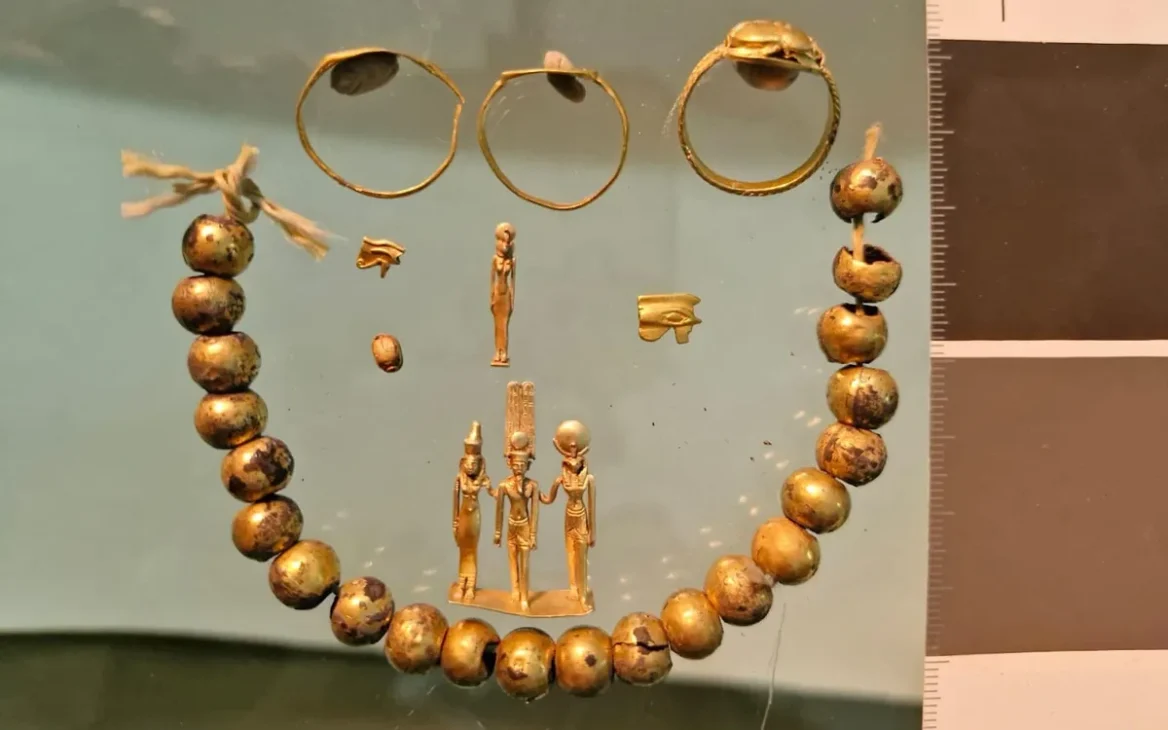
Archaeologists Found A 2,600-Year-Old Pot Filled With Gold Jewelry At The Karnak Temple In Egypt. Among The Artifacts, There Is A Rare Statuette Representing Three Deities.
The Find Was Made By A Team From The Egyptian Ministry Of Tourism And Antiquities In The Northwest Sector Of The Complex. The Site Was Used For Administrative Activities And Storage.
The Karnak Temple, Located Near Luxor, Was Built About 4,000 Years Ago. Over Millennia, It Underwent Expansions And Renovations. At The Site, Several Deities Were Worshipped, Among Them Amon, Considered The Main God Of The City Of Thebes.
-
Extreme Heat in Antarctica Sets Record 15.4°C at Esperanza Base in June, Raising Concerns Among Scientists with Temperatures 20°C Above Normal, Rain Instead of Snow, and Unusual Melting Transforming the White Continent’s Landscape

-
UFG’s Innovative Use of Air Conditioner Drip Saves 400 Liters of Water Daily in Brazilian Public Building
-
China Builds Underwater Wall After Discovering Technology That Could Shift Military Balance in the Pacific, Study Reveals Why the Asian Power Reacted Now

-
After Over 8 Months in a Simulated Mars Habitat in Houston, 4 NASA Volunteers Communicate Almost Silently and Will Exit in October


Items Found
The Collection Of Jewelry Includes Beads, Amulets, And Statuettes, Many Made Of Gold. One Of The Most Notable Items Is A Golden Statuette Depicting Amon, Khonsu, And Mut. Amon Was The Supreme God Of Thebes, His Wife Mut Was A Mother Goddess, And Khonsu, Their Son, Was A Moon God. Representations Of The Theban Triad Have Been Found In Other Excavations In Egypt.
Abdelghaffar Wagdy, An Archaeologist From The Egyptian Ministry Of Tourism And Antiquities And A Leader Of The Team, Explained That The Statuette May Have Been Used As An Amulet Around The Neck. According To Him, The Piece Symbolized Devotion To The Divine Family And The Search For Spiritual Protection.
“The Representation Of The Theban Triad On The Amulet Likely Symbolizes Devotion To The Divine Family Of Amon, Mut, And Khonsu“, Wagdy Said, Noting That The Person Who Owned It Might Have Hoped To Receive Divine Protection.
Shelby Justl, An Egyptologist And Professor At The University Of Pennsylvania, Highlighted That The Statuette Fits The Context Of The Temple, As The Site Was Dedicated To The Worship Of These Three Deities. In Addition To The Statuette, Wadjet Amulets, Shaped Like An Eye, Were Found.
“The Golden Triad Of Amon, Mut, And Khonsu Is Intricately Crafted And Fits Perfectly In The Karnak Temple, As This Cult Temple Is Dedicated To The Worship Of These Three Deities“, Justl Stated.
For The Ancient Egyptians, These Objects Conferred Healing Power And Represented Rebirth. Justl Stated That The Amulets Were Used For Protection And To Transfer Regenerative Power To The Bearer: “An Amulet With This Shape Was Thought To Protect Its Bearer And Transfer Regenerative Power To Him Or Her.“
Possible Explanations For The Treasure Of Jewels
The Reason Why The Jewelry Was Buried In A Pot Is Still Unclear. Experts Suggest Some Possibilities. Wagdy Suggests That The Objects May Have Been Votive Offerings Made During Religious Rituals Or Donations To The Temple Treasury. Another Hypothesis Is That They Were Hidden For Safety During A Period Of Political Instability.
Peter Brand, A History Professor At The University Of Memphis, Claims That The Collection May Be A Rare Type Of “Hoard” Of Precious Metals Buried For Unknown Reasons. According To Him, The Existence Of Such Deposits In Ancient Egypt Is Not Uncommon, But Many Mysteries Remain About Their Purposes.
“The Collection Seems To Be Typical Of A Rare Type Of ‘Hoard’ Or ‘Accumulation’ Of Valuable Precious Metals Buried For Uncertain Reasons“, Stated Peter Brand.
An Alternative Theory Was Raised By Justl. The Expert Pointed Out That The Jewelry May Have Been Produced In Nearby Workshops And Stored In The Pot To Prevent Theft. He Emphasized That It Is Rare To Find So Many Gold Objects Together In A Place Associated With The Living, And Not A Tomb.
“It Is Rare To Find So Many Beautifully Crafted Gold Items Together And In A Location Associated With The Living And Not A Tomb“, Justl Said.
Signs Of Ancient Theft?
Another Possibility Raised By Jack Ogden, A Historian Specializing In Egyptian Jewelry, Is That The Items Were Designed For Funerary Purposes And Not For Daily Use. He Analyzed Images Of The Find And Highlighted That The Gold Pieces Appear To Be Fragile. To Him, This Indicates That They Were Produced With The Intention Of Being Buried.
“The Gold Work Appears To Be Quite Fragile In The Photos, So It Is Suspected That It Was Purely Funerary“, Ogden Said.
Ogden Further Suggested That The Pot May Be The Result Of An Ancient Robbery. He Explained That The Area Around The Karnak Temple Has Numerous Tombs. This Raises The Hypothesis That A Tomb Robber May Have Stolen The Jewelry And Hidden It, Never To Recover It.
“One Explanation Is That It Was An Ancient Theft By A Tomb Robber Hidden For Safety, But Never Recovered“, Ogden Said. He Highlighted That Future Analyses May Reveal Whether There Are Signs Of Damage On The Pieces Indicating A Hasty Removal From A Mummy.
“It Would Be Useful For Those Studying All This To Try To Determine Whether The Breaks And Damages Were Likely Caused By A Less-Than-Gentle Removal From A Mummy“, Concluded Ogden.
The Find Reinforces The Archaeological Importance Of The Karnak Temple. The Complex Has Revealed Many Valuable Artifacts Over The Years. The Discovery Also Provides New Information About Religious, Funerary, And Economic Practices In Ancient Egypt.
Researchers Will Continue Analyzing The Jewelry And The Context Of The Pot To Better Understand Its Purpose And History.
With Information From Live Science.