Portuguese
  Spanish


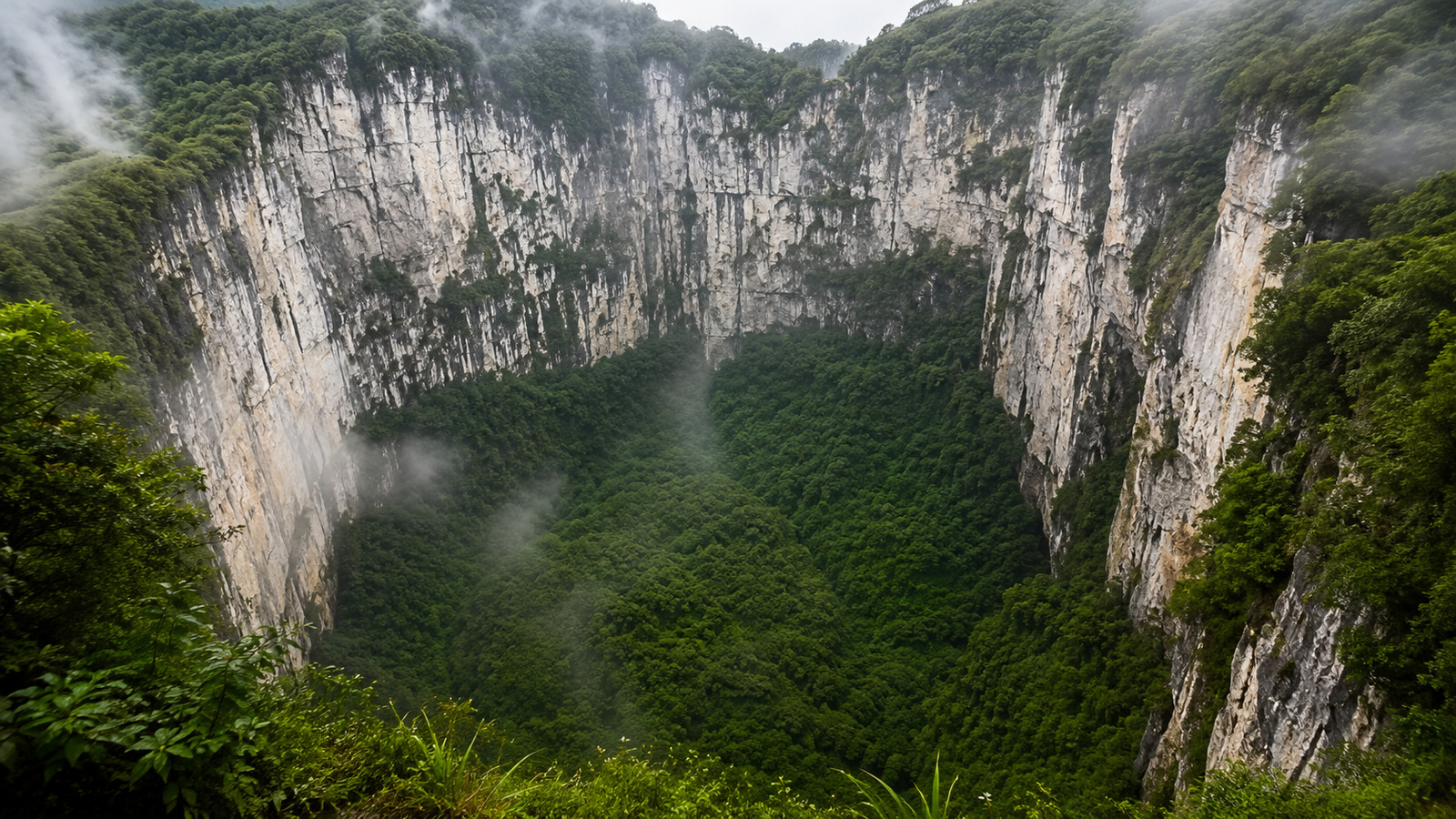


Forest in the world’s deepest sinkhole in China draws attention for harboring plants adapted to isolation, low light, high humidity, and specific nutrients, creating a rare ecosystem with accelerated plant growth and unusual dynamics
The forest in the sinkhole, the deepest in the world, located in China, draws attention for harboring plants adapted to low light, high humidity, and specific nutrients, forming an isolated and rare environment in nature.


What makes the forest in the sinkhole so different
The natural formation sparks curiosity because it brings together uncommon environmental conditions. Inside the sinkhole, vegetation grew under strong isolation, in a humid space, with low light entry and high availability of certain nutrients.
This combination created its own ecosystem, in which plants developed particular forms of survival.
-
Welder Discovers 16th-Century Diamond Ring in England After 7 Hours with Metal Detector; Gold Jewel Linked to Edward I Pattern Auctioned for £17,000

-
Former Merchant Marine Captain Invents Fuel-Free Barrier, Removes 20,000 Tons of Trash from Chennai Rivers
-
14-Year-Old Maxim Harris Turns School Project into Anti-Rage Gaming Accessory, Sells 1,000 Units Across 46 U.S. States, Donates 20% of Profits to Charity
-
Brazilian Health Agency Approves First Oral Medication for Cancer Patients



The forest began to function as an environment separate from the surface, with dynamics different from those observed in traditional forest areas.

How a sinkhole forms in the ground
A sinkhole is a natural depression formed when underground caves collapse. The process opens a large hole on the surface and creates a structure capable of profoundly modifying the landscape.
This type of formation frequently appears in limestone regions. In these areas, water slowly dissolves rocks over time, until parts of the terrain lose support and give way.
The depth and isolation make this type of environment important for understanding how vegetation responds to natural limits.
In the Chinese case, the sinkhole brings together factors that affect light, soil, humidity, and nutrients.
Plants grow fast, but use nutrients in an unusual way
In the forest in the sinkhole, plants exhibit a different nutritional composition. They have less carbon and more nitrogen and phosphorus, a characteristic that directly influences how they grow.
This combination favors faster growth. At the same time, nutrient use becomes less efficient, creating an unusual ecological cycle distinct from the pattern observed in conventional forests.
Vegetation also relies on greater nutrient absorption to compensate for this low efficiency. During favorable periods, accelerated growth helps plants make better use of the available conditions in the environment.
Adaptations help overcome low light and high humidity
Low solar incidence requires changes in how plants capture energy. Therefore, modified leaves help make better use of the available light inside the sinkhole.
Constant humidity also favors plant growth but limits which species can survive. This balance helps explain why the ecosystem is considered so unique.
Plants also need to deal with differentiated nutrient cycles. The decomposition and recycling of nutrients occur in a distinct manner, reinforcing the closed functioning of this natural environment.
Soil creates dense areas and less developed sections
The soil plays a central role in the organization of the forest in the sinkhole. It controls nutrient availability, retains water and minerals, and creates microenvironments within the formation itself.
This variation means that vegetation is not uniformly distributed. Some areas become denser, while others remain less developed, reflecting internal differences in soil, humidity, and available minerals.
With information from Revista Oeste.