






 4 min of reading
  0 comments


Hyundai Veracruz 2012 offers 7 seats, 260 hp V6 engine, 6-speed automatic transmission, and ample interior space for the price of a compact SUV.
In a market where many compact SUVs already cost more than R$ 120,000 when new, some large utility vehicles from the past have started to attract attention for their space and the amount of equipment offered. One of the most curious examples is the Hyundai Veracruz 2012, a seven-seater SUV that once occupied the top of the line of the South Korean brand and today can be found for values close to those of modern compacts.
Launched to compete with larger family utilities, the Veracruz bet on an increasingly rare recipe: naturally aspirated V6 engine, cabin for seven occupants, large SUV size, and focus on comfort for long trips. According to Hyundai, the model uses a 3.8 V6 DOHC engine with 260 hp, associated with a six-speed automatic transmission with manual mode.
260 hp V6 engine puts the Veracruz on a different level from current compact SUVs
The main highlight of the Veracruz is under the hood. According to Hyundai and international technical bases from Edmunds, the SUV uses a 3.8-liter V6 engine capable of delivering 260 hp at 6,000 rpm and 257 lb-ft of torque (approximately 34.8 kgfm) at 4,500 rpm. The set works with a six-speed automatic transmission equipped with a manual shift system.
-
The 7-seater SUV has become an alternative for those who need space without spending much, combining a 260 hp V6 engine, automatic transmission, and the size of a large utility vehicle for less than R$ 80,000: meet the 2012 Hyundai Veracruz.
-
The 7-seater SUV has become an alternative for those who need space without spending much, combining a 260 hp V6 engine, automatic transmission, and the size of a large utility vehicle for less than R$ 80,000: meet the 2012 Hyundai Veracruz.
-
Researchers present a hydrogen ion battery capable of storing energy in two different forms, an innovative solution that promises to increase the autonomy of renewable systems and simplify energy transport.
-
Researchers present a hydrogen ion battery capable of storing energy in two different forms, an innovative solution that promises to increase the autonomy of renewable systems and simplify energy transport.
Even more than a decade after its launch, the numbers continue to impress. In terms of power, the Veracruz surpasses several turbocharged compact SUVs currently sold in Brazil, providing a driving experience more focused on comfort and smoothness than sportiness.
Hyundai’s proposal was clear: to create a family vehicle capable of transporting passengers and luggage effortlessly, especially on road trips.
Seven seats make the Veracruz a rare alternative in the used market
While many modern SUVs offer only five seats, the Veracruz was developed to transport larger families.
According to Hyundai, all Veracruz models come with seven seats, including a foldable third row of seats. The configuration allowed the vehicle to be quickly transformed between a family utility and a cargo transporter.
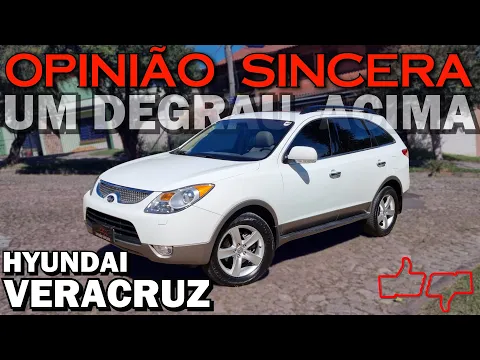

This is one of the factors that help keep the model relevant in the used car market. Finding a seven-seater SUV at prices close to those of the Veracruz has become increasingly difficult in recent years.
For those who need to transport more people regularly, the proposal still makes sense even after more than a decade of use.
Generous dimensions help explain the internal comfort
The Veracruz was developed as a large-sized SUV. According to the model’s technical data, the utility vehicle has 4,840 mm in length, 2,805 mm wheelbase, approximately 1,940 mm in width, and about 1,750 mm in height.
These measurements place the model above many current medium SUVs, especially when it comes to space for the occupants of the second and third rows.
The result is a cabin geared towards long trips, focusing on comfort for all passengers and not just those in the front seats.
Trunk can exceed 1,100 liters depending on the configuration
In addition to the capacity for seven people, the Veracruz also draws attention for the space available for luggage.
According to international technical bases, the rear compartment can reach about 1,133 liters of capacity, depending on the seat configuration. Some technical catalogs indicate a maximum volume of over 2,400 liters with the seats folded.
In practice, this places the model at a level far above most compact SUVs currently marketed.
This feature made the Veracruz an extremely versatile vehicle for family trips, equipment transport, and long-distance travel.
Equipment reinforced Hyundai’s top-of-the-line position
When it was launched, the Veracruz represented the most sophisticated offering in Hyundai’s lineup. According to Hyundai News materials, the model offered items such as electronic stability control (ESC), brake assist system, automatic transmission with manual SHIFTRONIC function, and various comfort-oriented equipment.
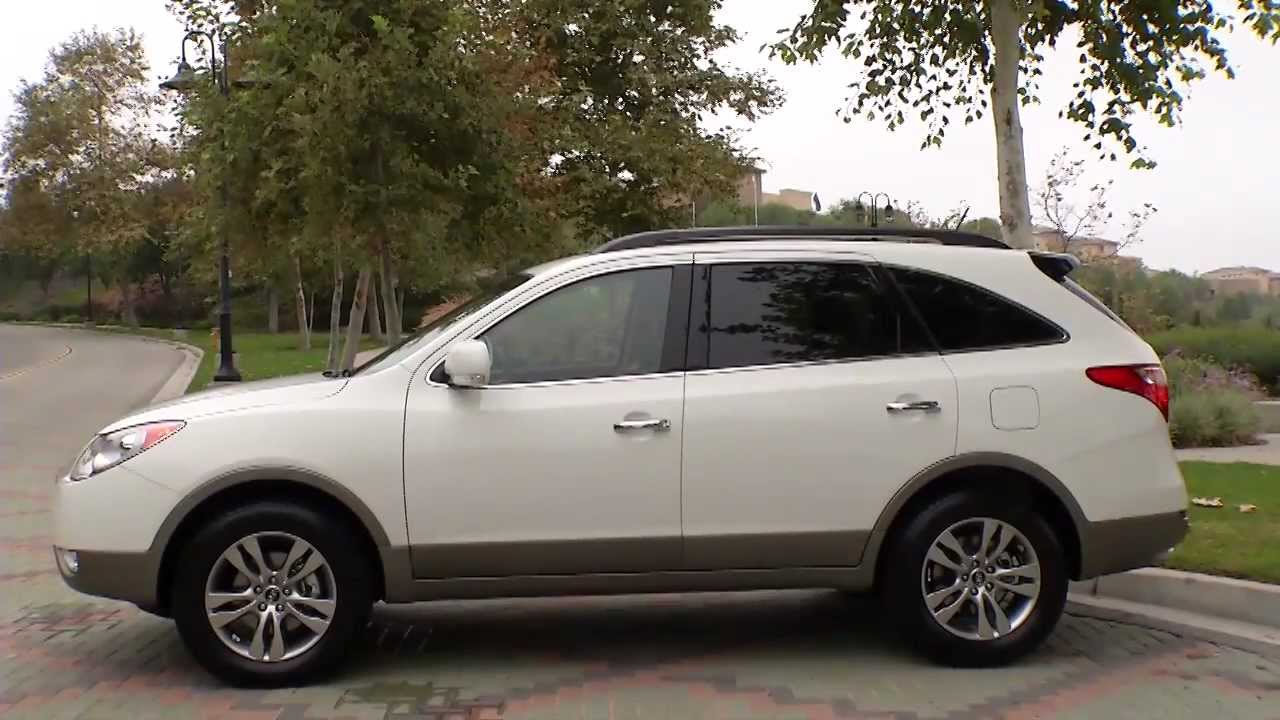
In the more complete versions, it was also possible to find leather seats, sunroof, premium sound system, heated and ventilated seats, and convenience features uncommon in many SUVs of the time.
Even analyzed by current standards, the package remains competitive for a used vehicle in its price range.
Current price brings the Veracruz closer to much smaller vehicles
The aspect that currently draws the most attention is the relationship between size and market value. While new compact SUVs often exceed R$ 120,000, the Veracruz appears in the used market for significantly lower values, even offering a V6 engine, seven seats, and large SUV dimensions.
This creates an unusual situation: a vehicle that was positioned as top of the line starts competing with much smaller, less powerful models with lower transport capacity.
Technical specifications of the Hyundai Veracruz 2012
| Item | Information |
|---|---|
| Model | Hyundai Veracruz 2012 |
| Engine | 3.8 V6 DOHC 24V |
| Displacement | 3,778 cm³ |
| Power | 260 hp at 6,000 rpm |
| Torque | 34.8 kgfm |
| Transmission | 6-speed automatic |
| Seats | 7 |
| Length | 4,840 mm |
| Wheelbase | 2,805 mm |
| Width | Approximately 1,940 mm |
| Height | Approximately 1,750 mm |
| Trunk | Up to 1,133 liters |
| Drive | 4×4 or front, depending on the version |
The Hyundai Veracruz 2012 represents an increasingly rare reality in the automotive industry. The model combines a 260 hp V6 engine, capacity for seven occupants, six-speed automatic transmission, and large SUV dimensions, features that typically require much larger investments in new vehicles.
For those who prioritize space, comfort, and transport capacity above current downsizing trends, the Veracruz remains one of the most interesting alternatives in the used market.




Be the first to react!