Portuguese
  Spanish


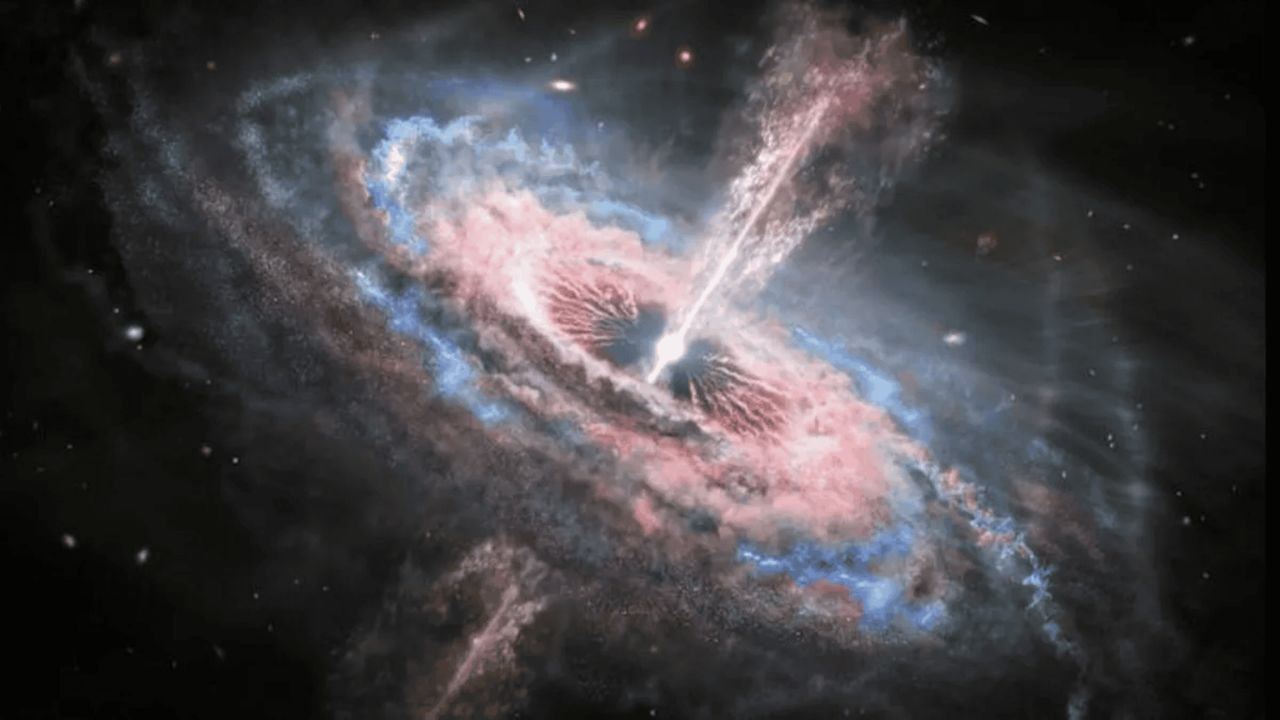


Astronomers discover record ultraviolet wind in distant quasar, driven by a supermassive black hole.
A discovery made by astronomers may help clarify how black holes influence the evolution of galaxies. The team identified a quasar called J2318, located about 3 billion light-years from Earth, which produces winds capable of reaching approximately 30% of the speed of light, equivalent to about 323 million kilometers per hour. The phenomenon was described in a study published on Thursday (4) in the scientific journal The Astrophysical Journal.
According to the researchers, this is the fastest wind ever recorded in observations conducted in the ultraviolet range of the light spectrum. The discovery caught the attention of astronomers because the observed speed is unusual even among the most energetic objects in the Universe.
Astronomers record rare phenomenon in distant quasar
According to Olhar Digital, the analyzed object hosts a supermassive black hole with an estimated mass of 1.7 billion times the mass of the Sun. Despite the colossal size, astronomers explain that this mass is within the expected range for this type of cosmic structure.
-
World’s Largest Camera, with 3,200 Megapixels, Begins Operation, Capturing Sky Images Every 30 Seconds for the Next Decade

-
Canary Island with 11,000 Residents and Over 500 Volcanoes Uses Wind and Water as a Giant Battery to Demonstrate Remote Areas Can Survive Without Fossil Fuels

-
Brazilian Craftsman Builds Small Hydropower Plants Generating Over 1,000 kWh Monthly, Paying for Themselves in Just Over a Year

-
Unknown Molecule Possibly Detected on Pluto and Titan by James Webb Telescope



What really surprised the scientists was the intensity of the winds emitted by the system. Patrick Hall, a member of the research team at York University in Canada, highlighted that the recorded speed is far above what is normally observed in similar phenomena.
Lucas Seaton, the study leader, used a comparison to illustrate the strength of the phenomenon. According to him, if it were possible to categorize this wind on a scale similar to that used for hurricanes, it would correspond to a category 79.
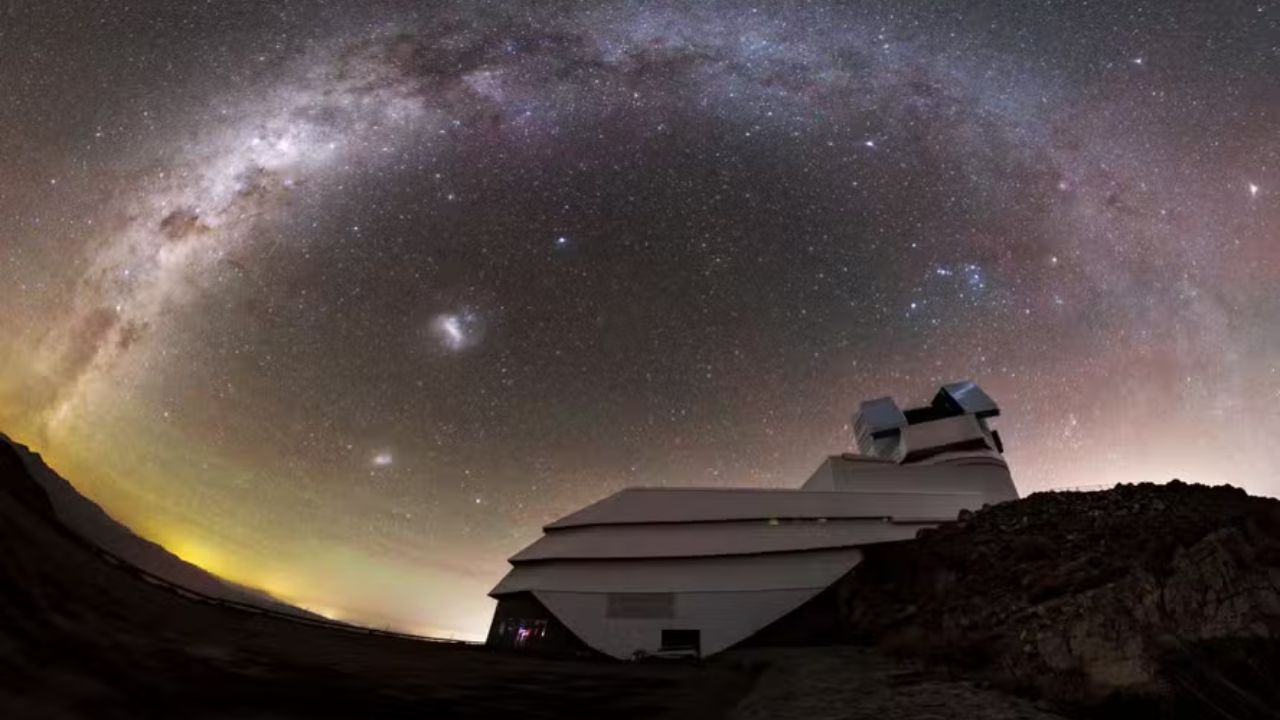
To achieve the result, the astronomers analyzed information collected by two scientific programs linked to the Sloan Digital Sky Survey (SDSS): the SDSS-IV Time-Domain Spectroscopic Survey and the SDSS-V Black Hole Mapper.
These projects observe the light emitted by stars, galaxies, and quasars. From this analysis, researchers can identify characteristics invisible in conventional observations.
According to Seaton, the method works similarly to the formation of a rainbow. Just as sunlight can be separated into different colors, the equipment divides the light from space objects into various wavelengths.
It was precisely this technique that allowed astronomers to detect clear signals of the ultra-fast winds present in J2318.
What generates the so-called “winds” of black holes?
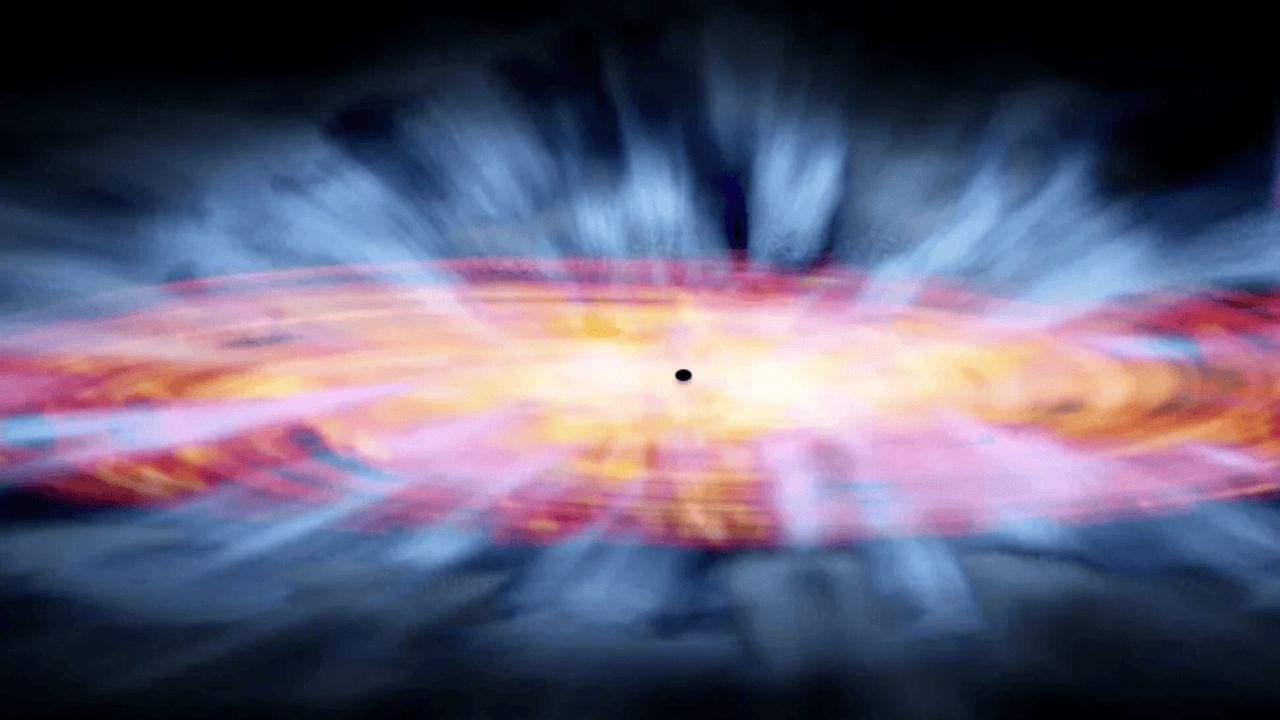
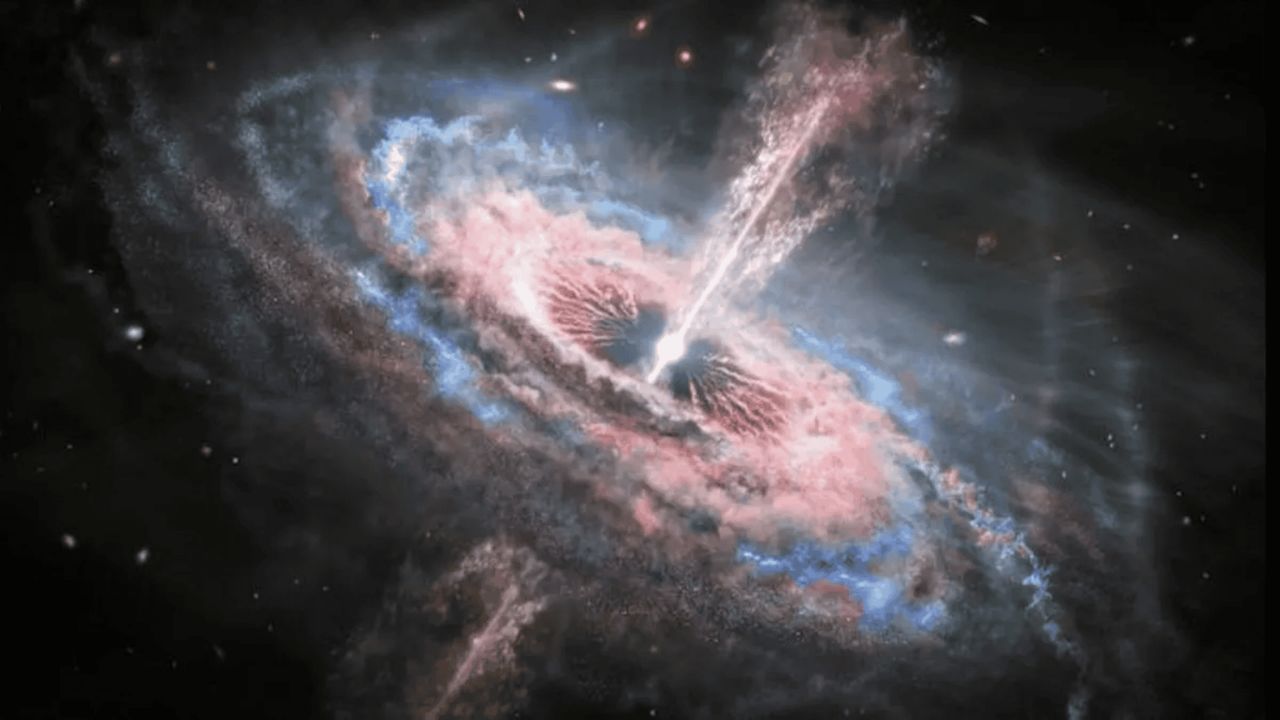
Quasars arise when large amounts of gas and dust concentrate around a supermassive black hole. Over time, this material forms a structure that continuously feeds the central object. During this process, intense friction occurs, releasing enormous amounts of energy.
Astronomers explain that this extremely powerful radiation can push part of the material away from the system, creating the so-called black hole winds.
According to Lucas Seaton: “In quasars, we often see gas winds pushed away from the black hole by the light of the quasar.” In the case of J2318, this mechanism reached exceptional intensity, becoming a rare case for the scientific community.
Why are these “winds” different from Earth’s winds?
Although they share the same name, the winds observed by astronomers in space are not related to terrestrial meteorological phenomena. On Earth, winds arise due to differences in atmospheric pressure. In quasars, the acceleration of material occurs due to the action of radiation emitted by the system.
Researchers explain that light particles called photons collide with the atoms present in the gas and transfer energy to them. Among the factors involved in this process are:
- Intense emission of radiation;
- Presence of large amounts of gas;
- Energy transfer by photons;
- Expulsion of matter away from the black hole;
- Formation of extremely fast flows.
Still, astronomers admit that some aspects remain without a definitive explanation. One of the challenges is understanding how the gas can reach such high speeds without losing certain chemical characteristics observed in the spectra.
Astronomers seek to understand the impact on galaxies
Besides representing a record, the discovery provides important clues about the evolution of the Universe. Astronomers believe that such energetic winds can profoundly alter the environment of the galaxies where they emerge. This happens because they carry enormous amounts of energy to regions far from the galactic core.
In certain cases, these flows can remove gas and dust from the system. As these materials are essential for the birth of new stars, their loss can reduce star formation. Professor Paola Rodríguez Hidalgo, from the University of Washington in Bothell, highlighted the importance of this mechanism.
According to her: “These extreme flows carry incredible amounts of energy that can affect the surrounding galaxies.” The researcher also emphasized that this process has appeared in galactic formation models for decades, but still requires more observations to be understood in detail.
Next steps of the research
The team responsible for the study intends to continue investigating similar objects in search of new examples of high-speed ultraviolet winds.
Although astronomers remain hopeful of finding other extreme cases, the researchers themselves acknowledge that surpassing the numbers observed in J2318 will be a difficult task. According to Flores, a member of the group, the searches will continue both in nearby regions and in the most distant observable areas of the Universe.
While new discoveries do not emerge, J2318 remains one of the most impressive examples ever recorded by astronomers. Besides setting a record in the speed of ultraviolet winds, the quasar offers valuable information about the interaction between supermassive black holes and the galaxies surrounding them, helping scientists better understand the dynamics of the cosmos.
With information from Olhar Digital