






 Portuguese
  Spanish


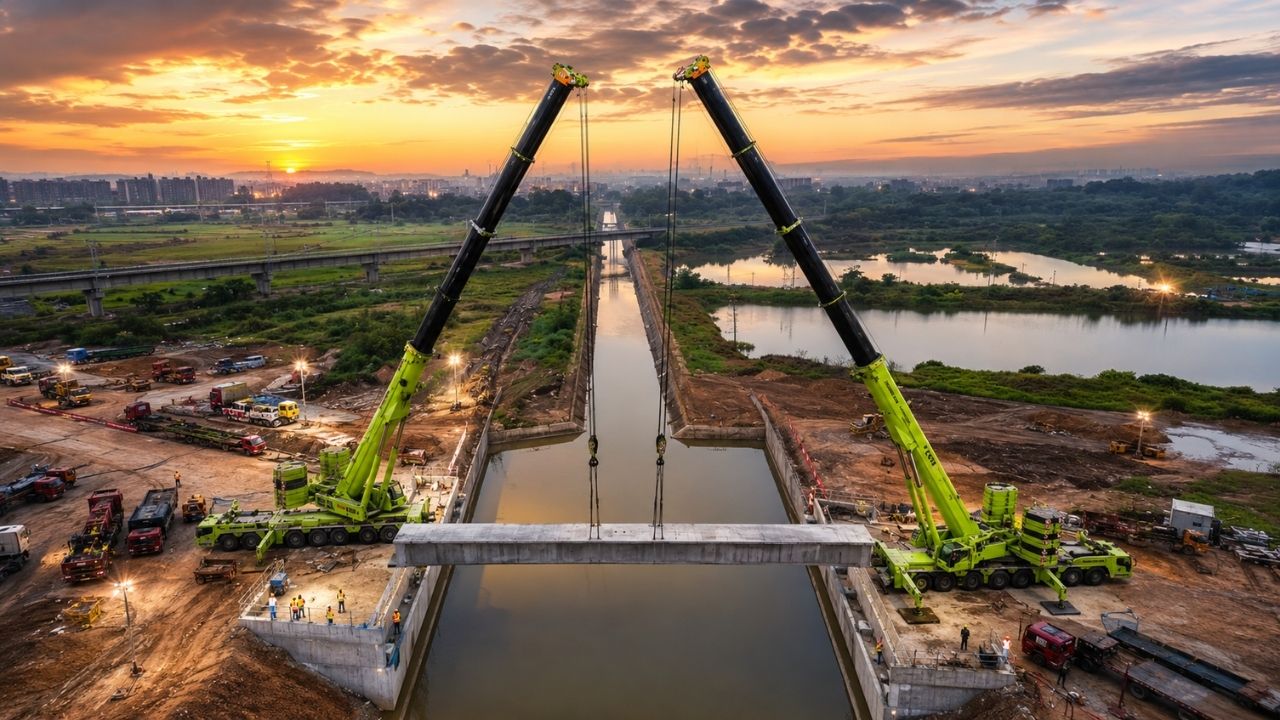


A bridge in 24 hours appears in video published on May 22, 2026, with two Chinese Zoomlion cranes, nine 125-ton beams, and night convoy over 100 km. The operation impresses with logistics, but the source does not inform city, province, or name of the bridge.
The bridge in 24 hours was presented in a video published on May 22, 2026, showing an operation with two Chinese Zoomlion cranes of 650 tons, nine beams of about 125 tons, and a night convoy that traveled over 100 km to the site.
In a video released by the Mega Projects China channel, it shows details of transportation, schedules, lifting, and synchronization over a 35-meter river, but does not inform the city, province, name of the bridge, or the project responsible for the work. Therefore, the safest reading is to treat the case as a technical operation recorded on video, without pinpointing a specific location.
Source does not inform the exact location of the work
Although the video presents many operational details, such as weights, distance traveled, schedules, and lifting method, it does not clearly identify where the work was carried out. The source also does not inform the name of the bridge, the river, the city, the province, or the contracting company of the work.
-
China’s Engineered Bamboo: The “Material of the Future” Stronger Than Steel and a Sustainable Wood Alternative

-
Egypt’s “New Nile”: 170 km Artificial River Aims to Turn Desert into Farmland, but Water Supply Concerns Loom
-
Unable to secure a mortgage as a self-employed single mother, she designed her own floating home from a 20-meter boat and now lives “off-grid” with her two children and solar panels on an English canal.
-
Man Transforms Rusty Shipping Container into Luxury Home with Insulated Walls, Large Windows, and Drywall Finish, Surprising Onlookers


For this reason, the report describes the operation based on what appears in the video and avoids stating unconfirmed geographic data. What is known from the source is that Chinese Zoomlion cranes, nine heavy beams, and a long-distance convoy were used in an assembly planned to occur in up to 24 hours.
Heavy convoy traveled more than 100 km before lifting
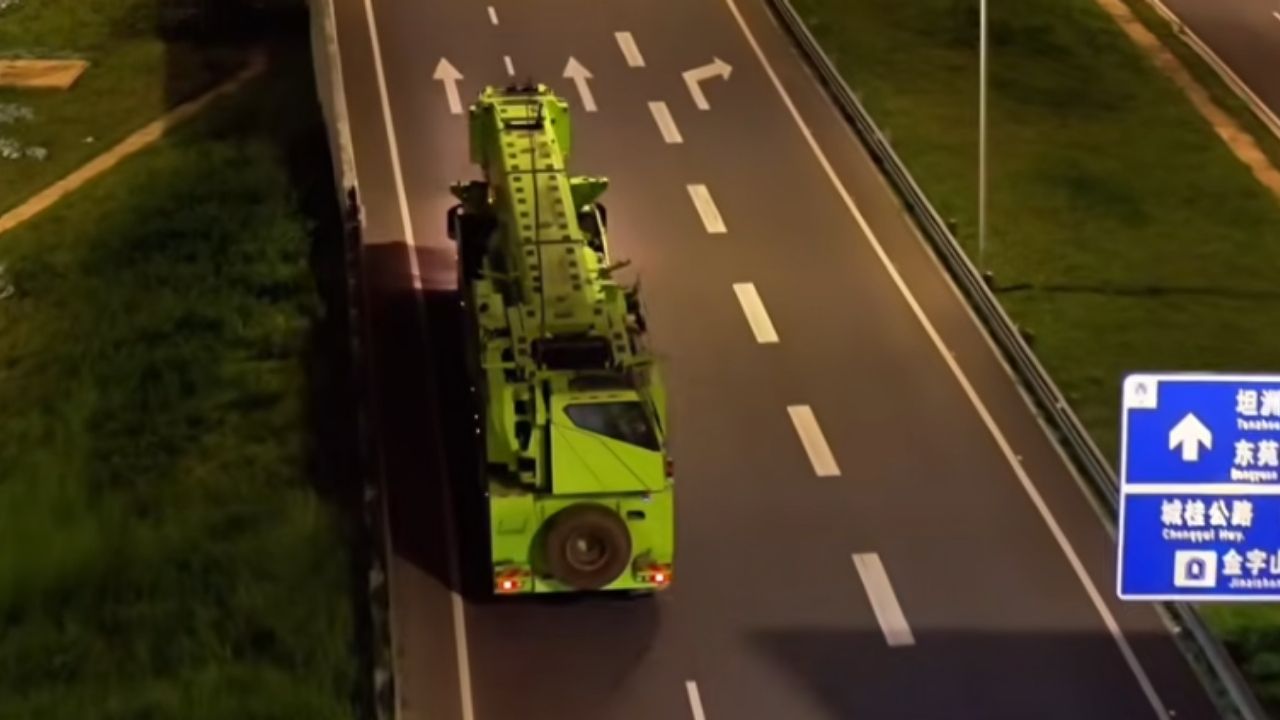
Before any beam was lifted, the operation of the 24-hour bridge began on the road. The source shows a convoy with nine beam trucks, 12 counterweight trailers, and support vehicles, including a yellow pickup responsible for leading the route and checking the path.
The total weight moved exceeded a thousand tons, considering the beams, counterweights, and support equipment. The journey over more than 100 km became a critical stage of the work, because the heavy loads required constant attention to the tires, speed, and stability of the trucks.
During the night journey, the drivers made stops to cool tires with water. Some vehicles faced blowouts or slow leaks, but the team replaced the damaged tires and kept the convoy moving to the destination.
The arrival at the site happened before dawn
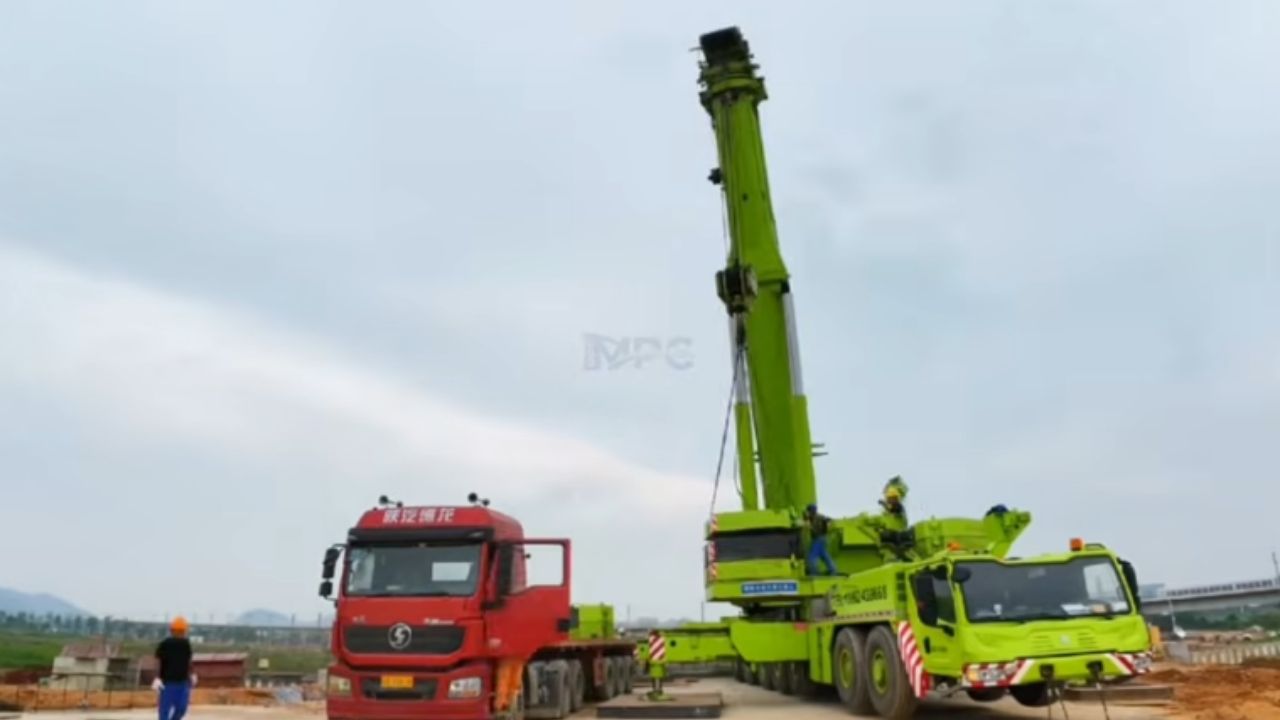
According to the transcript, when about 20 km from the site, it was already around 2:30 AM. The arrival at the site occurred at 4 AM, leaving little time for rest before the assembly began at dawn.
This detail shows that the 24-hour bridge did not rely solely on the strength of the cranes. The night logistics were decisive for the beams to be in the right place at the right time, without compromising the lifting schedule.
The operation did not start when the crane lifted the first beam. It started hours earlier, with tire checks, trailer organization, counterweight relocation, and coordination of a fleet that needed to cross a long distance without losing control.
Two 650-ton cranes worked on opposite banks
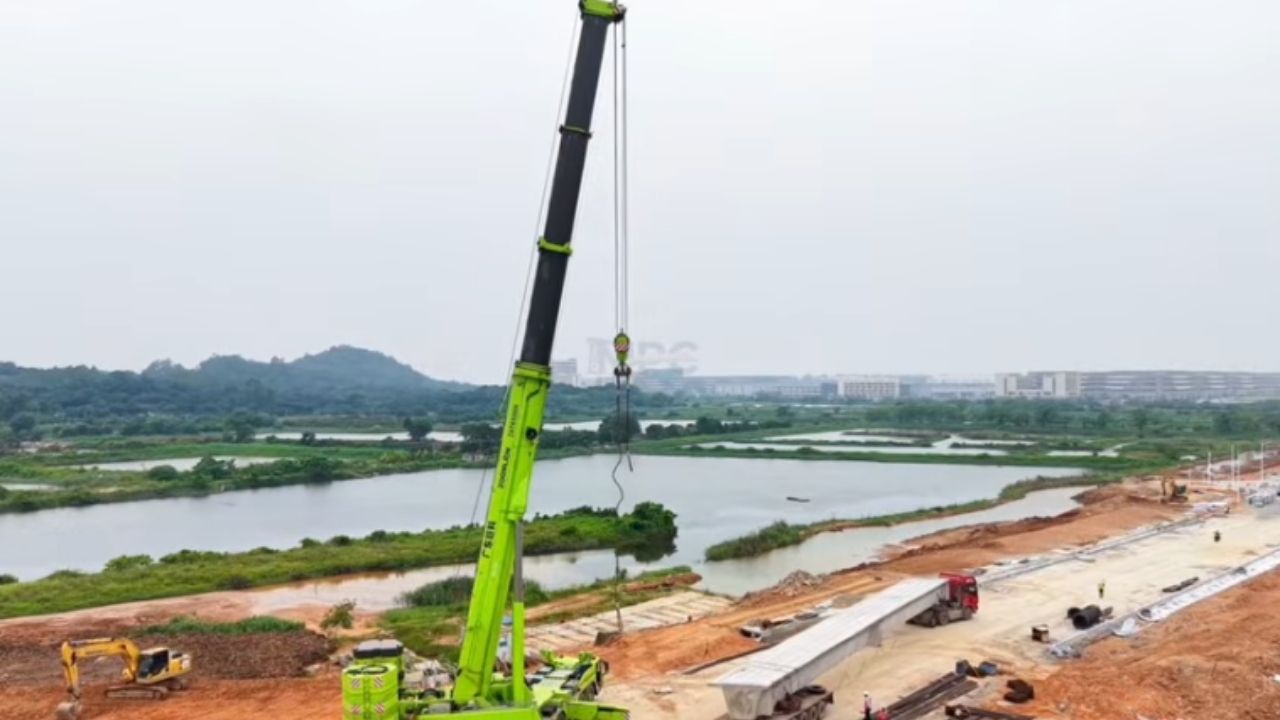
At dawn, the two 650-ton Zoomlion cranes were positioned on opposite sides of the river. The choice was necessary because the span was 35 meters, and a single crane would not safely reach the opposite bank.
The solution was to perform a kind of aerial “handoff.” One crane lifted the beam and guided it to a part of the span. Then, the crane on the other bank took over the piece, with operators and signalers adjusting cables, lifting points, and movements.
This type of transfer requires extreme precision. If one piece of equipment advances too much, if the truck backs up out of sync, or if the beam swings beyond the expected, the safety of the entire operation can be compromised.
Each beam weighed about 125 tons
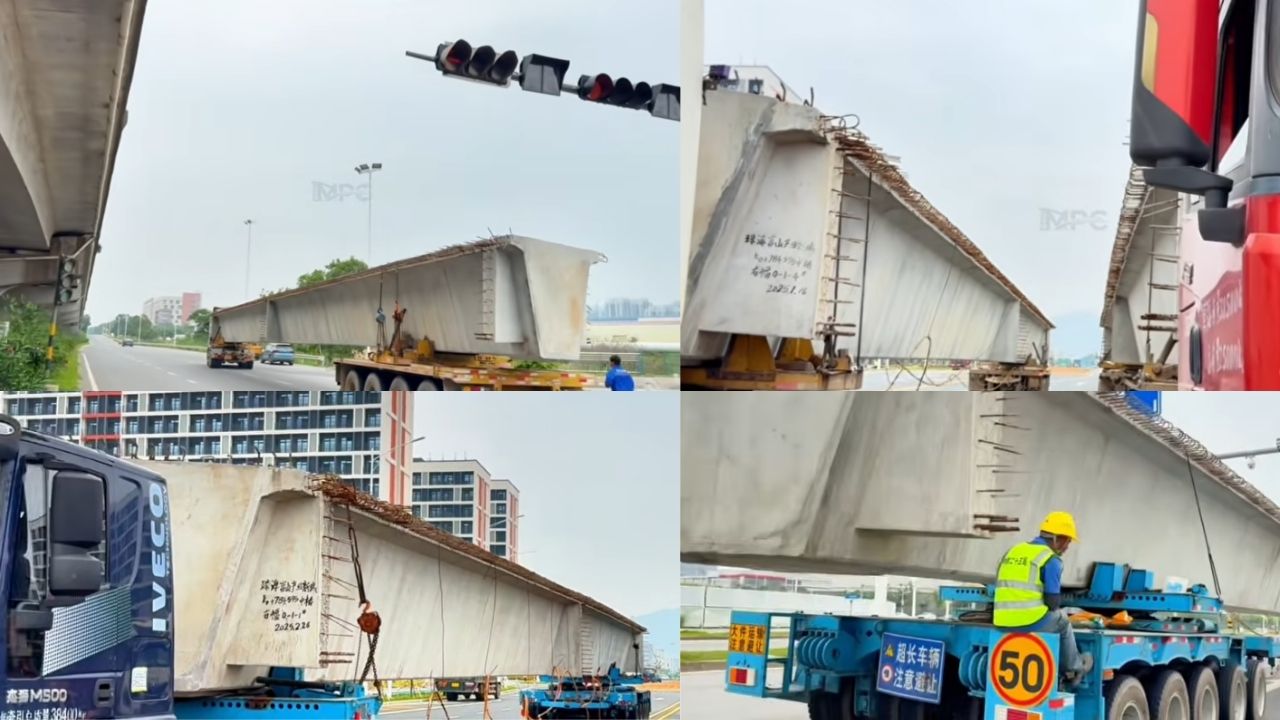
The bridge was composed of nine beams, each weighing approximately 125 tons. This explains why the transport required specific trucks and why the lifting needed to be done with two large cranes.
In practice, the bridge in 24 hours was a race against time, but with no room for improvisation. Each beam needed to be unloaded from the truck, positioned, transferred between cranes, and fitted in the correct place over the river.
The first lift was described as the most difficult. After the team completed the first stage, the pace increased. Even so, each new beam required careful repetition of procedures, cable review, and worker clearance before movement.
Counterweights, cables, and steel plates were part of the safety
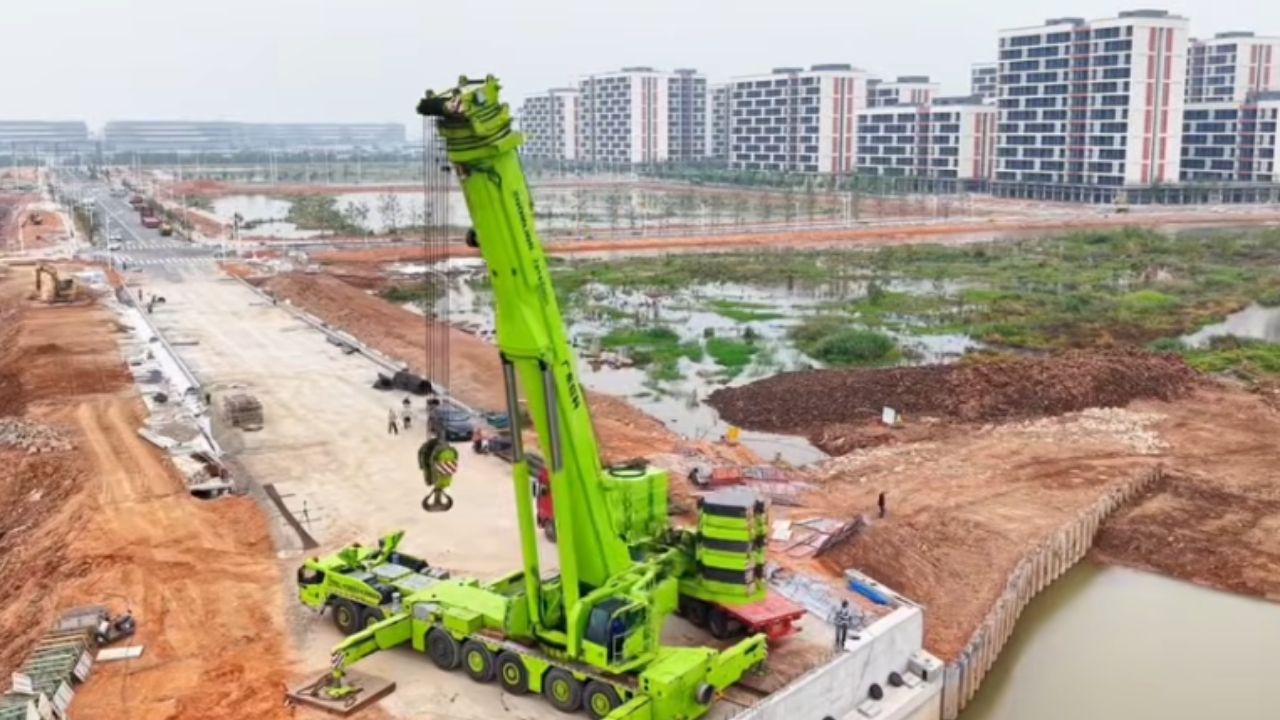
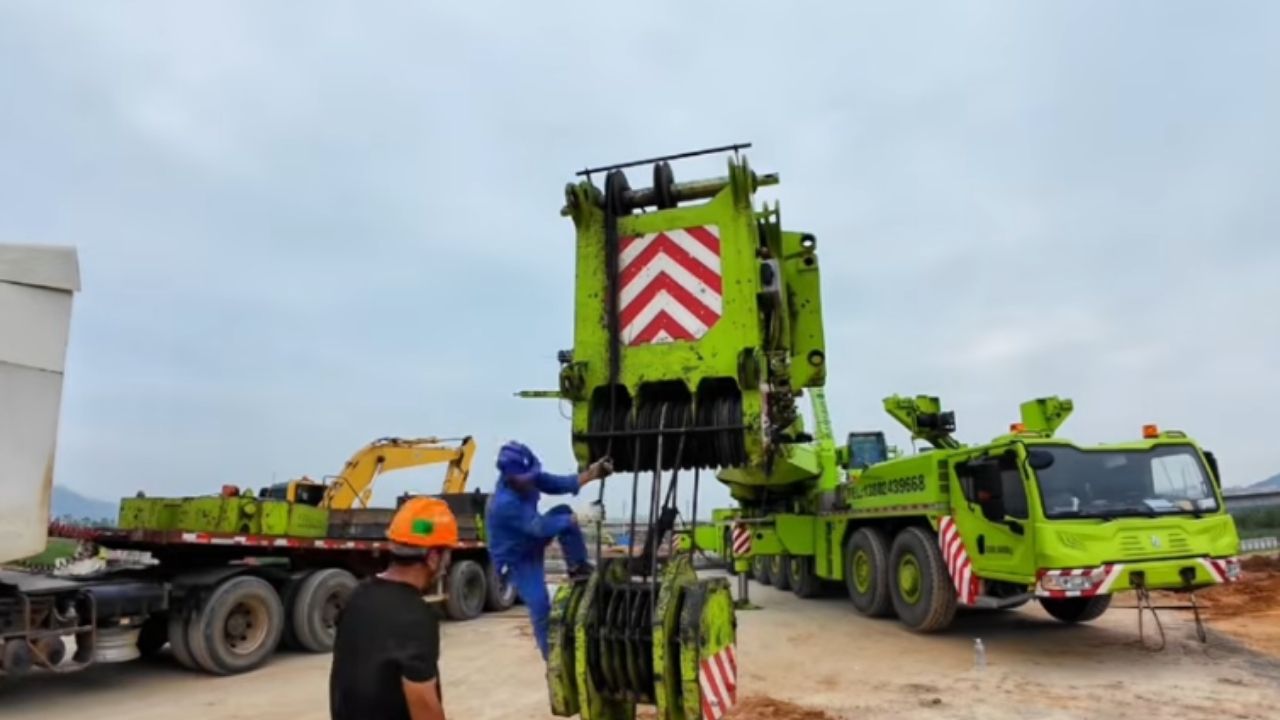
The source also highlights the preparation of the cranes before the main work. Operators tested the boom rotation, checked stabilizers, and used hundreds of tons of counterweights to assess if there was any sinking or instability.
Giant steel plates were placed under the track supports to reinforce the base. In an operation of this size, the ground also becomes part of the engineering. If the surface gives way, the risk is not only in the beam but in the entire lifting set.
The steel cables also received attention. The team adjusted the sheave passage configuration to speed up the lift without compromising safety. The video shows this care before the effective start of beam positioning.
Trucks and cranes needed to move at the same pace
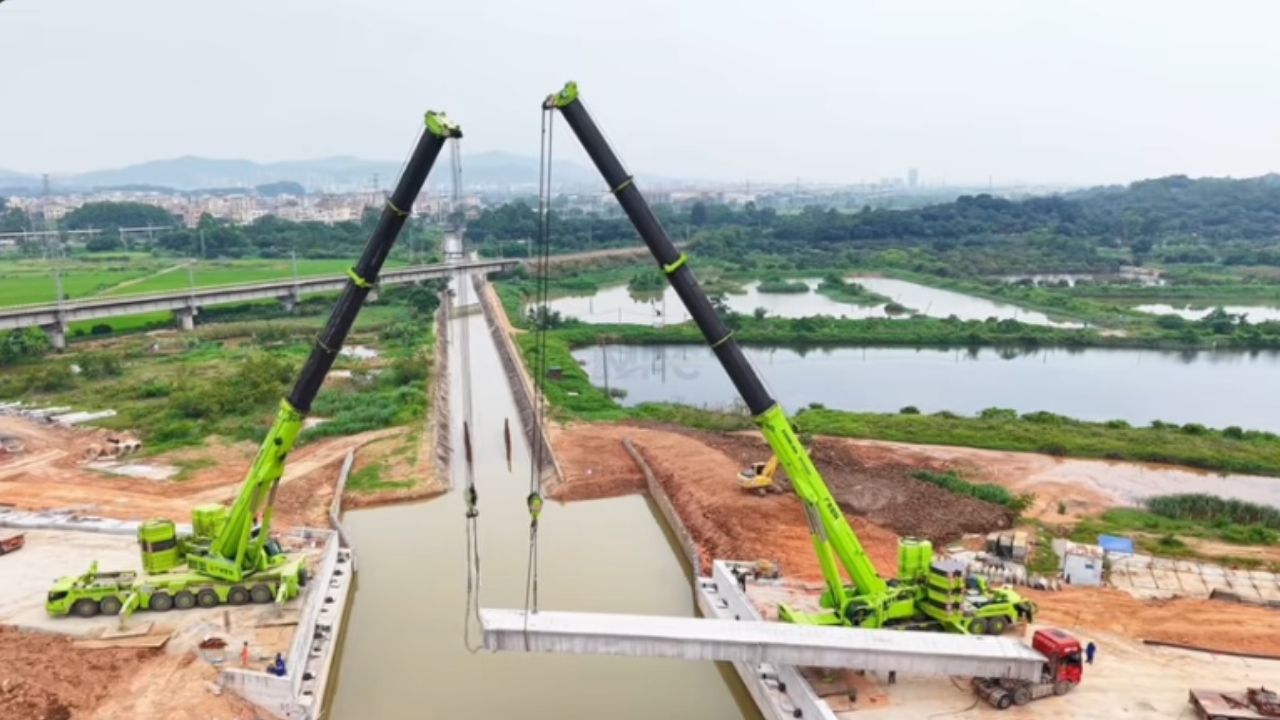
One of the most delicate moments of the 24-hour bridge occurred when the beam truck needed to slowly reverse while the crane lifted and rotated the piece. The movement required synchronization between the driver, operator, and ground crew.
This coordination avoided overload and allowed the beam to gradually advance towards the river. When the piece approached the transfer area, workers positioned the cables of the second crane to take on part of the weight.
The lifting seemed simple from afar, but it depended on small calculated movements. The bridge only advanced because trucks, cranes, riggers, and operators worked as a single machine.
The fourth beam was already in place by early afternoon
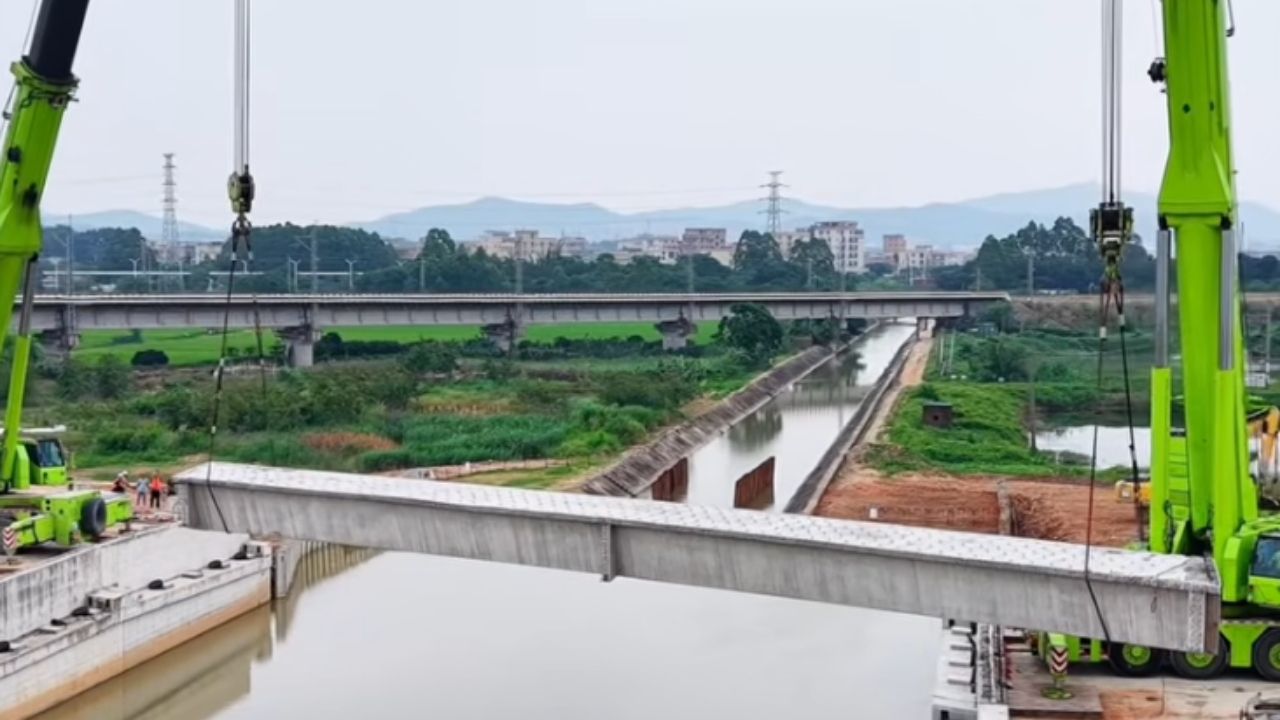
The operation gained speed after the first beam. According to the transcript, by early afternoon the fourth beam was already positioned. At 3 PM, the pace indicated that completing the entire bridge within 24 hours was a viable goal.
This progress shows the importance of repetition. Once the team confirmed the procedure, each new hoisting followed a more predictable pattern, with trucks aligned, cranes adjusted, and operators more familiar with the movement.
Even so, the bridge in 24 hours still required full attention. Even with the increased pace, any failure in cable, support, truck, counterweight, or communication could interrupt the sequence and delay the entire assembly.
Operation shows the weight of logistics in heavy construction
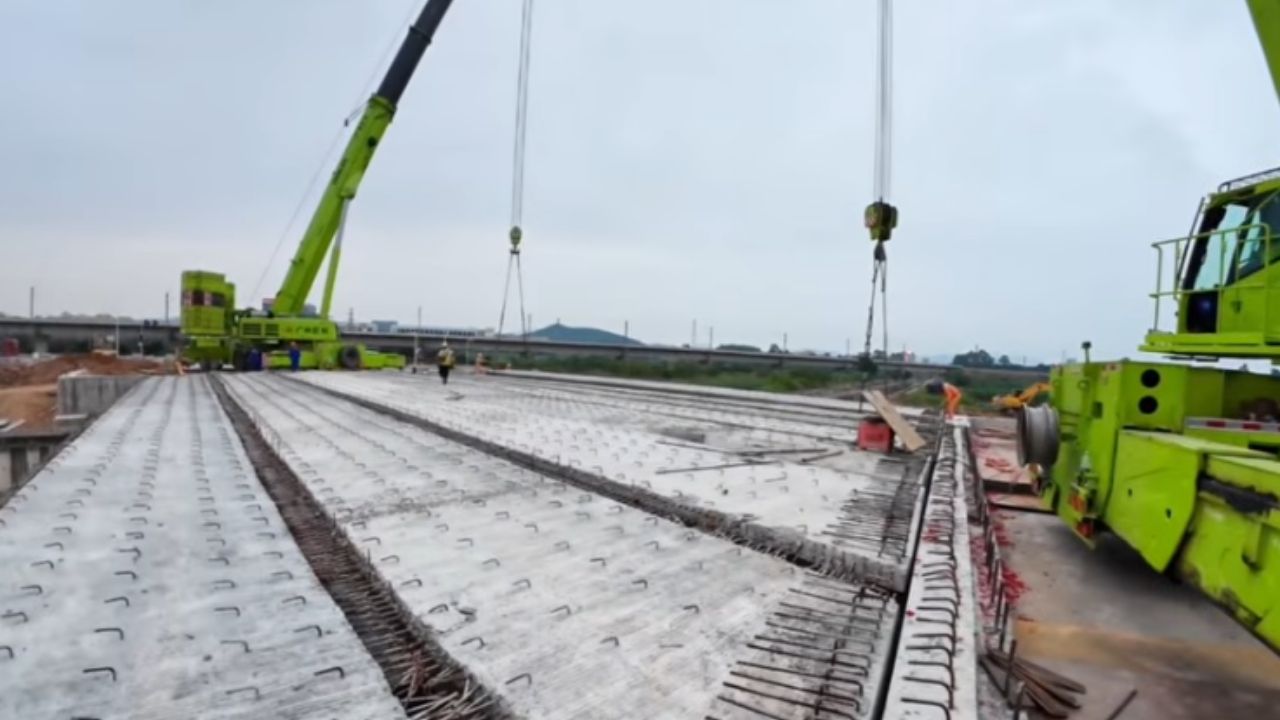
The project draws attention not only for the timeframe but for the number of steps invisible to the public. Before the bridge appeared over the river, there was fleet movement, tire control, counterweight transport, crane assembly, stability tests, and preparation of hoisting points.
The final speed was only possible because logistics came before the construction. The video shows that building quickly does not mean skipping steps, but organizing each phase so that execution happens without wasting time.
The bridge in 24 hours is, therefore, less a trick of brute force and more a demonstration of planning. The cranes are impressive, but the result depended on the combination of route, fleet, team, safety, and technical repetition.
Operation with Chinese cranes becomes a showcase of strength and precision
The bridge assembly functions as a showcase of the heavy engineering capacity associated with the Chinese equipment used in the operation. The use of two Zoomlion cranes of 650 tons reinforces the industrial dimension of the work shown in the video.
The presence of Zoomlion gives prominence to the machines, but the project shows that equipment alone does not solve everything. The difference lies in the coordination between crane, truck, ground crew, cables, counterweights, and operators.
When a 35-meter bridge is installed over a river in such a short time, the visual impact is immediate. But the most relevant point is in the operational discipline: each beam, each cable, and each truck must follow a precise sequence.
Speed impresses, but synchronization explains the feat


The bridge in 24 hours impresses with the timeframe, the two 650-ton cranes, and the nine 125-ton beams. However, what truly supports the operation is the combination of logistics, safety, and millimetric coordination.
The convoy of over 100 km, the tire issues, the stabilizer tests, the use of counterweights, and the aerial transfer of the beams show that the project was not just fast. It was an operation planned to reduce risks at every stage.
Do you think a project of this type could happen with the same speed in Brazil? What impresses you the most: the cranes, the night convoy, or the precision to fit the beams over the river? Share your opinion.







