






 Portuguese
  Spanish


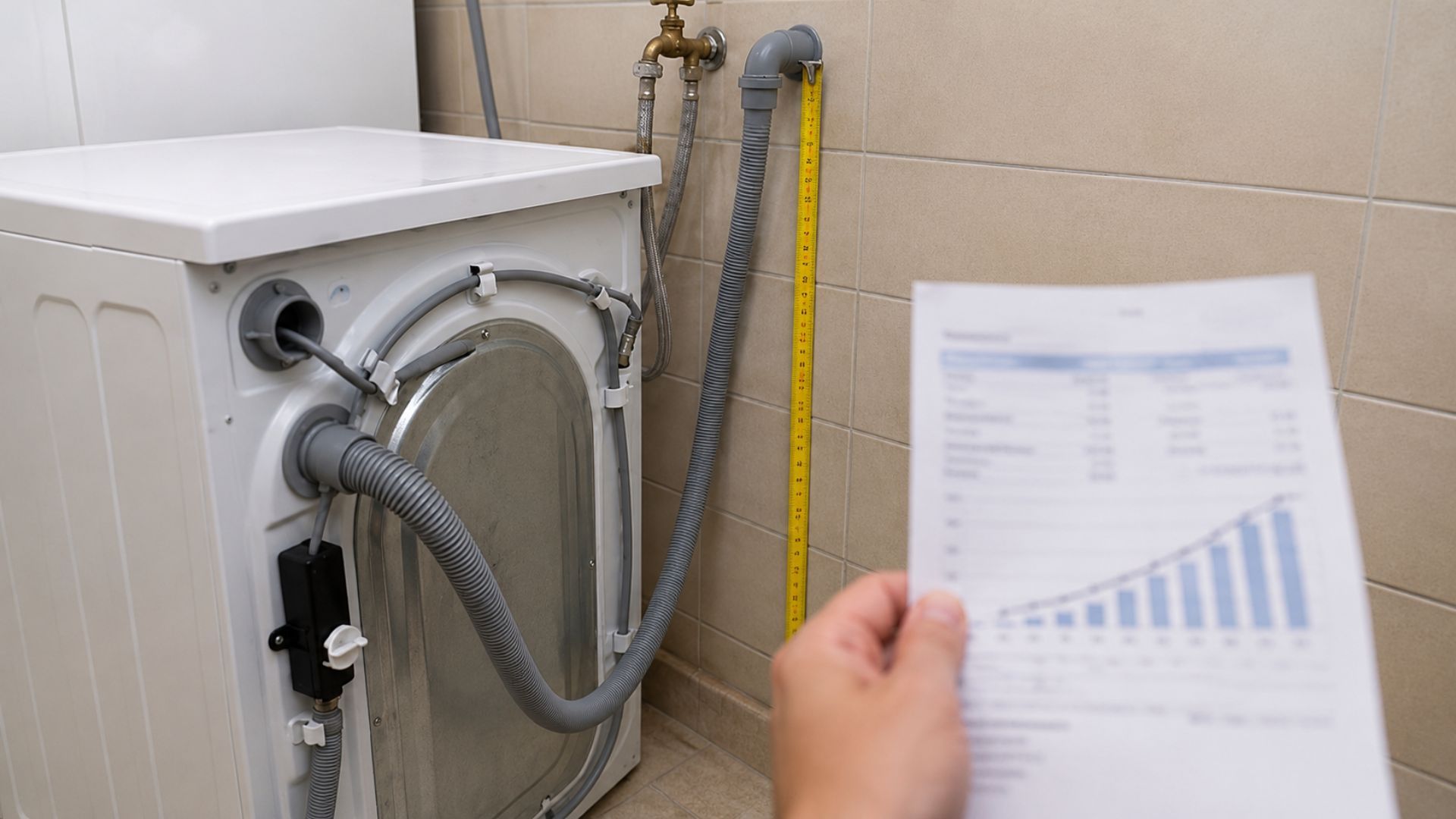


Manufacturers like Electrolux, Consul, and Samsung recommend that the washing machine drain hose be between 90 cm and 140 cm from the floor, but most consumers ignore this measurement and end up facing water waste due to the siphon effect, increased electricity bills, and premature wear due to installation failure.
According to TechTudo, there’s a detail in washing machines that costs zero reais to fix, but can cause hundreds of reais in losses annually when ignored. The so-called 90 cm rule determines the minimum height at which the drain hose must be positioned relative to the floor for the hydraulic system to function correctly. If the hose is below this level, water entering the drum can escape by gravity before completing the cycle, forcing the appliance to refill repeatedly and skyrocketing water consumption without the user realizing the source of the problem.
The warning comes directly from the industry. Álvaro Volpato Junior, Electrolux’s product engineering manager, explains that incorrect hose installation causes simultaneous water entry and exit, preventing the washing cycle from functioning properly. The result is a washing machine that uses more water, more energy, and more time to do the same job, in addition to suffering accelerated wear on internal components. And worse: problems caused by non-standard installation may not be covered by the manufacturer’s warranty.
What is the 90 cm rule and why does it exist

The 90 cm rule is a technical recommendation from manufacturers that defines the ideal height range for the washing machine drain hose. Brands like Electrolux, Consul, and Samsung specify that the hose outlet should be between 90 cm and 140 cm from the floor. This measurement is not arbitrary: it ensures that the internal pump can efficiently expel water, without the liquid returning to the drum due to gravity.
-
Young Innovators from Brazil Turn Discarded Plastic into Eco-Friendly Bricks Using Coconut Fiber, Offering a Sustainable Alternative for Construction

-
Brazilian Scientists Among Team Proposing to Turn Ocean Depths into Giant Gravity Battery Using Cargo Ships and Subsea Cranes

-
Chile’s Plan for a 20,000 km Undersea Cable to Hong Kong Halted by U.S. Pressure, Highlighting the Silent Data Control Battle in Latin America
-
In Somaliland’s Desert, Greenhouse Uses Sun and Seawater to Grow Lettuce, Cucumbers, and Tomatoes Without Rain: 1-Hectare Project Cools Crops, Desalinates Water, and Converts Brine into Commercial Salt




When the hose is positioned within this range, the hydraulic balance of the system remains stable. The pump operates at its designed pressure, water is drained at the correct moment in the cycle, and the washing machine’s internal sensors can accurately measure the drum level. If the hose is too low or too high, this balance is broken, and the entire operational chain of the appliance is compromised, from filling to spinning.
The siphon effect: water that escapes without you noticing
The most common phenomenon caused by incorrect hose installation is the so-called siphon effect. It’s a simple physical principle: when the hose outlet is positioned too close to the floor or directly into the drain without the required minimum height, the difference in level causes gravity to automatically pull water out of the washing machine, even without the pump being activated.
In practice, this means that water that has just entered the drum drains almost immediately through the hose. The level sensor detects that the drum has not reached the necessary volume and commands a new fill, which will also be drained by the siphon effect. The cycle repeats indefinitely: the washing machine fills, loses water, fills again, loses again, consuming tens of liters more than necessary in each wash. The siphon effect is silent and invisible to those who don’t know where to look, and therefore is usually only discovered when the water bill arrives with an inexplicable amount.
More water, more electricity, and shorter lifespan
The water waste caused by incorrect hose installation is just the tip of the iceberg. Each additional drum fill activates the water inlet valve, engages the drain pump, and extends the washing machine’s operating time, proportionally increasing electricity consumption. A cycle that should last 40 minutes can drag on for over an hour when the siphon effect is active.
The pump’s continuous effort to compensate for water loss accelerates the wear of internal parts that were not sized to operate at that pace. Over time, bearings, seals, and the motor itself can experience premature failures that require maintenance or replacement, further increasing the cost of an installation that could have been solved with a tape measure. According to Volpato, problems resulting from out-of-spec installation may, in some cases, not be recognized by the manufacturer’s warranty, meaning the consumer bears the repair cost alone.
Common errors that compromise the hose and washing machine
Beyond height, other installation mistakes with the hose worsen the problem. Splicing or extending the drain hose with extensions is one of the most frequent and damaging errors, as it alters the diameter and pressure of the flow, favoring the siphon effect and continuous drainage. Volpato warns that the outlet hose should not be spliced under any circumstances, as any modification compromises the drainage designed by the manufacturer.
Another recurring error is positioning the hose tip submerged inside the tank or drain, creating a seal that prevents air entry and intensifies suction by gravity. The leveling of the washing machine also deserves attention: all feet must be firm and in contact with the floor to avoid excessive vibrations that, in addition to generating noise, displace the hose from its correct position over time and recreate the conditions for the siphon effect. Even the use of electrical extensions and adapters is discouraged by the Electrolux specialist, as it can affect motor performance and equipment safety.
How to correct installation and avoid losses
Solving the 90 cm rule problem requires more attention than investment. The first step is to measure the distance between the point where the hose connects to the drain or sewer pipe and the floor, ensuring this height is between 90 cm and 140 cm. If your washing machine hose is below 90 cm, reposition it immediately, using a wall bracket or the drain pipe itself as support to maintain the appropriate height.
Next, check for kinks, cracks, or obstructions along the hose that could restrict water flow. Consult the manufacturer’s manual, as each model may have its own specifications that go beyond the general 90 cm rule. Correct installation protects the washing machine, reduces water and electricity bills, preserves the warranty, and extends the equipment’s lifespan for years, all without additional cost and with just a few minutes of adjustment.
And you, have you checked the height of your washing machine hose? Have you discovered any installation errors that were weighing on your water bill? Leave your comment and tell us if the 90 cm rule made a difference in your home, because this is the kind of information that can truly save money for those who are not yet familiar with the siphon effect.





Thank you for the update …very informative.
Why does the installation crew not tell us about this? Are they not aware of this issue? Ideally they should be guiding us!