Portuguese
  Spanish


The Nou Mestalla, considered the world’s largest ghost stadium, entered an unprecedented construction phase in recent days. Valencia released images showing the installation of auxiliary scaffolding for the roof of the 70,000-seat stands, the assembly of stair towers, and progress on the facade of the stadium, which had been abandoned for almost 15 years. Construction was halted in 2009 due to a financial crisis that left the club with debts exceeding R$2 billion, and now the new deadline is to complete everything by 2027, according to NSC, to host games for the 2030 World Cup.
The world’s largest ghost stadium is finally ceasing to be a ghost. Valencia CF has begun installing the roof of the 70,000-seat stands, the stair towers, and the facade of the Nou Mestalla, a structure that has been abandoned as a concrete skeleton since 2009, when a financial crisis halted construction and transformed what was supposed to be “one of the most modern stadiums in the world” into a monument to failure. Now, 16 years later, images released by the club show that construction has entered a stage never before reached.
The goal is to deliver the stadium in 2027 so that Nou Mestalla can host games for the 2030 World Cup. Spain is one of the host nations for the tournament along with Portugal and Morocco, and Valencia needs a stadium of suitable stature to justify its inclusion among the host cities. The current Mestalla, inaugurated in 1923, has limited capacity and does not meet FIFA’s requirements for a World Cup, making the completion of Nou Mestalla a condition for the city’s participation in the event.
What is being done now at the world’s largest ghost stadium

image: Lázaro de La Peña, Valencia
Companies Horta Coslada and Pfeifer have progressed with the assembly of auxiliary scaffolding for the installation of the ring tension cables, a system that will support the roof of the stands. The protective structures for the stands where the radial cables will be installed are already in position, and the club reported that work on the facade and stair towers is progressing at an accelerated pace: four towers in the North and East sections have already been installed.
-
City Hall spends almost R$ 2 million on a wooden bridge only 2.5 meters wide to prevent the isolation of 5,000 people, but information about lifespan, load, and maintenance does not appear in public disclosures.

-
More than 2,100 trucks transported 16,200 cubic meters of concrete without interruption to create the foundation of the tallest skyscraper in the western United States and break a world record.

-
The man who started in construction with his own house founded a company in 1957, went through a banking crisis in 1987, and ended up connected to 16,500 houses in Houston.

-
Builders challenged experts, erected a 16-story building using only reinforced concrete when the known limit was six floors, and proved that skyscrapers would never be the same again.

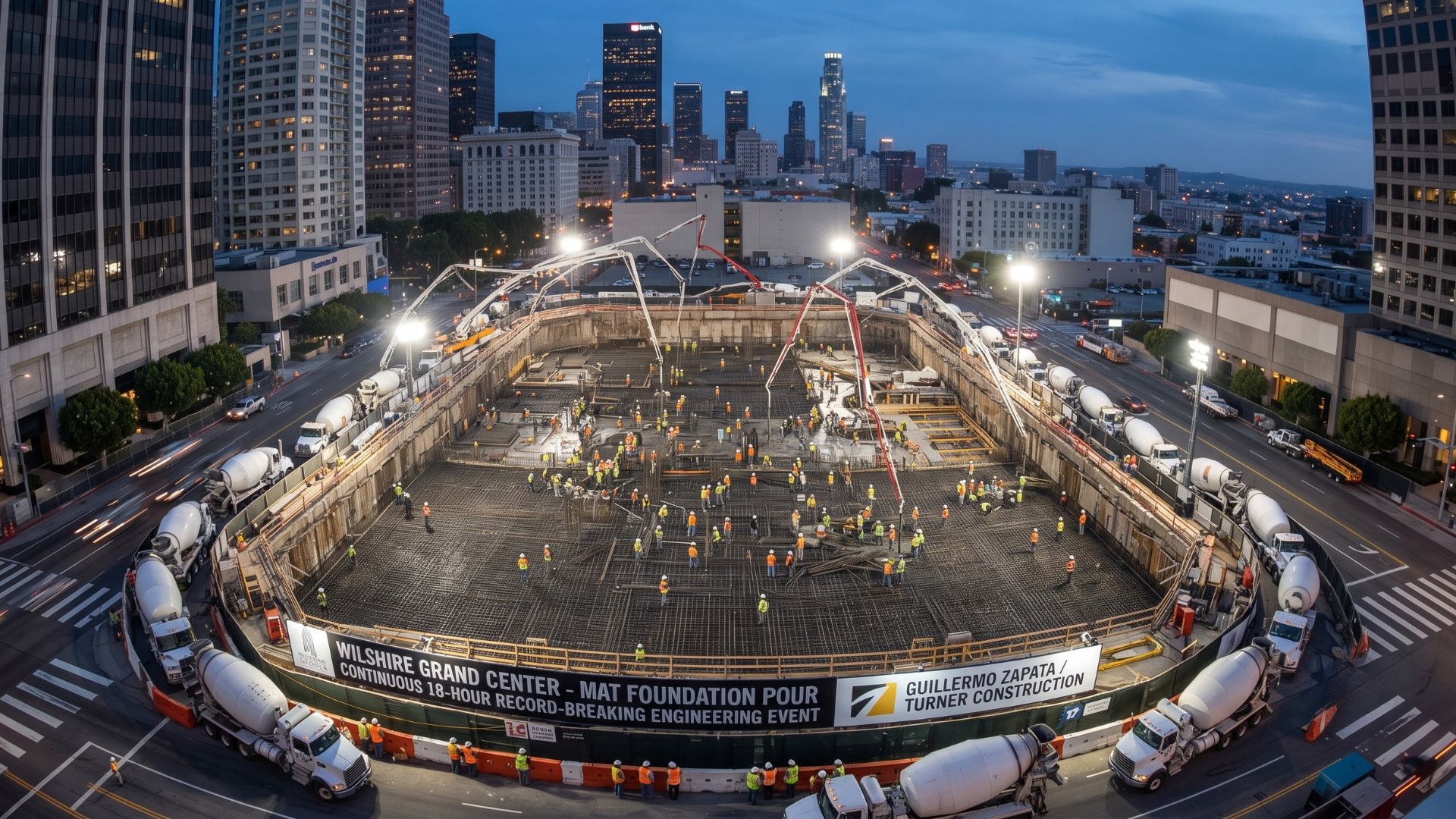

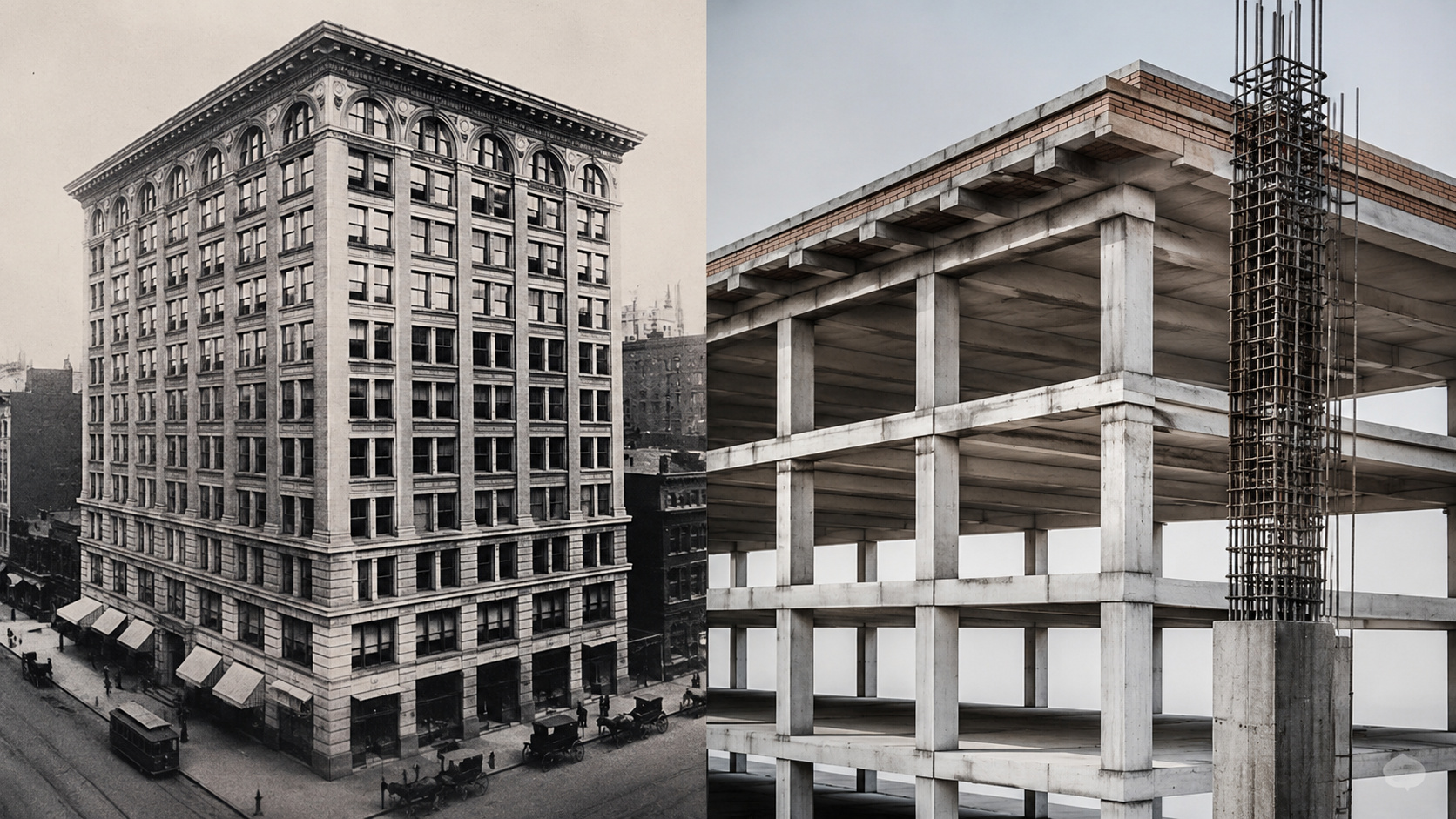

image: Lázaro de La Peña, Valencia
The roof support system uses a technology called “bird’s nest,” a structure on each pillar that tensions and extends the steel cables that will support the roof. It is the same structural logic used in modern stadiums such as the Allianz Arena (Munich) and the Beijing Olympic Stadium, adapted to the Nou Mestalla project, which was designed to be one of the most advanced in Europe when construction began in 2007.
The history of the world’s largest ghost stadium: from dream to ruin

Valencia planned the Nou Mestalla as a 70,000-seat stadium that would replace the centenary Mestalla and position the club among Europe’s giants in terms of infrastructure. Construction began in 2007, during a period of economic euphoria in Spain, with an estimated budget of hundreds of millions of euros and a projected completion in 2009. The concrete skeleton rose quickly: stands, pillars, and the main structure were ready before the collapse.
In 2009, the global financial crisis hit Valencia hard. The club accumulated debts of over R$2 billion and had a R$550 million loan denied, forcing the halt of construction when the roof, facade, internal installations, and all finishing work were still missing. The Nou Mestalla remained abandoned for almost 15 years, exposed to the elements, vandalism, and vegetation that began to grow between the concrete stands. The stadium became an involuntary tourist attraction and earned the title of the world’s largest ghost stadium.
The 2030 World Cup as the engine for recovery
The joint bid by Spain, Portugal, and Morocco to host the 2030 World Cup was the factor that reactivated the construction of the Nou Mestalla. Valencia is one of the Spanish cities included in the host plan, but FIFA requires stadiums that meet capacity, safety, accessibility, and roof requirements that the current Mestalla does not fulfill. Without the Nou Mestalla ready, the city loses the right to host matches.
The completion deadline in 2027 allows for a three-year margin before the World Cup, a time that FIFA considers minimal for homologation and operational tests. If Valencia meets the schedule, the Nou Mestalla will be the stadium with the longest construction history among the 2030 World Cup venues, having taken 20 years between the start of construction (2007) and delivery. The pressure is twofold: the club needs the stadium to compete commercially in Europe, and the city needs it for the World Cup.
The challenges remaining until 2027
Installing the roof and facade is the most visible part of the construction, but what’s missing goes beyond the external structure. The stadium’s interior needs complete electrical and hydraulic installations, lighting systems, turf, skyboxes, press rooms, locker rooms, and all the accessibility infrastructure that FIFA requires for a World Cup. Thousands of items need to be executed, tested, and approved in less than three years.
Financing remains the most delicate issue. Valencia has faced decades of financial instability, and the resumption of construction depends on investment that the club cannot always guarantee with its own revenues. The sale of naming rights (stadium naming rights), partnerships with the regional government of the Valencian Community, and potential private investors are avenues the club is exploring to make the remaining construction costs viable.
What the Nou Mestalla will mean for Valencia and the city
If completed, the Nou Mestalla will be a 70,000-seat stadium in one of Spain’s largest cities, with a modern roof, first-class facilities, and an urban location that allows easy access by public transport. For Valencia CF, which competes in La Liga and European competitions, the new stadium represents a revenue leap from matchday, corporate boxes, events, and naming rights that the centenary Mestalla cannot generate.
For the city of Valencia, the stadium is a matter of pride and pragmatism. The world’s largest ghost stadium became a symbol of urban shame, wasted land in the heart of the city that could house housing, commerce, or public spaces. Finishing it solves the urban problem and positions Valencia as a World Cup host city, with all the visibility and infrastructure investment that this attracts.
Do you think Valencia will manage to finish the Nou Mestalla in time for the 2030 World Cup, or will the world’s largest ghost stadium remain a ghost? Tell us in the comments if you know of other abandoned stadiums and what you think about a club taking 20 years to build its home.