Portuguese
  Spanish


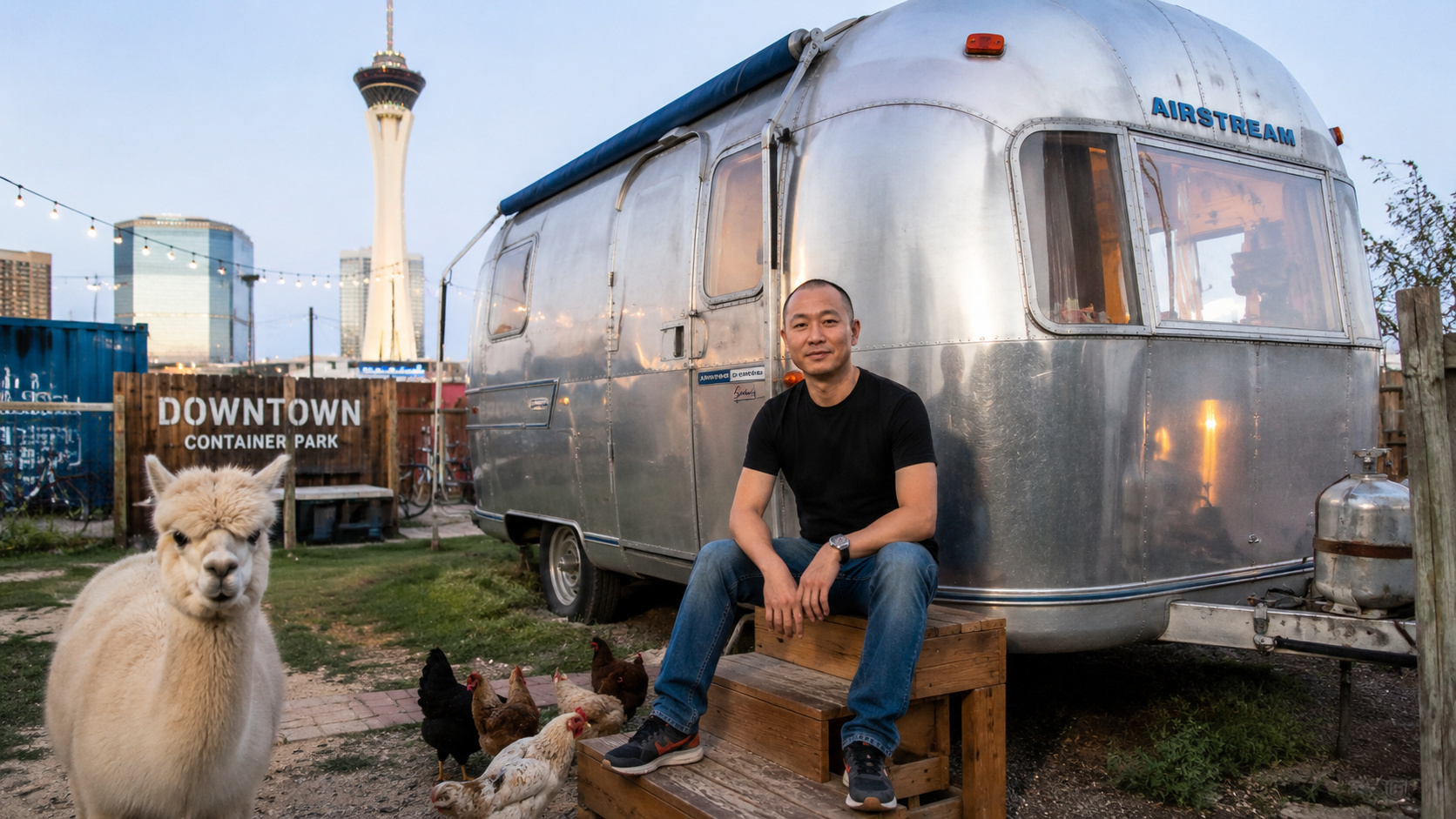

Tony Hsieh’s life in Las Vegas blends billion-dollar sale of Zappos, compact living, urban revitalization, and a curious personal choice: living in a 22 m² trailer, surrounded by animals, close neighbors, and an alternative community that became a symbol of an unconventional lifestyle
The man who led Zappos, a famous footwear and clothing retailer, became known for a choice that seemed to defy the expected script for a millionaire businessman: living in a 22 m² trailer in Las Vegas.
The information was published by ABC News, a U.S. news broadcaster and website, on August 12, 2015. The story featured Tony Hsieh, former CEO of Zappos, living in an Airstream of about 22 m² in the city’s downtown area.
The case draws attention because it does not involve a lack of money. Hsieh was directly involved in the sale of Zappos to Amazon, but chose to live in a space smaller than many Brazilian studios, surrounded by alpacas, chickens, and an alternative community.
-
World’s First Plasma Dress Turns Fashion Show into Scientific Spectacle with Controlled Electric Discharges and Ionized Gases in Iris Van Herpen’s Groundbreaking Tech-Fashion Creation

-
Phone Falls from Plane at 300 Meters in Rio de Janeiro, Continues Recording for 15 Seconds, Found by Environmentalist Next Day in Unbelievable Twist

-
8-Year-Old Finds 900-Year-Old Viking Bronze Buckle on Swedish Beach While Fossil Hunting
-
8-Year-Old Who Ran Barefoot Wins Race in Brazil with Shoes Gifted by Famous Athlete, Becomes Symbol of Hope but Family Seeks Support to Sustain Athletic Dream



Tony Hsieh was the former CEO of Zappos and became known for a choice quite different from the millionaire standard
Tony Hsieh was the former CEO of Zappos. CEO is the chief executive of a company, the person who leads the most important business decisions.

Zappos grew in online commerce by selling shoes and clothing. The company became famous in the United States and eventually linked to a sale to Amazon, one of the largest digital retail companies in the world.
After that, it would be common to imagine Hsieh in large mansions, luxury cars, and gated communities. But the image that gained strength was another: a millionaire businessman living in a small trailer in downtown Las Vegas.
The strength of the story lies precisely in this contrast. The former executive did not live small due to lack of choice. He chose a reduced space within an experience of coexistence, city, and community.
The 22 m² trailer was smaller than many studio apartments, but it was part of a personal choice
The Airstream where Tony Hsieh lived was approximately 22 m². This size is similar to small studios and popular studio apartments in large cities.
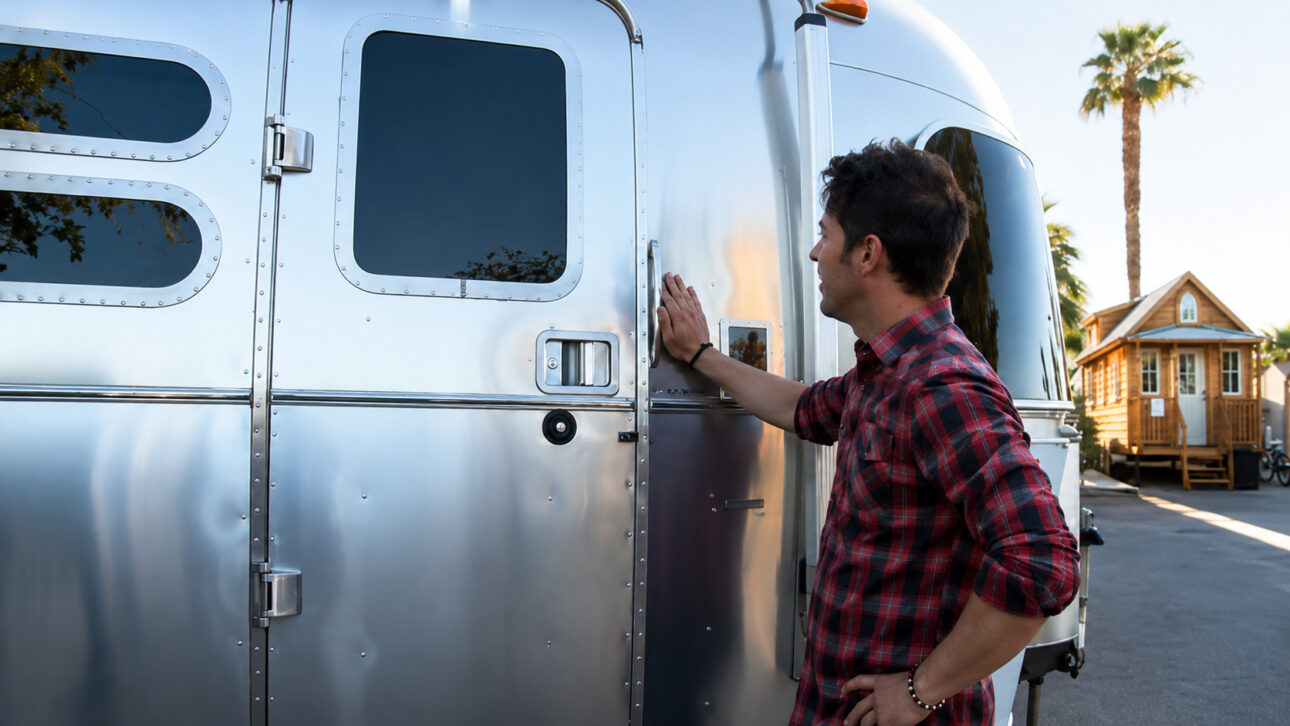
The central difference lies in the context. Many people live in small spaces because rent is expensive, income is low, or location weighs on the budget. In Hsieh’s case, the compact living was a personal choice.
Therefore, the story should not be read as a romanticization of tightness. Living in a small place as a lifestyle is different from living in a small place out of necessity. One involves financial freedom. The other involves economic limitation.
Even so, the case helps to open an important conversation: how much space does a person really need to live well. The answer depends on income, security, location, privacy, and quality of housing.
The community in Las Vegas had alpaca, chickens, trailers, and compact houses
Tony Hsieh’s trailer was located in an area known as Airstream Park. The space gathered trailers, compact houses, and residents who lived close to each other.
ABC News, a U.S. news broadcaster and website, detailed that Hsieh’s neighbors included an alpaca named Marley, a dog named Blizzy, and 4 chickens. The community also had families and friends living in 20 Airstream trailers and 10 Tumbleweed compact houses.
Airstream is a well-known type of trailer in the United States. Tumbleweed is the name associated with small houses, designed for those seeking a routine with less space and fewer objects.
The setting seemed almost cinematic. A businessman connected to a large technology and retail company lived in a kind of compact village, with animals, bonfires, close neighbors, and daily coexistence.
Downtown Las Vegas made history because Tony Hsieh bet on urban revitalization
Downtown Las Vegas is the central region of Las Vegas. The place made history because Tony Hsieh invested in a project to breathe new life into this part of the city.
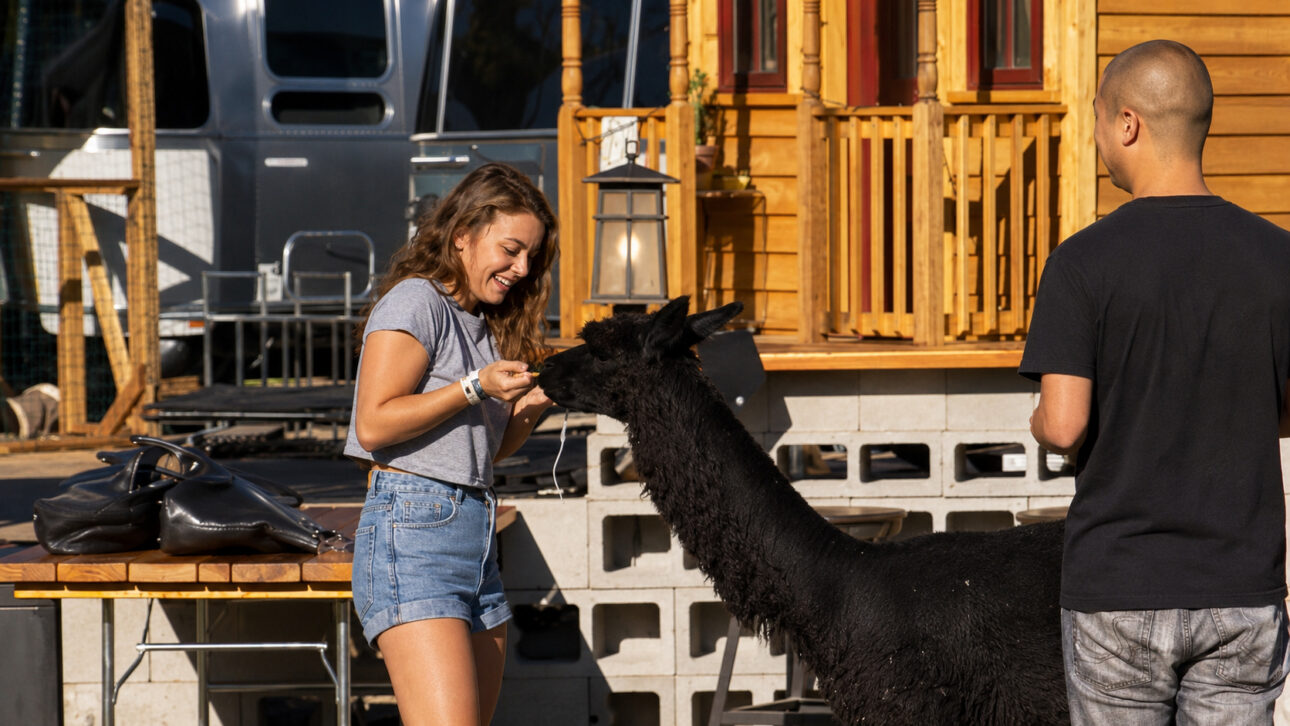
The idea was not just to live in a trailer. The space was part of a larger bet on urban coexistence, small businesses, and different use of central areas.
The Airstream Park and a park of recycled containers for small businesses were linked to the investment of $350 million to rebuild Downtown Las Vegas.
In simple terms, urban revitalization is when an area of the city undergoes changes to attract residents, commerce, and foot traffic. In Hsieh’s case, this involved compact housing, local businesses, and a close-knit community.
Life in the trailer also became a showcase of lifestyle
Tony Hsieh’s choice made headlines because it mixed wealth, simplicity, and public image. The former CEO of Zappos could live in a mansion but chose to live in a 22 m² trailer.
This type of decision creates curiosity because it challenges the common imagination about millionaires. For many people, fortune means a huge house. In Hsieh’s case, the small dwelling became part of a narrative about community and a less conventional routine.
He even said it was his favorite place among the places he had lived. The statement helps to understand that the value for him was not just in the size of the house but in the surrounding experience.
Even so, it’s necessary to separate symbol and reality. The trailer functioned as a lifestyle choice within a project with money, planning, and structure. This alone does not solve the real housing problems in expensive cities.
The contrast between fortune and minimal housing explains why the story continues to draw attention
The story remains strong because it has elements that are easy to visualize. A former CEO, a company sold to Amazon, a 22 m² trailer, Las Vegas, an alpaca, chickens, and an alternative community.
Each detail reinforces the contrast. There was wealth, but there was no mansion. There was a career tied to digital retail, but the routine took place in a small physical space, surrounded by neighbors and animals.
The comparison with studio apartments and studios helps to gauge the size of the trailer. However, the main point is not to copy the model. The point is to understand how a person with high financial power used their own dwelling as part of an idea about city and coexistence.
In the end, Tony Hsieh turned a personal choice into a powerful public image. The small house became a conversation about work, money, community, lifestyle, and the future of urban centers.
Tony Hsieh’s life in Las Vegas shows that house size, wealth, and happiness do not always follow the order that many people imagine. But it also reminds us that living in a small space by choice is very different from living like that due to lack of alternatives.
Do you think a small house can represent freedom when there is choice and good structure, or does this discourse hide real housing problems in big cities?