






 Portuguese
  Spanish


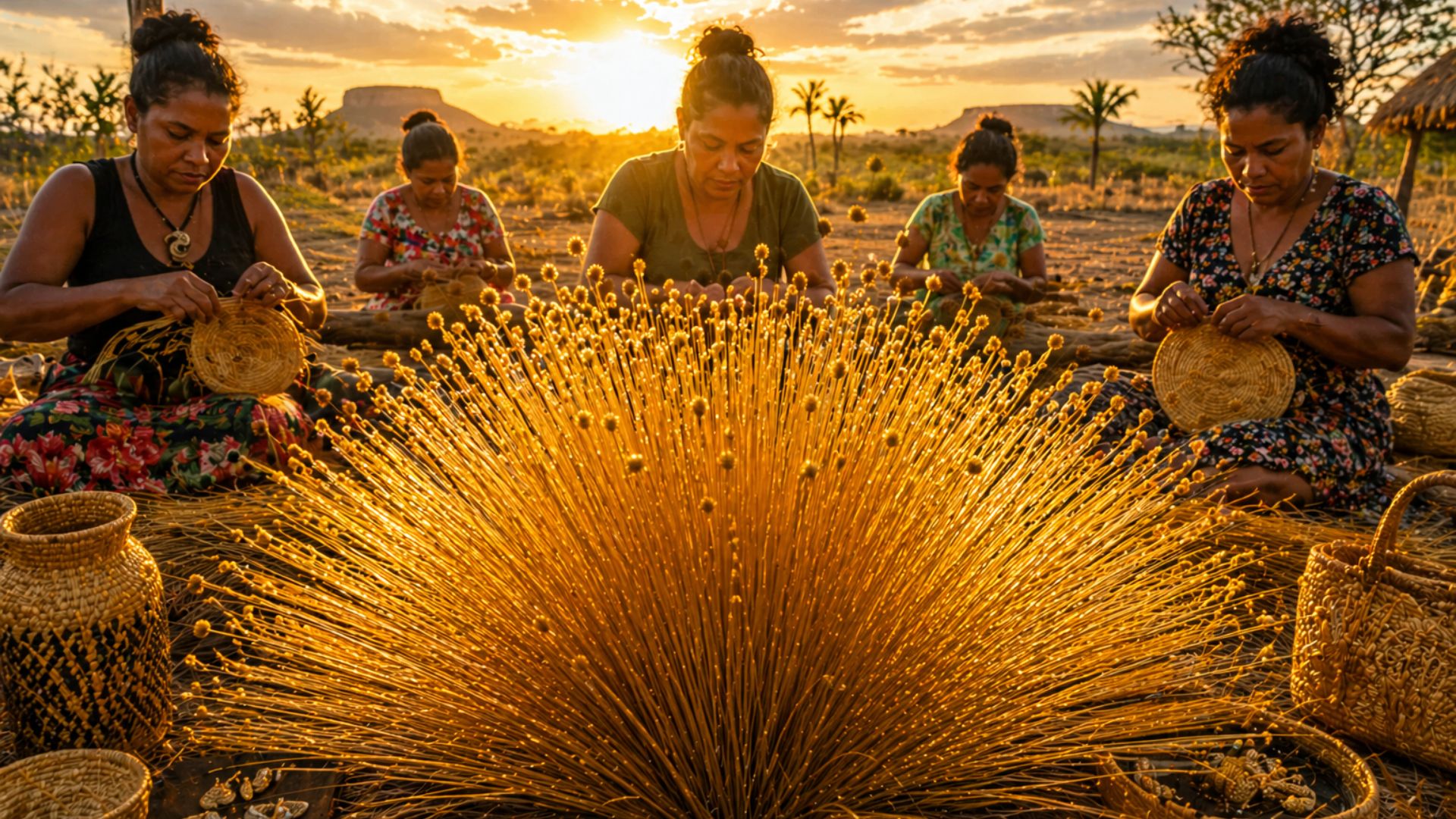

Official recognition of Mateiros reinforces the cultural importance of golden grass, while the growth of livestock farming in Tocantins continues to be based on pastures adapted to the Cerrado and the expansion of the cattle herd in different regions of the state.
Mateiros, in Jalapão, was recognized as the National Capital of Golden Grass by Law nº 15.050, of December 20, 2024, consolidating its cultural relevance, although the plant’s economic strength is linked to handicrafts, tourism, and extractivism, and not to the direct feeding of the cattle herd.
According to the IBGE, the municipality registered 2,748 inhabitants in the 2022 Census and has an estimated 2,922 residents in 2025, numbers that reinforce its small size but do not diminish the central role it plays in the cultural and economic identity of Jalapão.
Even with a small population, the city stands out for its artisanal production made with golden stalks, a technique that spans generations and sustains a significant part of the local income, especially in traditional communities that maintain historical practices of collection and processing.
-
Workers renovating a playground in northern England uncover 176 World War II bombs buried underground; training artifacts still contained explosives.

-
Brazilian Architect Transforms Waste into Sustainable Homes with Solar Power and Rainwater Systems for 40 Years

-
Security Guard Becomes Doctor at Louisiana Hospital Where He Once Worked, Studied Chemistry Between Shifts

-
Woman Rescued from Luxury Complex in Brazil Worked Without Pay for 55 Years, May Be Entitled to Over $300,000




Although the name suggests forage use, golden grass is not a pasture-oriented grass, being classified as Syngonanthus nitens, a species typical of humid areas of the Cerrado, where its collection requires strict control to ensure natural reproduction and avoid environmental impacts.
To preserve the species, harvesting in Tocantins occurs only between September 20 and November 20, a period defined by specific legislation, in addition to the requirement that the material be sold only in finished pieces, such as accessories and decorative items.
Golden Grass in Jalapão and Artisanal Tradition
In the Jalapão territory, the Mumbuca quilombola community has established itself as a reference in artisanal production, bringing together traditional knowledge and collective organization that have ensured national visibility for golden grass since the advance of tourism in recent decades.

From the 1990s onwards, with the growth of ecotourism, the pieces began to circulate in specialized fairs and markets, increasing local income and projecting Jalapão as a destination associated with preserved nature and authentic cultural production.
Livestock Farming in Tocantins and Growth of the Cattle Herd
On the other hand, the advance of livestock farming in Tocantins is directly linked to the expansion of pastures adapted to the Cerrado and the strengthening of the production chain, without any dependence on golden grass as a food source for cattle.
Between 2018 and 2024, the state’s cattle herd grew by 39.2%, placing Tocantins among the largest producers in the country, with numbers exceeding 11 million head, according to data released by the state government.
In regions of Jalapão, extensive farming coexists with extractive practices, but studies indicate that residents treat these activities distinctly, clearly separating the use of areas designated for cattle from those dedicated to collecting golden grass.
Difference between Golden Grass and Pastures for Cattle
This differentiation becomes essential to avoid misconceptions, as golden grass has its own environmental and cultural value and should not be confused with forage species used in feeding livestock during different climatic periods.
While native or cultivated pastures sustain livestock farming, the symbolic plant of Jalapão plays a distinct role, focused on the creative economy and the preservation of traditional practices, with an indirect impact on local socioeconomic organization.
Cerrado Challenges and Sustainable Management

Given the climatic conditions of Jalapão, characterized by long periods of drought and sandy soils of low fertility, rural producers need to adopt adapted strategies to maintain productivity without increasing pressure on sensitive areas of the biome.
In this context, the use of resistant pastures combined with adequate management contributes to reducing losses, while inadequate practices can intensify degradation processes, including erosion and the compromise of ‘vereda’ areas and wetlands.
At the same time, ‘capim-dourado’ (golden grass) remains an extractive resource whose sustainability depends on respecting the collection calendar, continuous inspection, and the maintenance of the natural environments where the species develops.
Tourism and Income with ‘Capim-Dourado’
The economic relevance of the plant in Mateiros is concentrated in handicrafts, an activity that mobilizes entire families and reinforces regional cultural identity through techniques passed down through generations.
With the expansion of tourism, these pieces have become an important source of income, while also strengthening Jalapão’s image as a destination linked to biodiversity and recognized artisanal production.
Meanwhile, livestock farming remains one of the pillars of Tocantins’ agribusiness, with prominence given to municipalities such as Araguaína and Porto Nacional, which have a more robust and consolidated productive structure in the state.
National Recognition and Distinct Economic Role
The recognition of Mateiros as the National Capital of ‘Capim-Dourado’ increases the visibility of artisanal activity and reinforces the need to preserve its production chain, without altering the predominant economic role of the municipality.
The performance of livestock farming in the state, on the other hand, stems from structural factors such as land availability, productive investments, and climate adaptation, keeping ‘capim-dourado’ restricted to its cultural and environmental role within the Cerrado.
Thus, an integrated reading of the regional scenario shows that artisanal tradition and livestock production coexist but follow distinct logics, contributing in complementary ways to the economic dynamics of Tocantins.


